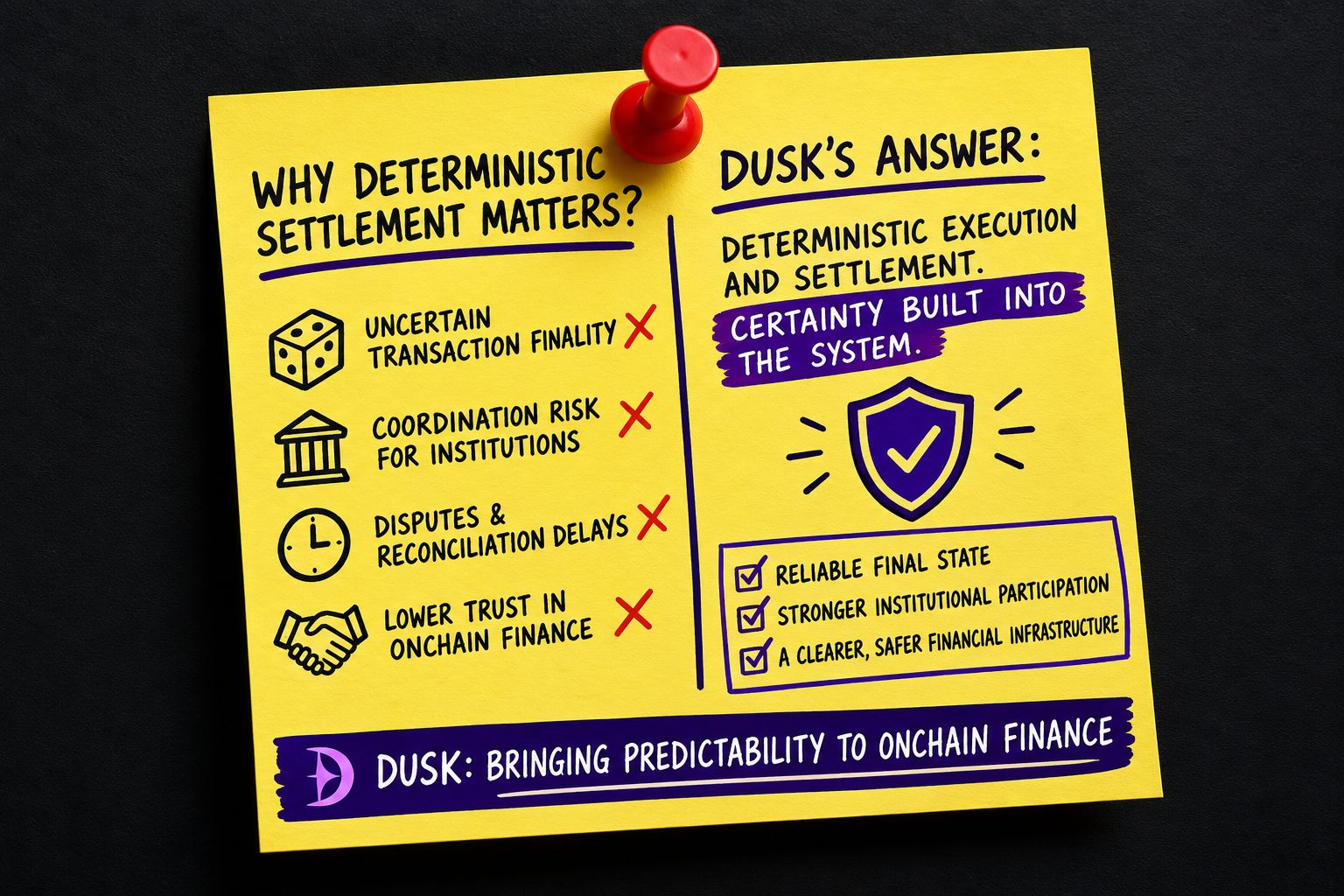
#dusk $DUSK @Dusk
لماذا يهمّ التسوية الحتمية البنية المالية لـ Dusk
يمكن للأسواق أن تعيش مع التقلبات. لكن ما تعجز عن البقاء أمامه هو عدم اليقين بشأن ما الذي تمّت تسويته فعليًا.
تصبح هذه الفروق مهمة عندما تتحرّك الأصول المالية على السلسلة (onchain). لا تكفي فائدة المعاملة لمجرد أنها تم إرسالها؛ تحتاج المؤسسات إلى ثقة بشأن الحالة النهائية، خصوصًا حين يعتمد عليها ضمان (collateral) الملكية والامتثال.
أعود إلى هذا الأمر كلما نظرت إلى Dusk. بُنيت بنيتها التحتية حول التنفيذ والتسوية الحتميين، ما يغيّر السؤال من “هل عالجت الشبكة هذه المعاملة؟” إلى “هل يمكن لجميع المشاركين الاتفاق بشكل موثوق على الحالة الناتجة؟”
يبدو ذلك دقيقًا، لكن البنية المالية تُبنى بالضبط على هذا النوع من اليقين.
تخيّل بنكين يقومان بتحديث السجل نفسه بينما يظلان غير متأكدين مما إذا كانت معاملة سابقة قد تؤثر فعليًا. ليست المشكلة في السرعة. بل في مخاطر التنسيق.
تشير مقاربة Dusk إلى أن التسوية الحتمية قد تصبح أقل تفضيلًا تقنيًا وأكثر متطلبًا للأسواق المنظمة التي تتحرك على السلسلة.
لكن هناك سؤال أصعب: إذا كانت الأنظمة المالية تطالب بشكل متزايد بحتمية نهائية يمكن التنبؤ بها، فهل يمكن للسلاسل التي تتحمّل الغموض أن تبقى قادرة على المنافسة؟$METAB
$ONG
Dusk، شبكة Dusk، بلوكشين Dusk، التسوية الحتمية، التنفيذ الحتمي، البنية المالية، تمويل onchain، التمويل الخاضع للرقابة، تسوية البلوكشين، نهائية المعاملات، بلوكشين للمؤسسات، الأوراق المالية الرقمية، RWA، الأصول في العالم الحقيقي، بلوكشين ملتزم، الأسواق المالية، البنية التحتية للبلوكتشين، DuskEVM، بلوكشين للخصوصية، تسوية قابلة للتنبؤ، DeFi للمؤسسات، الأصول المُرمّزة