
#dusk $DUSK @Dusk
Putting an asset on-chain is easy. Making it actually usable in a financial market is much harder.
That’s the part of the RWA conversation I think gets overlooked, and it’s where Dusk becomes interesting.
Tokenization can create a digital representation of an asset, but that doesn’t automatically solve the rest of the workflow. Financial markets still need controlled access, ownership, confidentiality, disclosure, execution, and settlement. If sensitive activity is completely visible by default, moving assets on-chain can create a different problem instead of solving the old one.
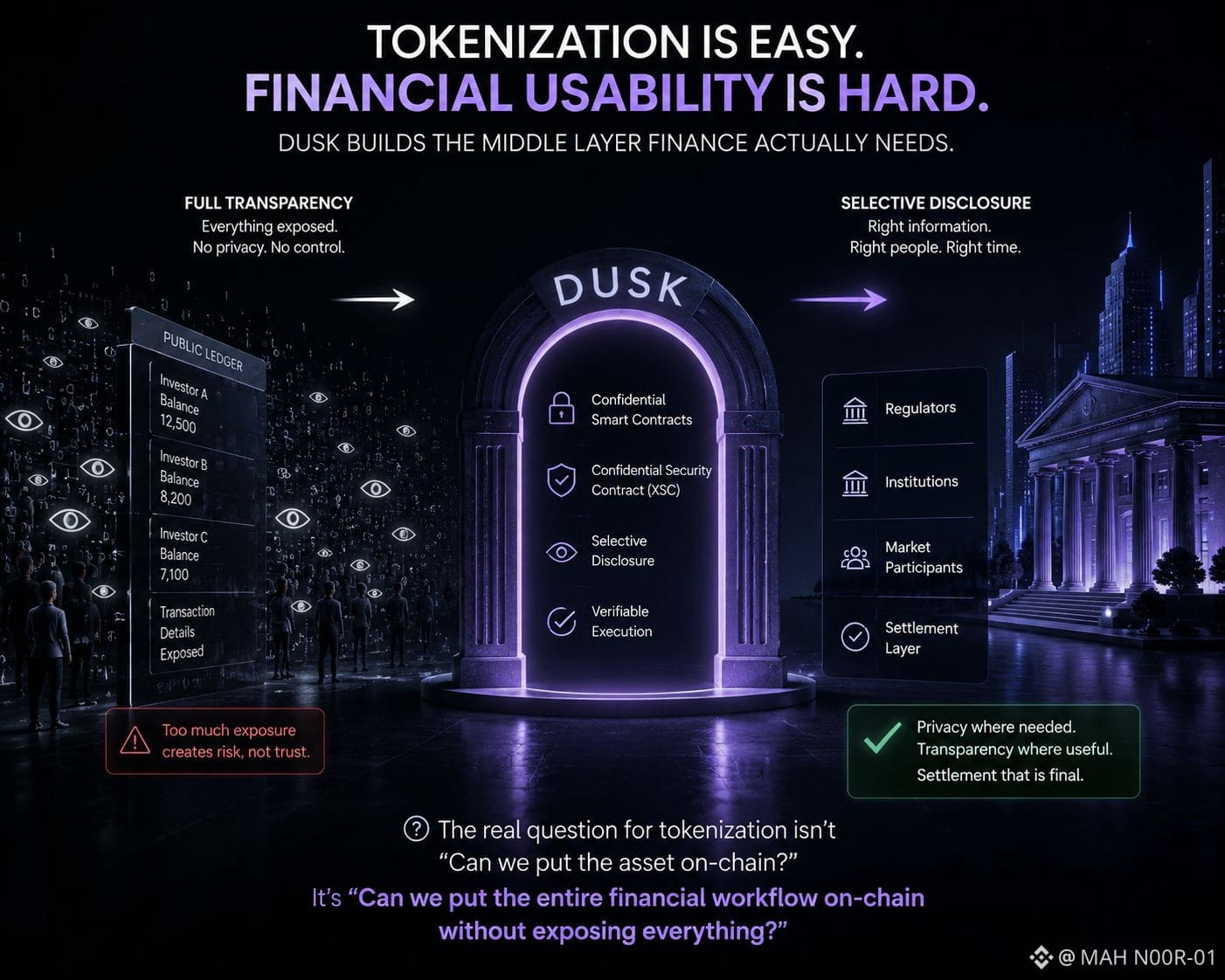
Dusk is built specifically around this tension. It is a Layer-1 blockchain for financial applications, with the Confidential Security Contract (XSC) standard and support for confidential smart contracts. The important idea isn’t simply “privacy.” It’s separating what needs to be verifiable from what doesn’t need to be publicly exposed.
That distinction matters. A financial transaction may need to follow specific rules and produce a verifiable result without broadcasting every underlying detail to everyone watching the network.
But there’s an honest limitation here: better blockchain infrastructure doesn’t automatically solve the legal, institutional, or real-world processes surrounding financial assets.
So I think the more interesting question for tokenization is no longer:
“Can we put the asset on-chain?”
It’s:
“Can we put the financial workflow on-chain without making everything visible?”
@Dusk $DUSK #dusk
Putting an asset on-chain is easy. Making it actually usable in a financial market is much harder.
That’s the part of the RWA conversation I think gets overlooked, and it’s where Dusk becomes interesting.
Tokenization can create a digital representation of an asset, but that doesn’t automatically solve the rest of the workflow. Financial markets still need controlled access, ownership, confidentiality, disclosure, execution, and settlement. If sensitive activity is completely visible by default, moving assets on-chain can create a different problem instead of solving the old one.
Dusk is built specifically around this tension. It is a Layer-1 blockchain for financial applications, with the Confidential Security Contract (XSC) standard and support for confidential smart contracts. The important idea isn’t simply “privacy.” It’s separating what needs to be verifiable from what doesn’t need to be publicly exposed.
That distinction matters. A financial transaction may need to follow specific rules and produce a verifiable result without broadcasting every underlying detail to everyone watching the network.
But there’s an honest limitation here: better blockchain infrastructure doesn’t automatically solve the legal, institutional, or real-world processes surrounding financial assets.
So I think the more interesting question for tokenization is no longer:
“Can we put the asset on-chain?”
It’s:
“Can we put the financial workflow on-chain without making everything visible?”
@Dusk $DUSK #dusk