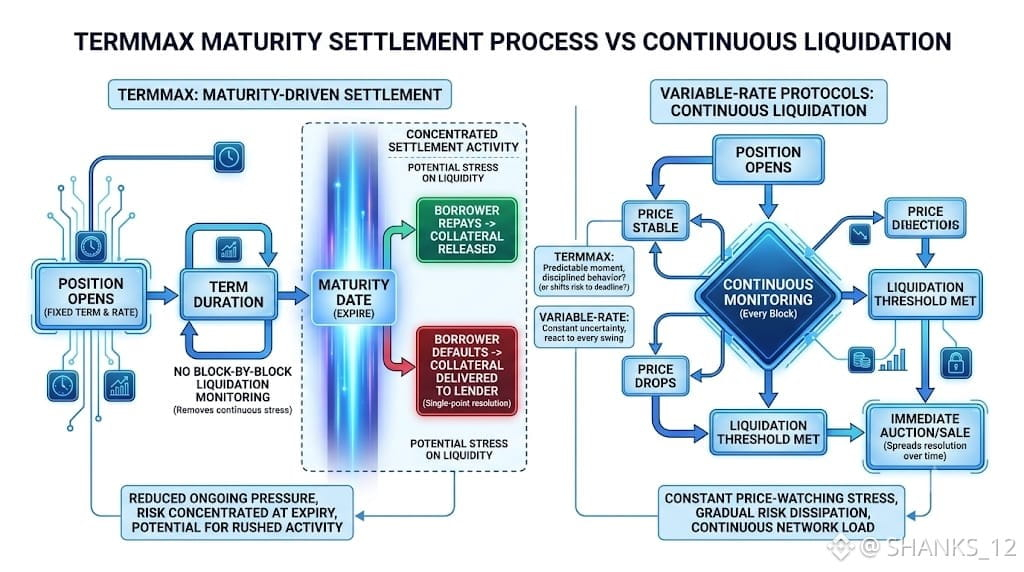
كنت أقرأ عن كيفية تعامل TermMax مع ما يحدث مباشرة عند الاستحقاق، إذ إن الإقراض محدد الأجل يثير دائمًا هذا السؤال بالنسبة لي: ما الذي يحدث فعليًا لحظة انتهاء مدة القرض إذا لم يكن المقترض قد سدد. إن هذه التفاصيل الصغيرة دفعتني إلى جلسة بحث أطول مما كنت أخطط له.
يبدو مثيرًا للاهتمام أن TermMax يعتمد على آلية تسليم عند الاستحقاق بدلاً من المراقبة المستمرة للتصفية التي تراها في بروتوكولات الإقراض بمعدل متغير. يبدو أن تسوية الضمانات مرتبطة بتاريخ الانتهاء نفسه، وكأن تاريخ الاستحقاق يعمل كنقطة تفتيش مدمجة. وهذا يجعلني أفكر في كيفية إزالة جزء من ضغط المراقبة المستمر للأسعار الذي تُحدثه محركات التصفية عادةً، لأن النظام لا يتفاعل في كل كتلة مع تقلبات الأسعار.
لكن عندها يبرز سؤال طبيعي: هل يؤدي تركيز حل المخاطر في نقطة واحدة زمنية إلى خلق ضغط قرب موعد الاستحقاق بدلاً من توزيعه تدريجيًا؟ من الخارج يبدو الأمر كأنه كفء في الأسواق الهادئة، لكنني لست متأكدًا تمامًا من كيفية تصرفه إذا ارتفعت التقلبات قبل وقت قصير من استحقاق دفعة كبيرة من المراكز في آن واحد. هل يمكن أن يؤدي ذلك إلى اندفاع نشاط تسوية يضغط على السيولة تمامًا عندما تكون في أمسّ الحاجة إليها؟
هناك أيضًا عدم يقين أكثر هدوءًا بخصوص مدى قابلية توقع ذلك بالنسبة للمقترضين. هل إن معرفة لحظة التسوية الدقيقة تشجع على سلوك أكثر انضباطًا في السداد، أم أنها مجرد نقل المخاطر إلى أقرب وقت من الموعد النهائي بدل تقليلها؟ لا أعتقد أن هذا النمط يصبح واضحًا حتى يعيش البروتوكول من خلال عدة دورات استحقاق حقيقية في ظل الضغط.
ربما يكشف الاختبار الحقيقي لهذا التصميم فقط عندما تنتهي العديد من المراكز معًا تحت وطأة الضغط... على كل حال، الوقت سيخبرنا👍
#termmax @TermMax
$BOMB $ENA $ONG
#TrumpPressesCongressToPassClarityAct #USJoblessClaimsFallTo206000 #WalmartFalls7% #FASBProposesStablecoinsAsCashEquivalents
يبدو مثيرًا للاهتمام أن TermMax يعتمد على آلية تسليم عند الاستحقاق بدلاً من المراقبة المستمرة للتصفية التي تراها في بروتوكولات الإقراض بمعدل متغير. يبدو أن تسوية الضمانات مرتبطة بتاريخ الانتهاء نفسه، وكأن تاريخ الاستحقاق يعمل كنقطة تفتيش مدمجة. وهذا يجعلني أفكر في كيفية إزالة جزء من ضغط المراقبة المستمر للأسعار الذي تُحدثه محركات التصفية عادةً، لأن النظام لا يتفاعل في كل كتلة مع تقلبات الأسعار.
لكن عندها يبرز سؤال طبيعي: هل يؤدي تركيز حل المخاطر في نقطة واحدة زمنية إلى خلق ضغط قرب موعد الاستحقاق بدلاً من توزيعه تدريجيًا؟ من الخارج يبدو الأمر كأنه كفء في الأسواق الهادئة، لكنني لست متأكدًا تمامًا من كيفية تصرفه إذا ارتفعت التقلبات قبل وقت قصير من استحقاق دفعة كبيرة من المراكز في آن واحد. هل يمكن أن يؤدي ذلك إلى اندفاع نشاط تسوية يضغط على السيولة تمامًا عندما تكون في أمسّ الحاجة إليها؟
هناك أيضًا عدم يقين أكثر هدوءًا بخصوص مدى قابلية توقع ذلك بالنسبة للمقترضين. هل إن معرفة لحظة التسوية الدقيقة تشجع على سلوك أكثر انضباطًا في السداد، أم أنها مجرد نقل المخاطر إلى أقرب وقت من الموعد النهائي بدل تقليلها؟ لا أعتقد أن هذا النمط يصبح واضحًا حتى يعيش البروتوكول من خلال عدة دورات استحقاق حقيقية في ظل الضغط.
ربما يكشف الاختبار الحقيقي لهذا التصميم فقط عندما تنتهي العديد من المراكز معًا تحت وطأة الضغط... على كل حال، الوقت سيخبرنا👍
#termmax @TermMax
$BOMB $ENA $ONG
#TrumpPressesCongressToPassClarityAct #USJoblessClaimsFallTo206000 #WalmartFalls7% #FASBProposesStablecoinsAsCashEquivalents