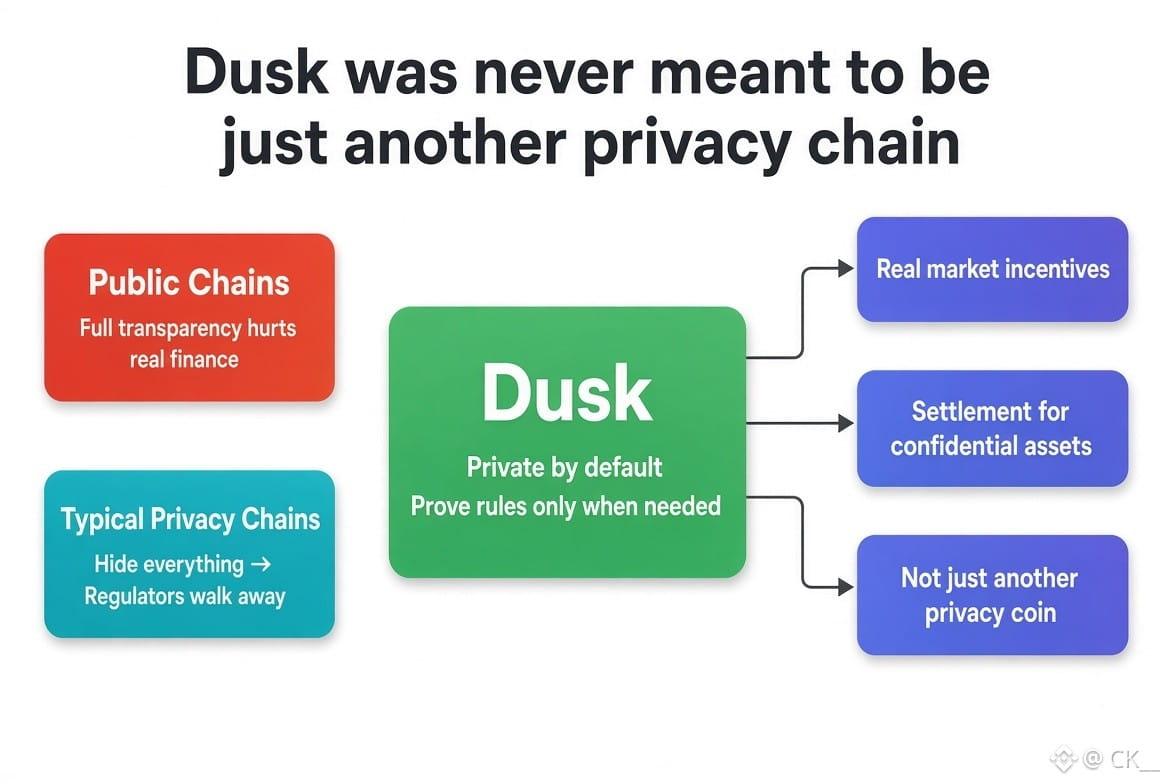
لقد كنت أراقب Dusk لفترة من الوقت ولا أعتقد أنها كانت تحاول يومًا أن تكون سلسلة خصوصية أخرى. الناس يستمرون في مقارنتها بعملات تخفي كل شيء. هذا هو الإطار الخاطئ.
تتعامل السلاسل العامة مع الشفافية باعتبارها افتراضيًا. في الأسواق الواقعية هذا يمثل مشكلة. لا يريد صندوقٌ أن تكون سجلاته ظاهرة على دفتر الأستاذ. لا يريد المُصدر أن تكون كل الحيازات وكل عملية نقل مرئية. لا يمكن لصانع السوق أن يعمل إذا كانت كل حركة قابلة للقراءة فورًا. الخصوصية الكاملة لها مشكلة عكسية. إذا لم يستطع أحد التحقق من أي شيء، سيبتعد اللاعبون الخاضعون للتنظيم.
توجد Dusk في تلك الفجوة. تبقى الأنشطة خاصة ما لم تكن هناك حاجة إلى أن يطّلع شخصٌ على جزءٍ محدد لسببٍ ما. أثبت الأهلية دون تفريغ هوية كاملة. أثبت أن عملية تداول اتبعت القواعد دون إظهار الدفتر كاملًا. هذا أقرب إلى ما تعمل به البنوك والبورصات بالفعل، وليس مثل معظم مشاريع خصوصية العملات المشفرة.
الحدّية واضحة. المؤسسات تستغرق وقتًا طويلًا. يجب أن يبدو المنتج قابلاً للاستخدام، وليس صحيحًا نظريًا فقط. والإفصاح الانتقائي لا يعمل إلا إذا كان الأشخاص الذين يحملون المفاتيح يتصرفون بالفعل بشكل مناسب.
لهذا السبب لا أنظر إلى Dusk باعتبارها صفقة خصوصية أولًا. أنظر إلى ما إذا كان يمكن أن تصبح بنية تحتية للتسوية للأصول التي تحتاج فعلاً إلى السرية.
إذا لم تصبح Dusk «فقط سلسلة خصوصية أخرى»، فماذا يجب أن تُثبت بعد ذلك كي تتعامل معها المؤسسات كتمديد حقيقي للسوق بدلًا من كونها مجرد تجربة؟
#dusk $DUSK @Dusk
تتعامل السلاسل العامة مع الشفافية باعتبارها افتراضيًا. في الأسواق الواقعية هذا يمثل مشكلة. لا يريد صندوقٌ أن تكون سجلاته ظاهرة على دفتر الأستاذ. لا يريد المُصدر أن تكون كل الحيازات وكل عملية نقل مرئية. لا يمكن لصانع السوق أن يعمل إذا كانت كل حركة قابلة للقراءة فورًا. الخصوصية الكاملة لها مشكلة عكسية. إذا لم يستطع أحد التحقق من أي شيء، سيبتعد اللاعبون الخاضعون للتنظيم.
توجد Dusk في تلك الفجوة. تبقى الأنشطة خاصة ما لم تكن هناك حاجة إلى أن يطّلع شخصٌ على جزءٍ محدد لسببٍ ما. أثبت الأهلية دون تفريغ هوية كاملة. أثبت أن عملية تداول اتبعت القواعد دون إظهار الدفتر كاملًا. هذا أقرب إلى ما تعمل به البنوك والبورصات بالفعل، وليس مثل معظم مشاريع خصوصية العملات المشفرة.
الحدّية واضحة. المؤسسات تستغرق وقتًا طويلًا. يجب أن يبدو المنتج قابلاً للاستخدام، وليس صحيحًا نظريًا فقط. والإفصاح الانتقائي لا يعمل إلا إذا كان الأشخاص الذين يحملون المفاتيح يتصرفون بالفعل بشكل مناسب.
لهذا السبب لا أنظر إلى Dusk باعتبارها صفقة خصوصية أولًا. أنظر إلى ما إذا كان يمكن أن تصبح بنية تحتية للتسوية للأصول التي تحتاج فعلاً إلى السرية.
إذا لم تصبح Dusk «فقط سلسلة خصوصية أخرى»، فماذا يجب أن تُثبت بعد ذلك كي تتعامل معها المؤسسات كتمديد حقيقي للسوق بدلًا من كونها مجرد تجربة؟
#dusk $DUSK @Dusk