بمناسبة الذكرى السنوية الثلاثين لمدرستنا الثانوية، قررت صفّتنا أن نتكاتف معًا لنساهم في إنشاء صندوق للمنح الدراسية للمدرسة.
كان عددنا 40 شخصًا، يساهم كلٌّ منا بمبلغ 500,000 دونغ فيتنامي، ليصبح المجموع 20 مليون دونغ فيتنامي. كنتُ الشخص الذي نظّم كل شيء، كما تولّيت أيضًا مهام أمين الصندوق.
تم توثيق كل مساهمة واردة وكل مصروف وكل تحويل بعناية من قبلي، وكنت دائمًا أشارك المعلومات مع جميع أفراد صفّنا. كانت هذه أول مرة نقوم بشيء من هذا النوع، وانتهى الأمر بنجاح. آمل أن تكون المرة القادمة مثلها.
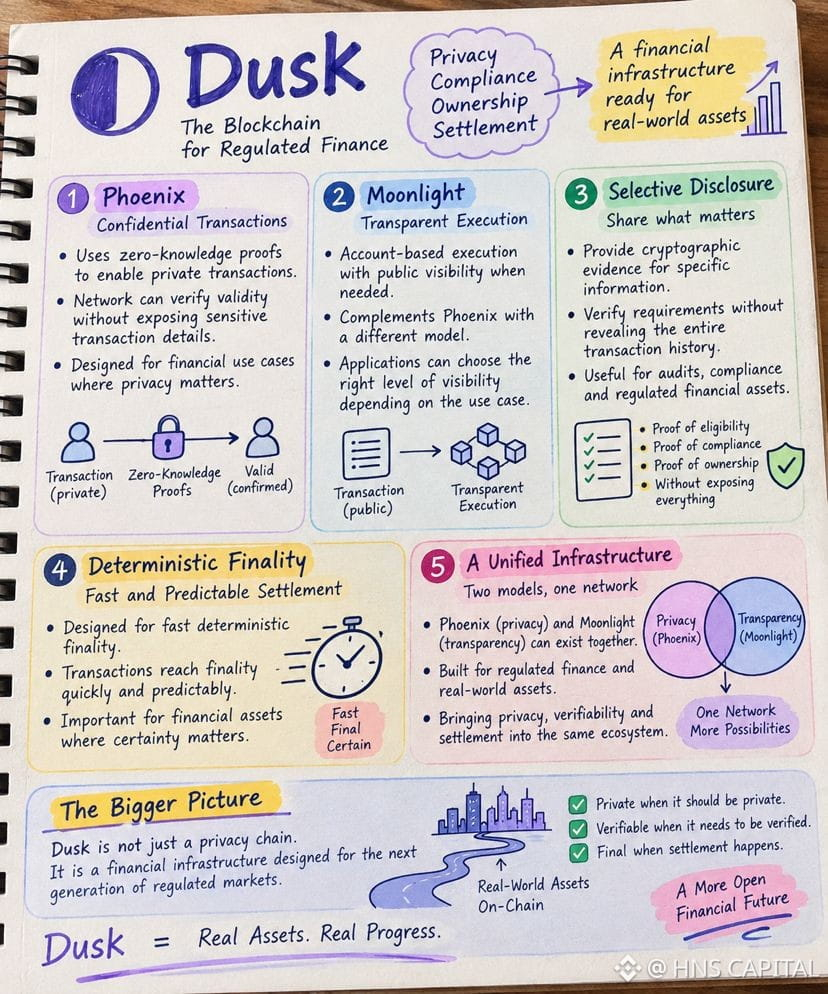
يقترب Dusk من البنية التحتية المالية بمبدأ مشابه، ولكن على مستوى البروتوكول.
يُمكّن Phoenix إجراء المعاملات بسرّية باستخدام إثباتات المعرفة الصفرية، ما يسمح للشبكة بالتحقق من صحة المعاملة دون كشف تفاصيلها الحساسة.
يوفر Moonlight تنفيذًا شفافًا قائمًا على الحسابات، ما يمنح التطبيقات نموذجًا مختلفًا عندما يلزم الاعتماد على الرؤية العامة.
الأمر المثير للاهتمام هو أن الطريقتين يمكن أن تتعايشا داخل الشبكة نفسها.
يدعم Dusk أيضًا الإفصاح الانتقائي، مما يتيح للأطراف المخوّلة التحقق من معلومات محددة دون الوصول إلى كل ما وراء المعاملة.
وهذا الأمر مهم بشكل خاص للأصول الخاضعة للرقابة.
قد تحتاج مؤسسة ما إلى إثبات أن المعاملة تمتثل لقواعد معيّنة، بينما لا ينبغي أن تصبح الأرصدة الأساسية أو الأطراف المقابلة أو تفاصيل المعاملة تلقائيًا بيانات عامة.
يجمع Dusk بين بنية الخصوصية هذه وإتاحة الحسم الحتمي، بهدف تسوية سريعة ومتوقعة بدلًا من ترك المعاملات المالية معلّقة بانتظار تأكيد غير مؤكد.
ذلك الجمع هو ما لفت انتباهي:
خاص عندما ينبغي أن يكون خاصًا.
قابل للتحقق عندما يلزم التحقق.
حاسم عندما تحدث التسوية.
هذه طريقة مختلفة للتفكير في البنية التحتية للبلوك تشين.
بدلًا من اعتبار الشفافية على أنها “يمكن للجميع رؤية كل شيء”، يعمل Dusk على بناء نموذج أكثر تحكمًا للوصول إلى المعلومات.
#dusk $DUSK @Dusk $ONG $PEOPLE
كان عددنا 40 شخصًا، يساهم كلٌّ منا بمبلغ 500,000 دونغ فيتنامي، ليصبح المجموع 20 مليون دونغ فيتنامي. كنتُ الشخص الذي نظّم كل شيء، كما تولّيت أيضًا مهام أمين الصندوق.
تم توثيق كل مساهمة واردة وكل مصروف وكل تحويل بعناية من قبلي، وكنت دائمًا أشارك المعلومات مع جميع أفراد صفّنا. كانت هذه أول مرة نقوم بشيء من هذا النوع، وانتهى الأمر بنجاح. آمل أن تكون المرة القادمة مثلها.
يقترب Dusk من البنية التحتية المالية بمبدأ مشابه، ولكن على مستوى البروتوكول.
يُمكّن Phoenix إجراء المعاملات بسرّية باستخدام إثباتات المعرفة الصفرية، ما يسمح للشبكة بالتحقق من صحة المعاملة دون كشف تفاصيلها الحساسة.
يوفر Moonlight تنفيذًا شفافًا قائمًا على الحسابات، ما يمنح التطبيقات نموذجًا مختلفًا عندما يلزم الاعتماد على الرؤية العامة.
الأمر المثير للاهتمام هو أن الطريقتين يمكن أن تتعايشا داخل الشبكة نفسها.
يدعم Dusk أيضًا الإفصاح الانتقائي، مما يتيح للأطراف المخوّلة التحقق من معلومات محددة دون الوصول إلى كل ما وراء المعاملة.
وهذا الأمر مهم بشكل خاص للأصول الخاضعة للرقابة.
قد تحتاج مؤسسة ما إلى إثبات أن المعاملة تمتثل لقواعد معيّنة، بينما لا ينبغي أن تصبح الأرصدة الأساسية أو الأطراف المقابلة أو تفاصيل المعاملة تلقائيًا بيانات عامة.
يجمع Dusk بين بنية الخصوصية هذه وإتاحة الحسم الحتمي، بهدف تسوية سريعة ومتوقعة بدلًا من ترك المعاملات المالية معلّقة بانتظار تأكيد غير مؤكد.
ذلك الجمع هو ما لفت انتباهي:
خاص عندما ينبغي أن يكون خاصًا.
قابل للتحقق عندما يلزم التحقق.
حاسم عندما تحدث التسوية.
هذه طريقة مختلفة للتفكير في البنية التحتية للبلوك تشين.
بدلًا من اعتبار الشفافية على أنها “يمكن للجميع رؤية كل شيء”، يعمل Dusk على بناء نموذج أكثر تحكمًا للوصول إلى المعلومات.
#dusk $DUSK @Dusk $ONG $PEOPLE