I've been spending time in @TermMax docs lately, and one detail keeps pulling me back in: XT, one of the two tokens in every fixed rate market, is designed to lose all its value by maturity. Most people skim past that and assume it's a red flag.
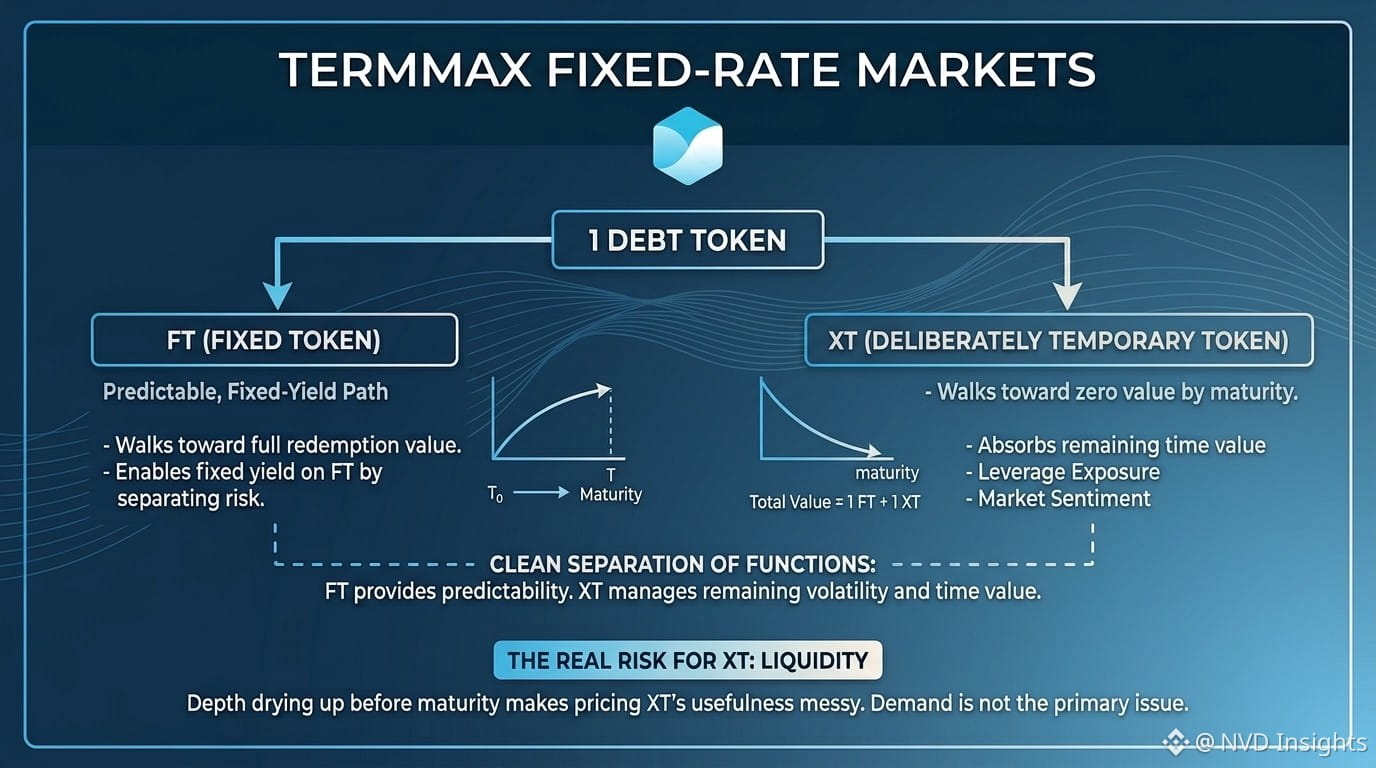
The thing is, that is not a bug in the system it's the whole point. Each market splits a debt token into two pieces: FT, which walks toward its full redemption value, and XT, which walks toward zero. Together, 1 FT + 1 XT always equals 1 debt token. FT is the predictable, fixed rate side. XT is the deliberately temporary side that absorbs everything else remaining time value, leverage exposure, market sentiment.
That's actually a clean separation of jobs, and it is what makes the fixed yield 0n FT possible in the first place. But it also means you can not judge XT the way you'd judge a normal token. Watching for "demand" misses the point entirely.
The real risk is liquidity if depth dries up before maturity, pricing XT's remaining usefulness gets messy fast. Still, the structure itself holds up under scrutiny.
#termmax
The thing is, that is not a bug in the system it's the whole point. Each market splits a debt token into two pieces: FT, which walks toward its full redemption value, and XT, which walks toward zero. Together, 1 FT + 1 XT always equals 1 debt token. FT is the predictable, fixed rate side. XT is the deliberately temporary side that absorbs everything else remaining time value, leverage exposure, market sentiment.
That's actually a clean separation of jobs, and it is what makes the fixed yield 0n FT possible in the first place. But it also means you can not judge XT the way you'd judge a normal token. Watching for "demand" misses the point entirely.
The real risk is liquidity if depth dries up before maturity, pricing XT's remaining usefulness gets messy fast. Still, the structure itself holds up under scrutiny.
#termmax