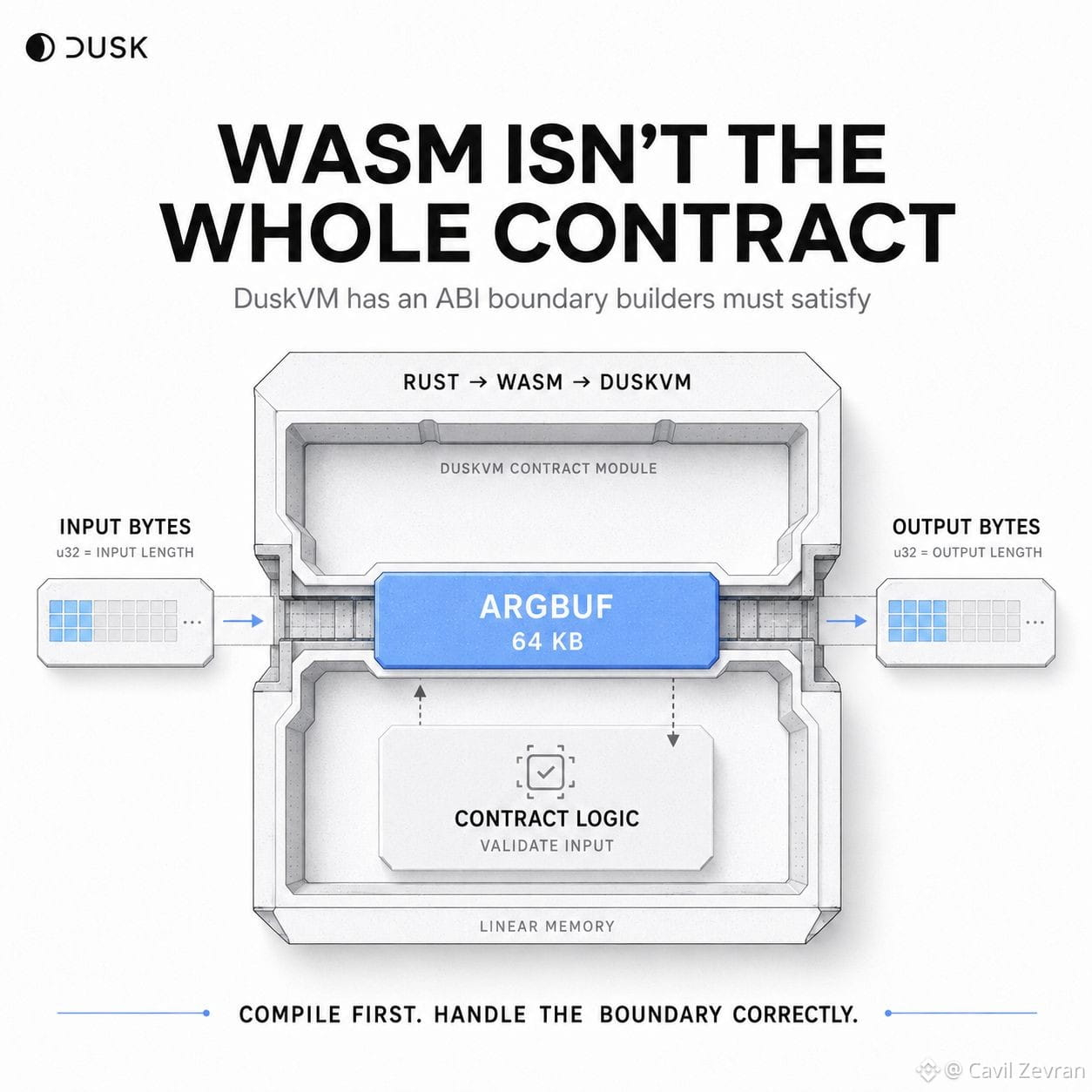

تمنح DuskVM كل عقدٍ مخزن وسيطات بحجم 64 كيلوبايت.
وهذا تفصيلٌ بنّاءٌ أكثر إفصاحًا بكثير من عبارة «يدعم Rust وWASM».
في البداية قرأتُ تنفيذ WASM الأصلي على أنه بابٌ مفتوح نوعًا ما. عند النظر عن كثب، لدى DuskVM حدٌّ محدد يجب على كل عقدٍ احترامه.
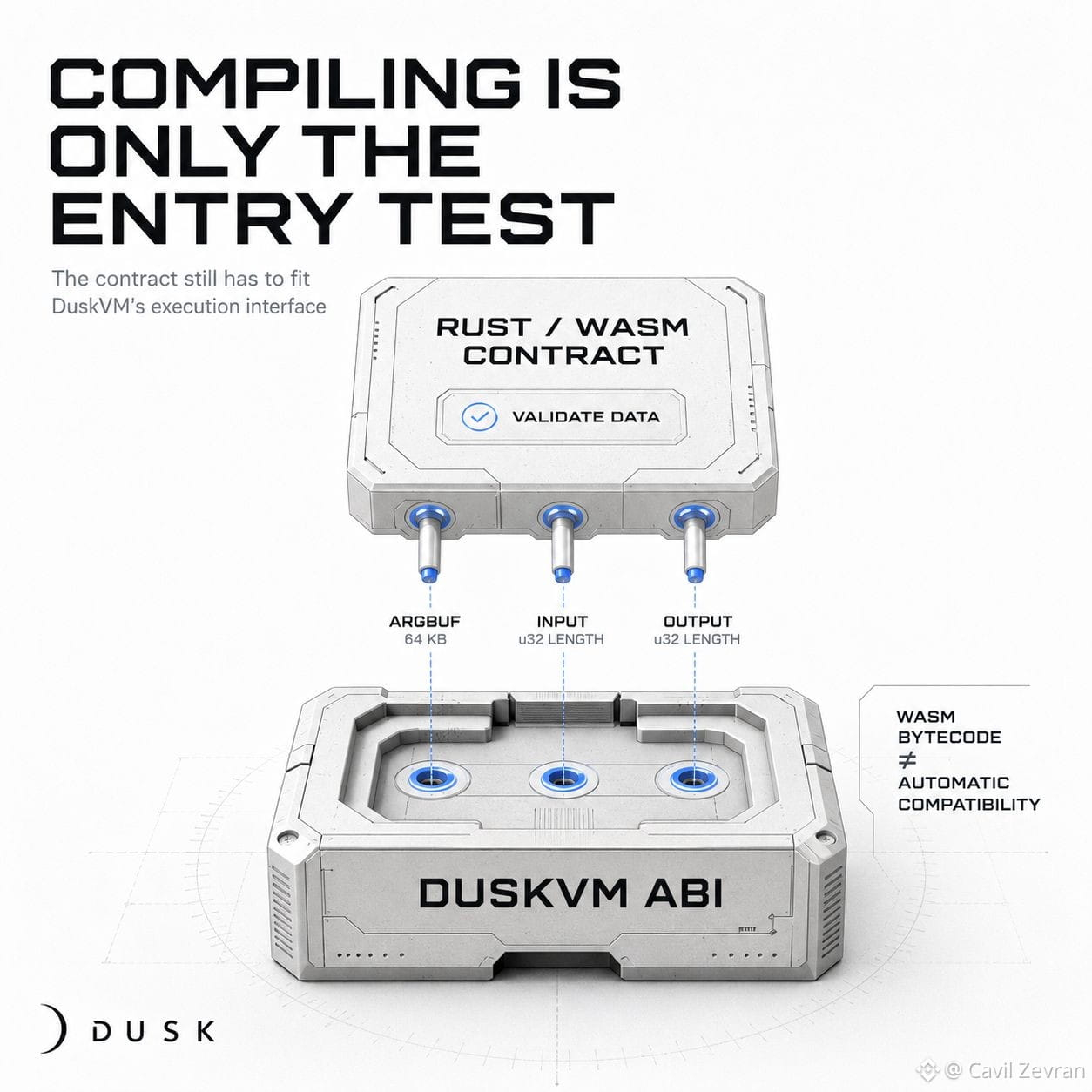
يجب أن يكشف العقد عن argbuf، وهو المكان الذي تُوضَع فيه بيانات الاستدعاء (call data). كما تتبع الدوال المعروضة اصطلاح DuskVM fn foo(u32) -> u32؛ حيث يُستخدمَت القيمة الواردة لوصف عدد البايتات التي يجب قراءتها، وتصف قيمة الإرجاع المخرجات التي يجب كتابتها مرةً أخرى.
ولا تقوم DuskVM بتصحيح إدخال العقد من أجله.
لا يزال العقد الذكي مسؤولًا عن التحقق مما يدخل إلى ذلك المخزن ومعالجته بأمان.
وهذا هو اختبار الضغط الذي سأفرضه على من يختارون المسار الأصلي عند بناء الحلول.
إن جعل Rust يترجم إلى WASM لا يثبت بنفسه إلا القليل. لا يزال العقد بحاجة إلى التصرف بشكل صحيح عند حد ABI الخاص بـ DuskVM في كل مرة تعبر فيها بيانات خارجية ذلك الحد.
يوفر التنفيذ الأصلي للمطوّرين وصولًا مباشرًا إلى قدرات Dusk L1.
لكن مخزن الـ 64 كيلوبايت هو المكان الذي تصبح فيه البنية المجردة هندسةً شائعة جدًا: تأتي البايتات، وعلى عقدك أن يعرف بالضبط ماذا يفعل بها.
@Dusk $DUSK #dusk
وهذا تفصيلٌ بنّاءٌ أكثر إفصاحًا بكثير من عبارة «يدعم Rust وWASM».
في البداية قرأتُ تنفيذ WASM الأصلي على أنه بابٌ مفتوح نوعًا ما. عند النظر عن كثب، لدى DuskVM حدٌّ محدد يجب على كل عقدٍ احترامه.
يجب أن يكشف العقد عن argbuf، وهو المكان الذي تُوضَع فيه بيانات الاستدعاء (call data). كما تتبع الدوال المعروضة اصطلاح DuskVM fn foo(u32) -> u32؛ حيث يُستخدمَت القيمة الواردة لوصف عدد البايتات التي يجب قراءتها، وتصف قيمة الإرجاع المخرجات التي يجب كتابتها مرةً أخرى.
ولا تقوم DuskVM بتصحيح إدخال العقد من أجله.
لا يزال العقد الذكي مسؤولًا عن التحقق مما يدخل إلى ذلك المخزن ومعالجته بأمان.
وهذا هو اختبار الضغط الذي سأفرضه على من يختارون المسار الأصلي عند بناء الحلول.
إن جعل Rust يترجم إلى WASM لا يثبت بنفسه إلا القليل. لا يزال العقد بحاجة إلى التصرف بشكل صحيح عند حد ABI الخاص بـ DuskVM في كل مرة تعبر فيها بيانات خارجية ذلك الحد.
يوفر التنفيذ الأصلي للمطوّرين وصولًا مباشرًا إلى قدرات Dusk L1.
لكن مخزن الـ 64 كيلوبايت هو المكان الذي تصبح فيه البنية المجردة هندسةً شائعة جدًا: تأتي البايتات، وعلى عقدك أن يعرف بالضبط ماذا يفعل بها.
@Dusk $DUSK #dusk