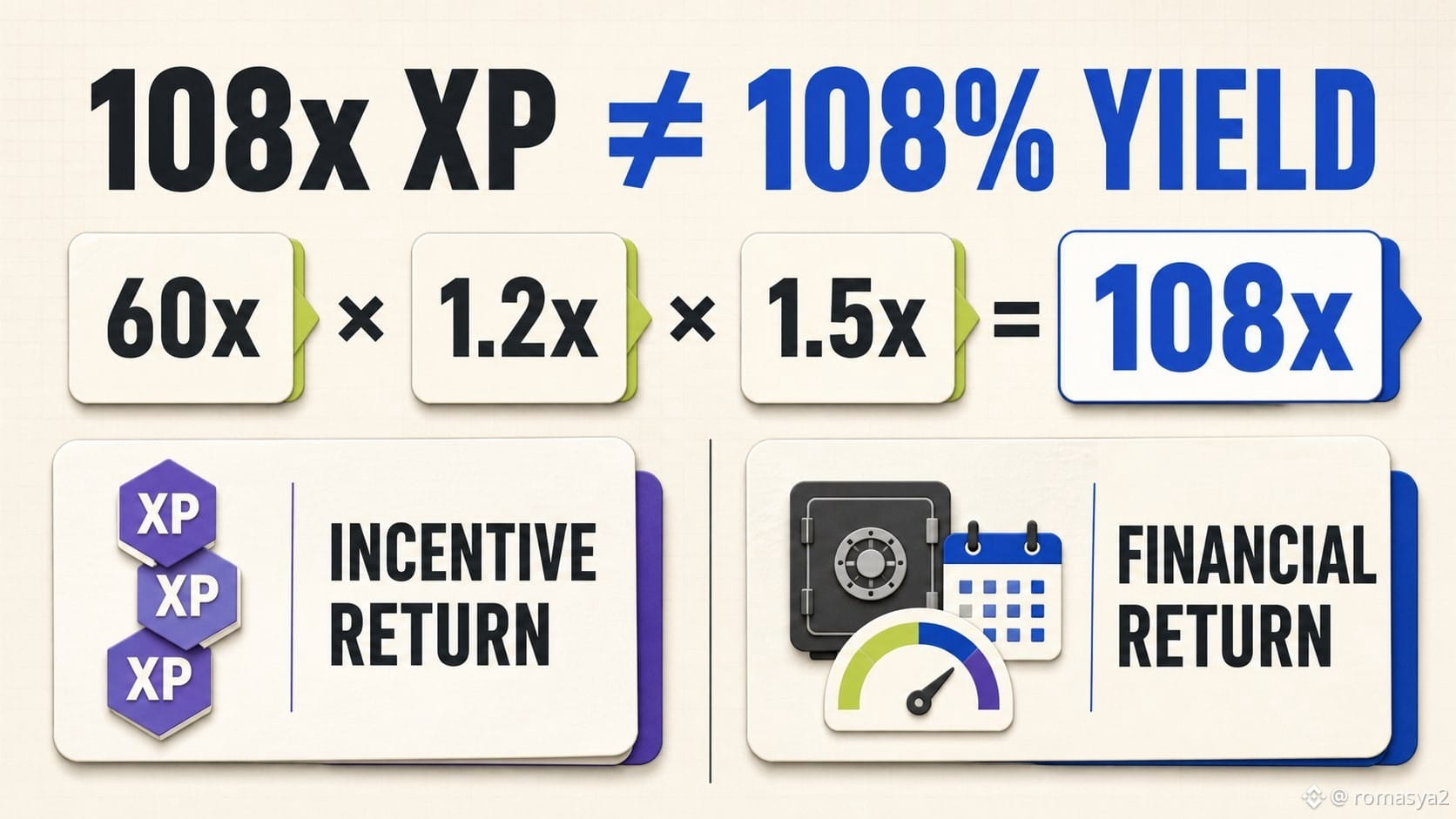
108x XP is not 108% yield.
A three-digit multiplier is visually powerful. That is exactly why I would separate it from the investment return before depositing.
TermMax Turbo Pad currently shows how a maximum 108x multiplier can be constructed:
60x base × 1.2x Early Bird × 1.5x for a 60-day duration = 108x.
This equation affects XP accumulation. It does not turn the vault APY into 108%, multiply the deposited capital by 108, or define a guaranteed dollar value for the points.
I would therefore keep two separate ledgers:
1. Financial return
Asset deposited, displayed APY, duration, fees, withdrawal conditions and protocol risk.
2. Incentive return
Base multiplier, temporary bonuses, duration multiplier, eligibility rules and accumulated XP.
My decision test is simple:
Would I still accept the vault’s asset, duration and financial return if I ignored the XP completely?
If yes, the points are an additional incentive.
If no, I may be taking real capital risk mainly for a reward whose eventual value is not expressed by the multiplier itself.
Yield and XP can both matter. They just should not be treated as the same unit.
Which ledger do you optimize first: financial return or points?
Sources checked: TermMax Turbo Pad — Smart Earn; TermMax Badge System documentation.
@TermMax #TermMax
A three-digit multiplier is visually powerful. That is exactly why I would separate it from the investment return before depositing.
TermMax Turbo Pad currently shows how a maximum 108x multiplier can be constructed:
60x base × 1.2x Early Bird × 1.5x for a 60-day duration = 108x.
This equation affects XP accumulation. It does not turn the vault APY into 108%, multiply the deposited capital by 108, or define a guaranteed dollar value for the points.
I would therefore keep two separate ledgers:
1. Financial return
Asset deposited, displayed APY, duration, fees, withdrawal conditions and protocol risk.
2. Incentive return
Base multiplier, temporary bonuses, duration multiplier, eligibility rules and accumulated XP.
My decision test is simple:
Would I still accept the vault’s asset, duration and financial return if I ignored the XP completely?
If yes, the points are an additional incentive.
If no, I may be taking real capital risk mainly for a reward whose eventual value is not expressed by the multiplier itself.
Yield and XP can both matter. They just should not be treated as the same unit.
Which ledger do you optimize first: financial return or points?
Sources checked: TermMax Turbo Pad — Smart Earn; TermMax Badge System documentation.
@TermMax #TermMax