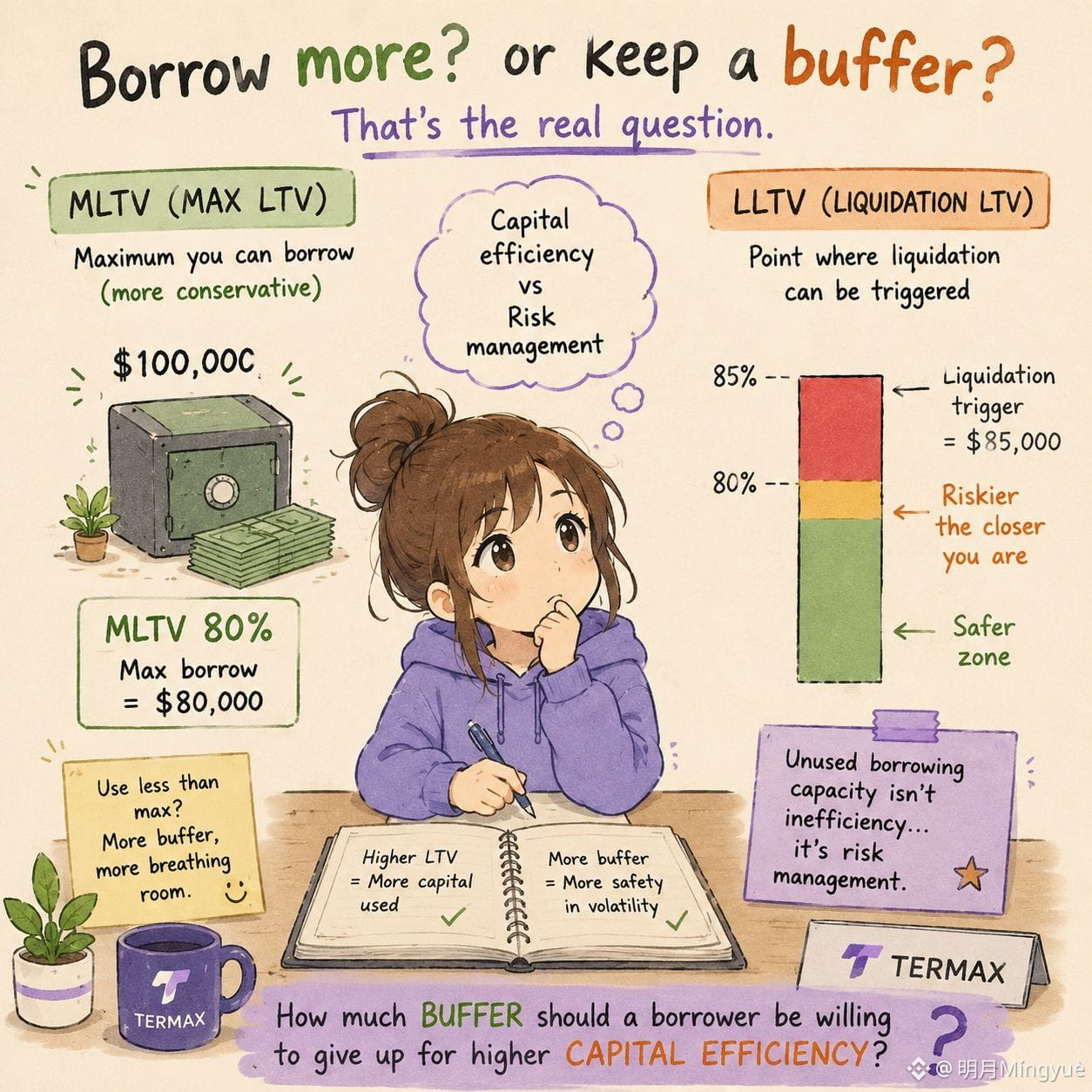
شيء لاحظته أثناء الاطلاع على نموذج الضمان الخاص بـ @TermMax : مقدار ما يمكنك اقتراضه ونقطة بدء التصفية ليسا الشيء نفسه.
لنفترض أن لديّ ضمانًا بقيمة 100 ألف دولار. فكرتي الأولى على الأرجح ستكون الاقتراض قريبًا قدر الإمكان من الحد الأقصى. لكن هذا يعني أيضًا ترك مساحة أقل إذا تحرك سعر الضمان ضدي.
يفصل TermMax بين هاتين النقطتين عبر MLTV وLLTV. MLTV هو حد الاقتراض الأكثر تحفظًا، بينما LLTV هي النقطة التي يمكن عندها تفعيل التصفية. ما أجده مثيرًا للاهتمام هو الفجوة بينهما.
تلك الفجوة هي في الأساس هامش أمان. أنا لا أستخدم كل دولار ممكن من سعة الاقتراض فقط لأن ضماني يسمح بذلك تقنيًا. وهذا جعلني أفكر بشكل مختلف حول “كفاءة رأس المال”.
عادةً ما نعتبر ارتفاع LTV أفضل لأن المزيد من رأس المال يتم توظيفه.
لكن إذا كان استخدام تلك السعة الإضافية يترك الصفقة أقرب بكثير إلى التصفية، فهل يكون ذلك أكثر كفاءة فعلًا؟
ربما توجد نقطة تكون فيها سعة الاقتراض غير المستخدمة ليست عدم كفاءة. بل هي إدارة مخاطر.
كم هامش الأمان الذي يجب أن يكون المُقترض مستعدًا للتخلي عنه فعليًا مقابل كفاءة أعلى في رأس المال؟
#TermMax @TermMax
لنفترض أن لديّ ضمانًا بقيمة 100 ألف دولار. فكرتي الأولى على الأرجح ستكون الاقتراض قريبًا قدر الإمكان من الحد الأقصى. لكن هذا يعني أيضًا ترك مساحة أقل إذا تحرك سعر الضمان ضدي.
يفصل TermMax بين هاتين النقطتين عبر MLTV وLLTV. MLTV هو حد الاقتراض الأكثر تحفظًا، بينما LLTV هي النقطة التي يمكن عندها تفعيل التصفية. ما أجده مثيرًا للاهتمام هو الفجوة بينهما.
تلك الفجوة هي في الأساس هامش أمان. أنا لا أستخدم كل دولار ممكن من سعة الاقتراض فقط لأن ضماني يسمح بذلك تقنيًا. وهذا جعلني أفكر بشكل مختلف حول “كفاءة رأس المال”.
عادةً ما نعتبر ارتفاع LTV أفضل لأن المزيد من رأس المال يتم توظيفه.
لكن إذا كان استخدام تلك السعة الإضافية يترك الصفقة أقرب بكثير إلى التصفية، فهل يكون ذلك أكثر كفاءة فعلًا؟
ربما توجد نقطة تكون فيها سعة الاقتراض غير المستخدمة ليست عدم كفاءة. بل هي إدارة مخاطر.
كم هامش الأمان الذي يجب أن يكون المُقترض مستعدًا للتخلي عنه فعليًا مقابل كفاءة أعلى في رأس المال؟
#TermMax @TermMax