هناك نمط أستمر في ملاحظته في مشاريع ترميز الأصول. يعرضون لك عقد الرمز، ودالة التحويل، وربما قائمة بيضاء. ثم يسمّون ذلك أصلًا مُنظَّمًا. لكنه ليس كذلك.
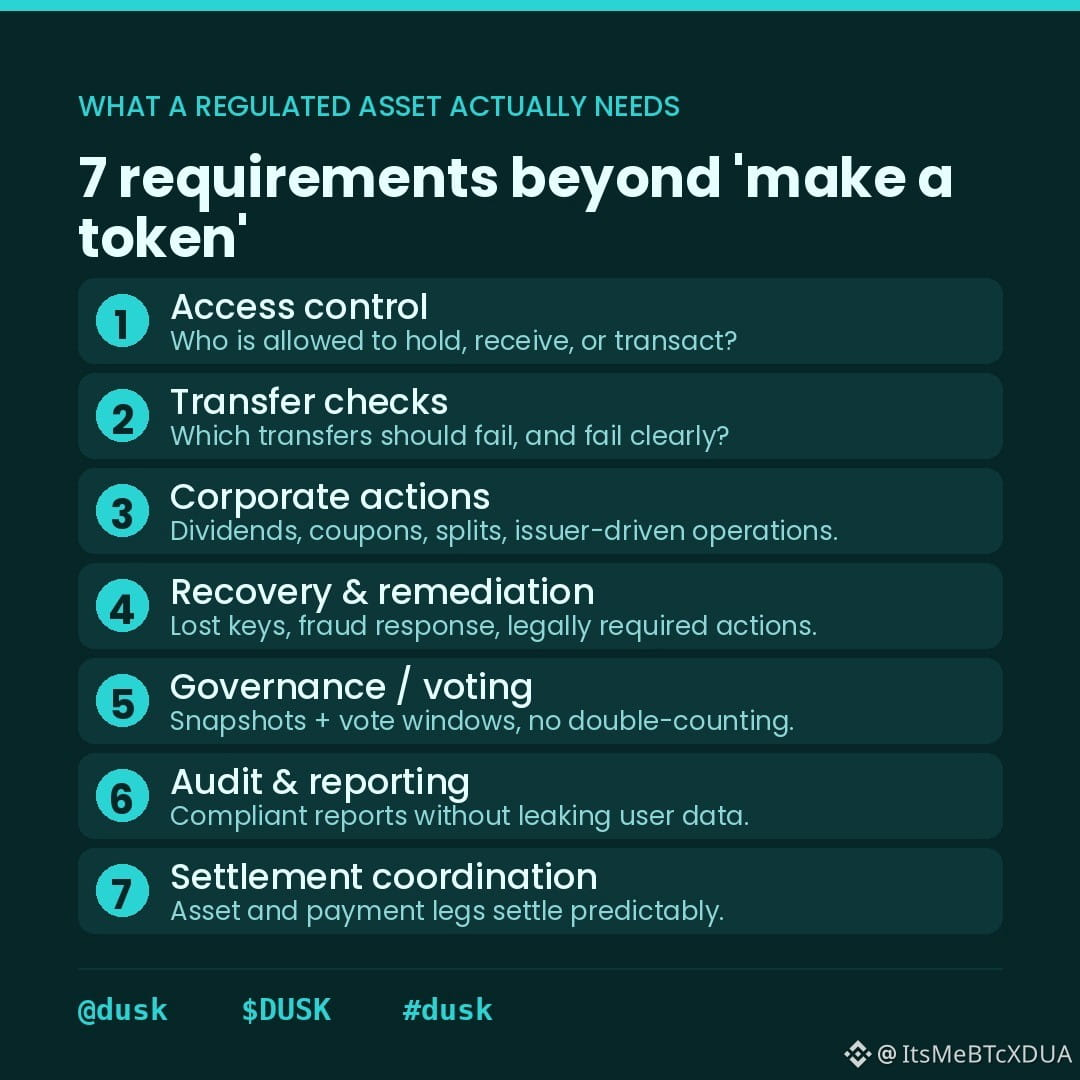
عند مراجعة قائمة المتطلبات الفعلية للأصول المُنظَّمة، توجد سبع نقاط متميزة، والتحويل مجرد واحدة منها.
التحكم في الوصول: ليس فقط "هل يمكن لهذا المحفظة أن تُجري تحويلًا"، بل من هو المؤهل فعلًا لامتلاك هذا الأصل من الأساس، وهل يمكن أن يتغير ذلك مع مرور الوقت عندما تتبدّل اللوائح أو تتغير حالة المستثمر.
فحوصات التحويل: التحويلات التي ينبغي أن تفشل يجب أن تفشل بوضوح وبسبب محدد، لا أن تفشل بصمت أو برسالة خطأ عامة. كما يجب أن توجد طريقة لمحاكاة عملية تحويل قبل تقديمها.
الإجراءات المؤسسية: قد تدفع الورقة المالية توزيعات أرباح، وتكون لها كوبونات، ويمكن تقسيمها أو دمجها. يحتاج المُصدر إلى آليات على السلسلة لكل ذلك، وليس مجرد رمز ثابت.
الاسترداد والمعالجة: قد تُفقد المفاتيح، ويحدث الاحتيال، وقد تفرض الجهات التنظيمية عمليات تحويل قسرية. يجب أن توجد مسار لذلك، وإلا فستتحول السجلات على السلسلة إلى مشكلة قانونية.
الحوكمة والتصويت: تتطلب تصويتات المساهمين لقطات (Snapshots) ونوافذ يتم فيها احتساب من كان يملك ماذا، في وقت محدد، دون السماح بحساب مزدوج.
التدقيق والإبلاغ: يحتاج المشرفون والمدققون إلى الوصول إلى المعلومات التي يحق لهم قانونًا الاطلاع عليها، دون أن يؤدي ذلك إلى تسريب البيانات إلى أي شخص آخر.
تنسيق التسوية: يجب أن تُسَوَّى جهة الأصل وُجهة الدفع بشكل متوقع وبالاقتران معًا، لا بشكل مستقل.
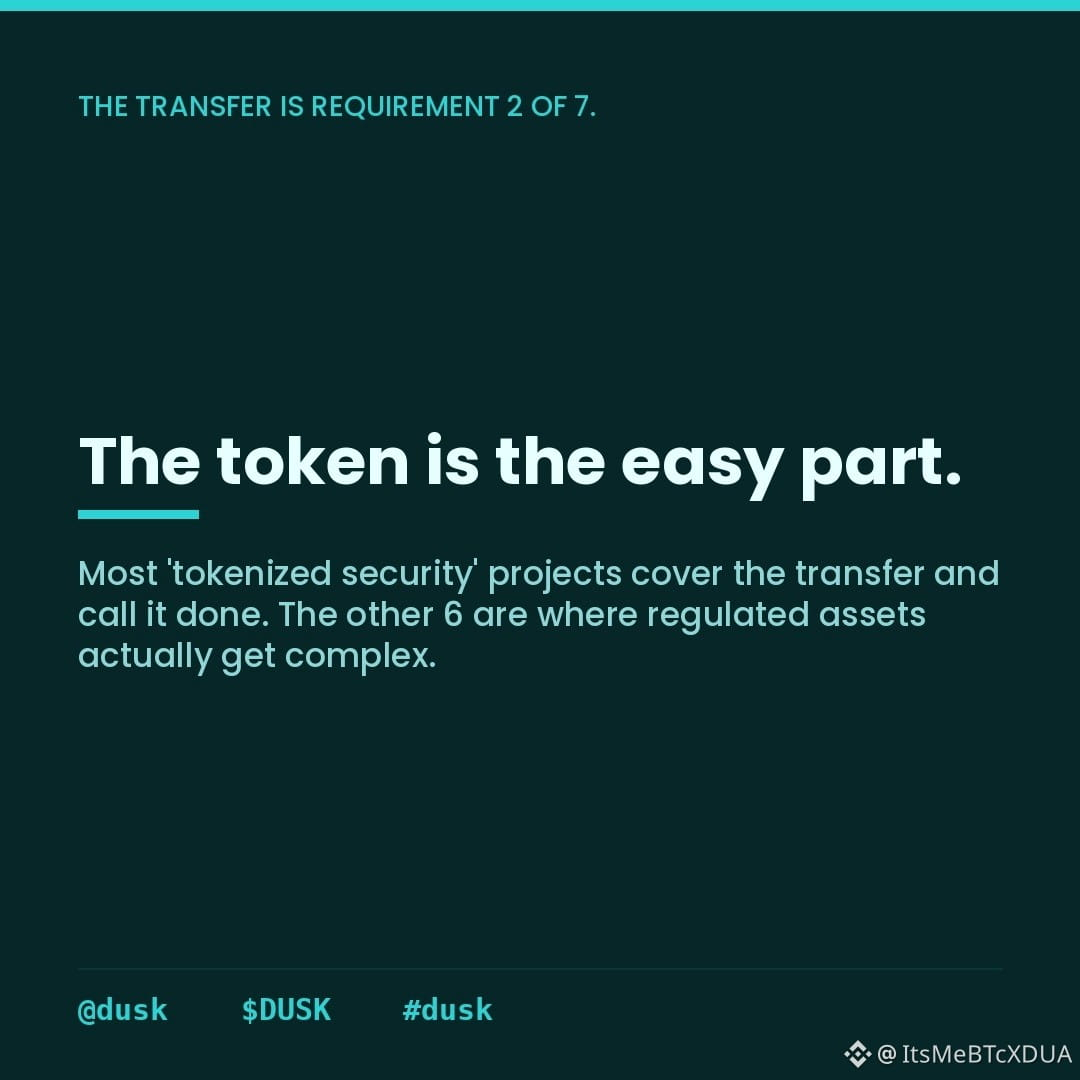
التحويل هو المتطلب رقم اثنين من سبعة. تُنفّذ معظم مشاريع الترميز ذلك وتصف النتيجة على أنها ورقة مالية. ربما يعتمد ما إذا كنت تعتقد أن ذلك كافٍ على ما إذا كنت تعمل في التمويل أم في عالم العملات المشفرة.
أيّ واحد من هذه السبعة تعتقد أنه الأصعب في التنفيذ بشكل صحيح على أي سلسلة، وليس فقط Dusk؟ وأيّ واحد تعتقد أنه الأكثر تعرضًا للتجاهل في كثير من الأحيان؟ @Dusk
$DUSK #dusk
عند مراجعة قائمة المتطلبات الفعلية للأصول المُنظَّمة، توجد سبع نقاط متميزة، والتحويل مجرد واحدة منها.
التحكم في الوصول: ليس فقط "هل يمكن لهذا المحفظة أن تُجري تحويلًا"، بل من هو المؤهل فعلًا لامتلاك هذا الأصل من الأساس، وهل يمكن أن يتغير ذلك مع مرور الوقت عندما تتبدّل اللوائح أو تتغير حالة المستثمر.
فحوصات التحويل: التحويلات التي ينبغي أن تفشل يجب أن تفشل بوضوح وبسبب محدد، لا أن تفشل بصمت أو برسالة خطأ عامة. كما يجب أن توجد طريقة لمحاكاة عملية تحويل قبل تقديمها.
الإجراءات المؤسسية: قد تدفع الورقة المالية توزيعات أرباح، وتكون لها كوبونات، ويمكن تقسيمها أو دمجها. يحتاج المُصدر إلى آليات على السلسلة لكل ذلك، وليس مجرد رمز ثابت.
الاسترداد والمعالجة: قد تُفقد المفاتيح، ويحدث الاحتيال، وقد تفرض الجهات التنظيمية عمليات تحويل قسرية. يجب أن توجد مسار لذلك، وإلا فستتحول السجلات على السلسلة إلى مشكلة قانونية.
الحوكمة والتصويت: تتطلب تصويتات المساهمين لقطات (Snapshots) ونوافذ يتم فيها احتساب من كان يملك ماذا، في وقت محدد، دون السماح بحساب مزدوج.
التدقيق والإبلاغ: يحتاج المشرفون والمدققون إلى الوصول إلى المعلومات التي يحق لهم قانونًا الاطلاع عليها، دون أن يؤدي ذلك إلى تسريب البيانات إلى أي شخص آخر.
تنسيق التسوية: يجب أن تُسَوَّى جهة الأصل وُجهة الدفع بشكل متوقع وبالاقتران معًا، لا بشكل مستقل.
التحويل هو المتطلب رقم اثنين من سبعة. تُنفّذ معظم مشاريع الترميز ذلك وتصف النتيجة على أنها ورقة مالية. ربما يعتمد ما إذا كنت تعتقد أن ذلك كافٍ على ما إذا كنت تعمل في التمويل أم في عالم العملات المشفرة.
أيّ واحد من هذه السبعة تعتقد أنه الأصعب في التنفيذ بشكل صحيح على أي سلسلة، وليس فقط Dusk؟ وأيّ واحد تعتقد أنه الأكثر تعرضًا للتجاهل في كثير من الأحيان؟ @Dusk
$DUSK #dusk