Went looking for where TMX holders actually vote on something. Could not find it.
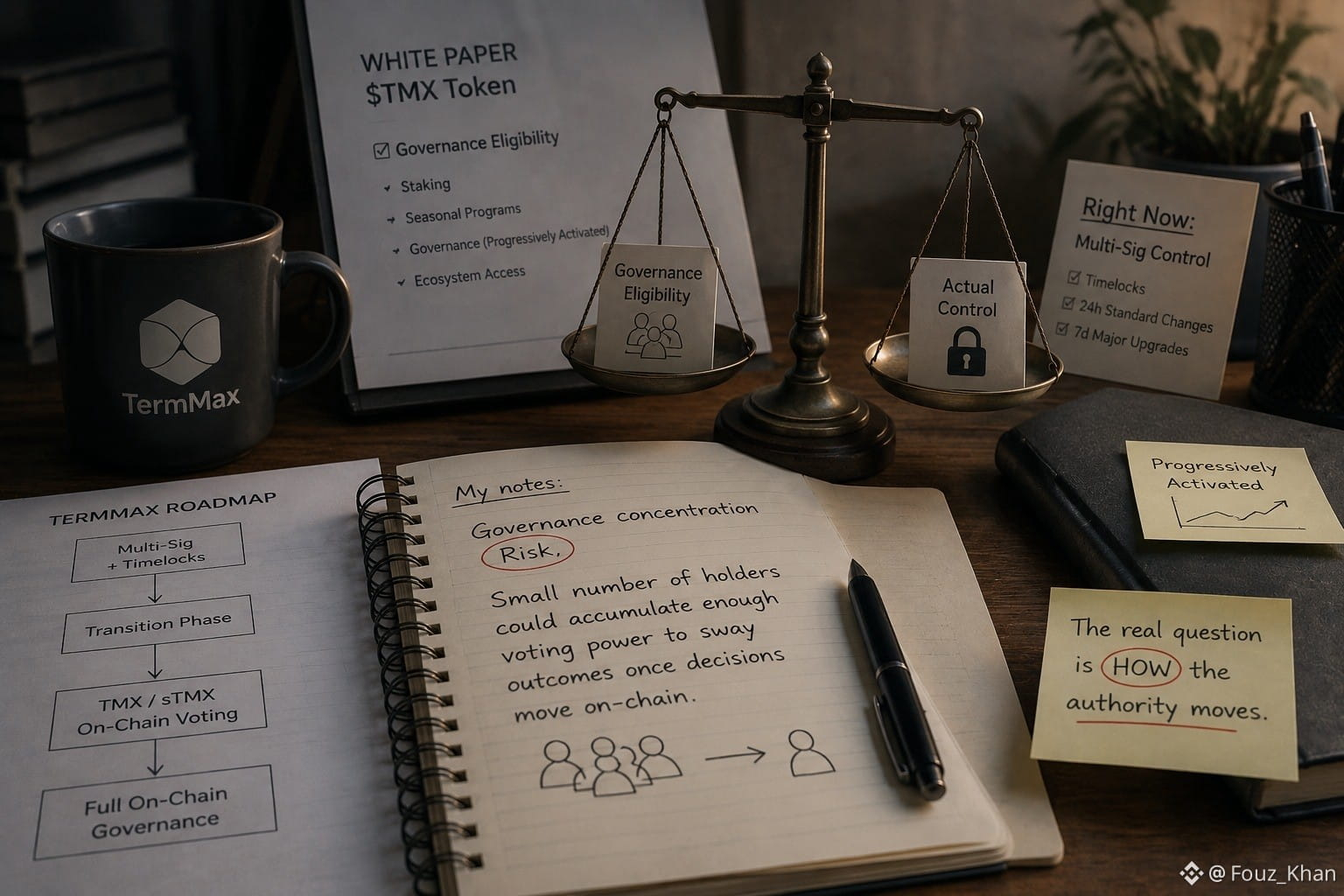
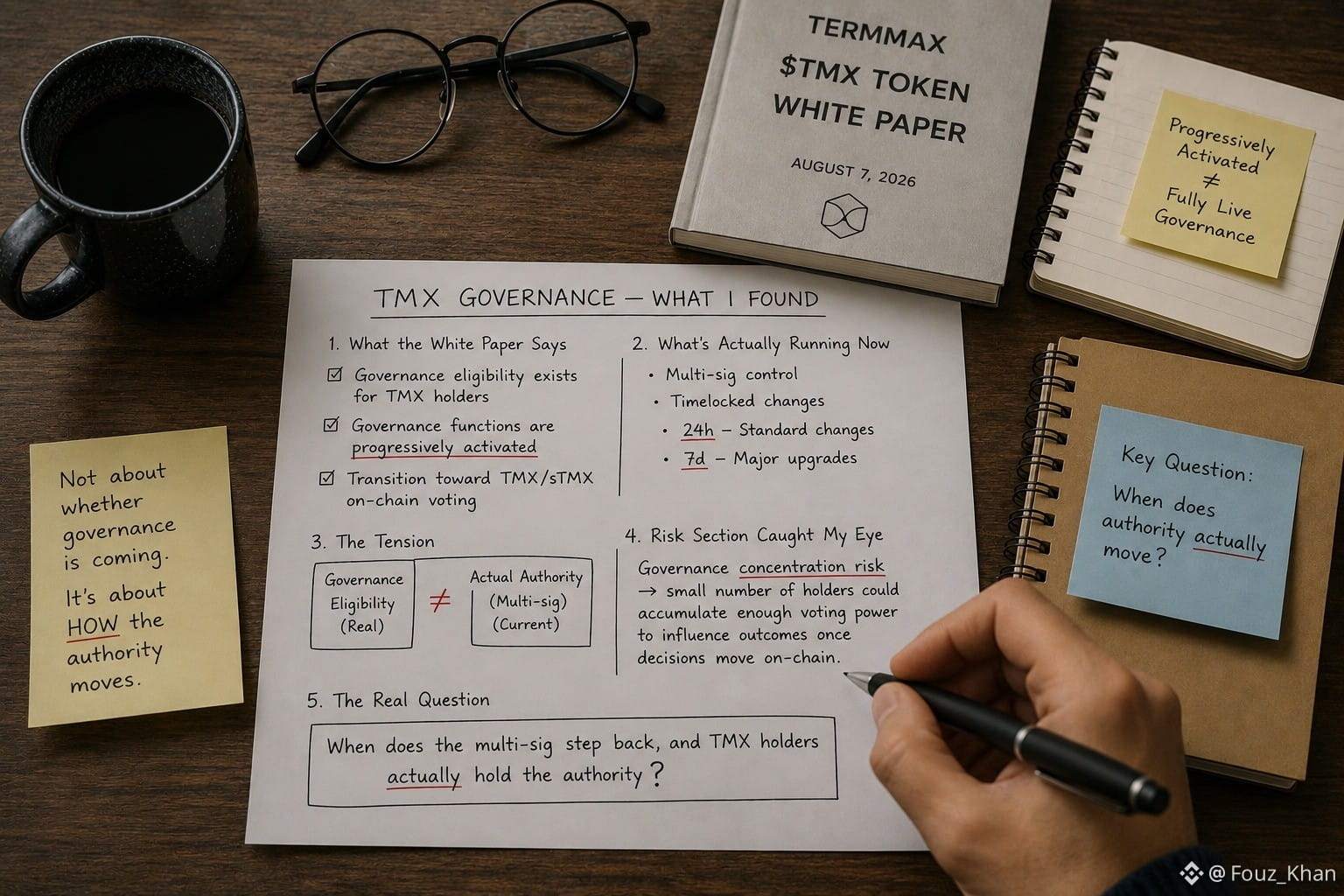
Not because it is hidden. The white paper says governance eligibility exists, that part's real. What's actually running the protocol right now is a multi-sig, timelocked, 24 hours for standard changes, 7 days for major upgrades. Full on-chain governance is described as something the protocol transitions toward, not something it currently has.
So "eligibility" is doing a lot of work in that phrase. You are eligible for something that is still being run through the multi-sig.
That is not the white paper hiding anything. It says this outright, current parameters get modified through multi-sig with timelocks during early development, moving to TMX/sTMX on-chain voting as the protocol matures. It is a stated roadmap, not a gap I found by accident.
What actually stopped me was reading further into the risk section. Separately from the governance description, TermMax lists governance concentration as its own risk category, a small number of holders accumulating enough voting weight to sway outcomes once decisions do move on-chain. That is a strange thing to plan around for a system that is not live yet. It reads like they are already thinking about what happens on the other side of the handoff, not what's happening under the current multi-sig.
Reading those two sections back to back, I stopped caring whether governance is actually coming. The white paper already says it is. What I actually want to know is how the authority moves, whether the multi-sig scales back on the stated timeline, or whether "progressively activated" ends up being the permanent phase everyone stopped checking on.
Would I count this as decentralized once there is a vote that actually changes something, or only once the multi-sig has visibly given up the authority it holds today?
$TMX #TermMax @TermMax
Not because it is hidden. The white paper says governance eligibility exists, that part's real. What's actually running the protocol right now is a multi-sig, timelocked, 24 hours for standard changes, 7 days for major upgrades. Full on-chain governance is described as something the protocol transitions toward, not something it currently has.
So "eligibility" is doing a lot of work in that phrase. You are eligible for something that is still being run through the multi-sig.
That is not the white paper hiding anything. It says this outright, current parameters get modified through multi-sig with timelocks during early development, moving to TMX/sTMX on-chain voting as the protocol matures. It is a stated roadmap, not a gap I found by accident.
What actually stopped me was reading further into the risk section. Separately from the governance description, TermMax lists governance concentration as its own risk category, a small number of holders accumulating enough voting weight to sway outcomes once decisions do move on-chain. That is a strange thing to plan around for a system that is not live yet. It reads like they are already thinking about what happens on the other side of the handoff, not what's happening under the current multi-sig.
Reading those two sections back to back, I stopped caring whether governance is actually coming. The white paper already says it is. What I actually want to know is how the authority moves, whether the multi-sig scales back on the stated timeline, or whether "progressively activated" ends up being the permanent phase everyone stopped checking on.
Would I count this as decentralized once there is a vote that actually changes something, or only once the multi-sig has visibly given up the authority it holds today?
$TMX #TermMax @TermMax