قضيت وقتًا أطول اليوم في توثيق «Dusk» الخاص بها، وأعتقد أنني وجدت قصة RWA الأكثر إثارة التي كانت تختبئ تحت العنوان.
جزء ترميز رمز SME في 15 أغسطس يوضح بشكل غير معتاد ما الذي لا يستبدله الترميز.
يبقى الموثِّق.
يبقى الموعد/المنصة الخاضعة للتنظيم.
يبقى المشغّل المسؤول.
يبقى اكتشاف السعر.
هذا يهم.
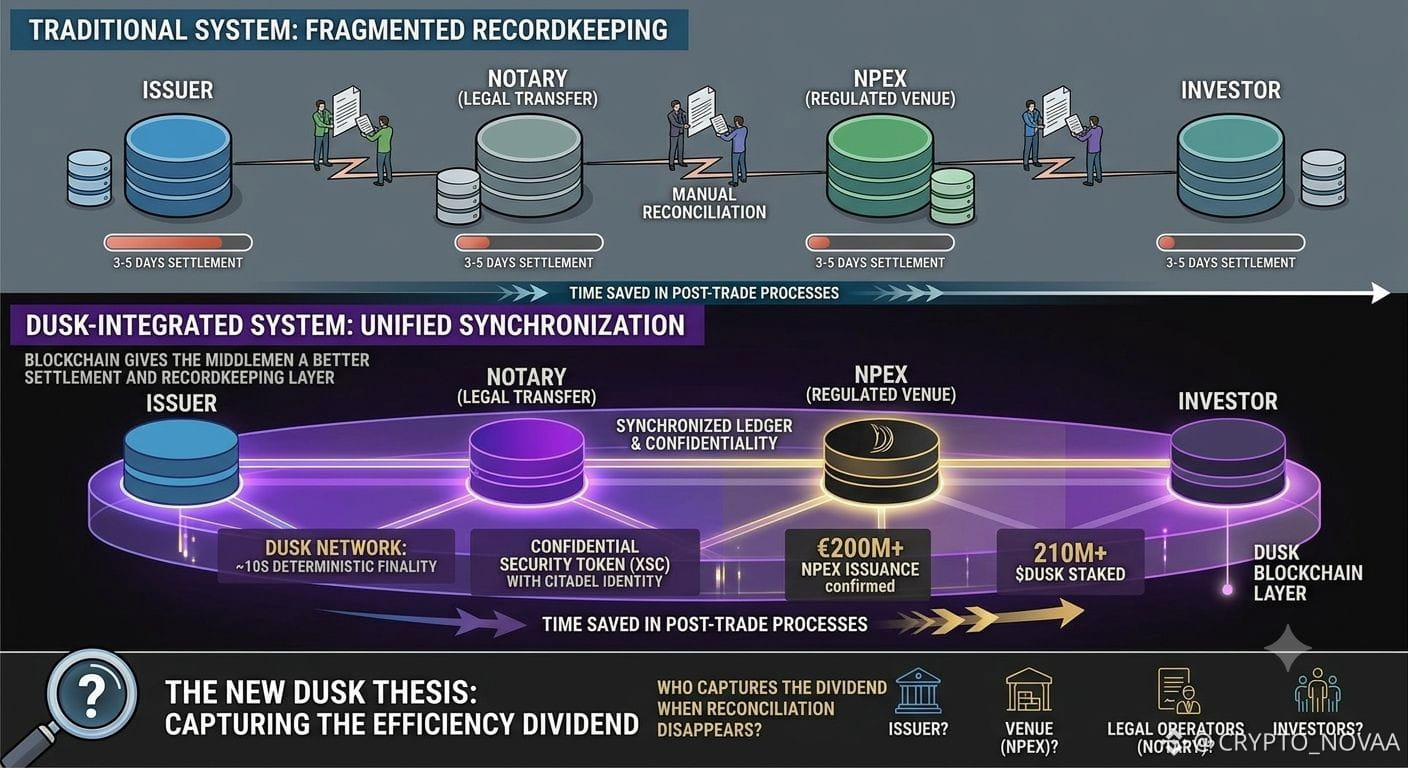
لأن «Dusk» قد تمتلك أرقامًا تقنية مذهلة — 210M+ $DUSK staked، ~10 ثوانٍ من الحسم الحتمي، و€200M+ في إصدار NPEX المؤكَّد — بينما لا تزال عملية الملكية القانونية الفعلية تعمل عبر البنية التحتية الهولندية الراسخة.
لذا ربما ليست القصة هي:
«البلوكشين يزيل الوسطاء.»
ربما هي:
«البلوكشين يمنح الوسطاء طبقة تسوية وتسجيل أفضل.»
وبصراحة، قد تكون حالة استخدام مؤسسية أكثر واقعية بكثير.
إذا بقيت NPEX هي المنصة الخاضعة للتنظيم وبقي الموثِّق مسؤولًا عن نقل الملكية قانونيًا، فإن عرض «Dusk» يصبح أقل تركيزًا على استبدال النظام القائم، وأكثر على جعل النظام الكامن تحته أسرع وأكثر تزامنًا وأسهل في المواءمة/المطابقة.
هذا يغيّر السؤال الذي أطرحه حول «Dusk».
ليس «هل يمكن للتجزئة/الترميز إلغاء الوسطاء؟»
بل:
من الذي يجني أرباح الكفاءة عندما لا يعود الوسطاء بحاجة إلى المواءمة قدرًا كبيرًا؟
المُصدر؟
المنصة؟
المشغّلون القانونيون؟
أم في النهاية المستثمرون؟
يبدو أن هذه هي أطروحة «Dusk» الأكثر إثارة للاهتمام والتي تستحق البحث.
@Dusk #Dusk.
جزء ترميز رمز SME في 15 أغسطس يوضح بشكل غير معتاد ما الذي لا يستبدله الترميز.
يبقى الموثِّق.
يبقى الموعد/المنصة الخاضعة للتنظيم.
يبقى المشغّل المسؤول.
يبقى اكتشاف السعر.
هذا يهم.
لأن «Dusk» قد تمتلك أرقامًا تقنية مذهلة — 210M+ $DUSK staked، ~10 ثوانٍ من الحسم الحتمي، و€200M+ في إصدار NPEX المؤكَّد — بينما لا تزال عملية الملكية القانونية الفعلية تعمل عبر البنية التحتية الهولندية الراسخة.
لذا ربما ليست القصة هي:
«البلوكشين يزيل الوسطاء.»
ربما هي:
«البلوكشين يمنح الوسطاء طبقة تسوية وتسجيل أفضل.»
وبصراحة، قد تكون حالة استخدام مؤسسية أكثر واقعية بكثير.
إذا بقيت NPEX هي المنصة الخاضعة للتنظيم وبقي الموثِّق مسؤولًا عن نقل الملكية قانونيًا، فإن عرض «Dusk» يصبح أقل تركيزًا على استبدال النظام القائم، وأكثر على جعل النظام الكامن تحته أسرع وأكثر تزامنًا وأسهل في المواءمة/المطابقة.
هذا يغيّر السؤال الذي أطرحه حول «Dusk».
ليس «هل يمكن للتجزئة/الترميز إلغاء الوسطاء؟»
بل:
من الذي يجني أرباح الكفاءة عندما لا يعود الوسطاء بحاجة إلى المواءمة قدرًا كبيرًا؟
المُصدر؟
المنصة؟
المشغّلون القانونيون؟
أم في النهاية المستثمرون؟
يبدو أن هذه هي أطروحة «Dusk» الأكثر إثارة للاهتمام والتي تستحق البحث.
@Dusk #Dusk.