ماذا ينبغي لسلسلة بلوكتشين مالية أن تحتفظ به بشكل خاص فعلاً؟
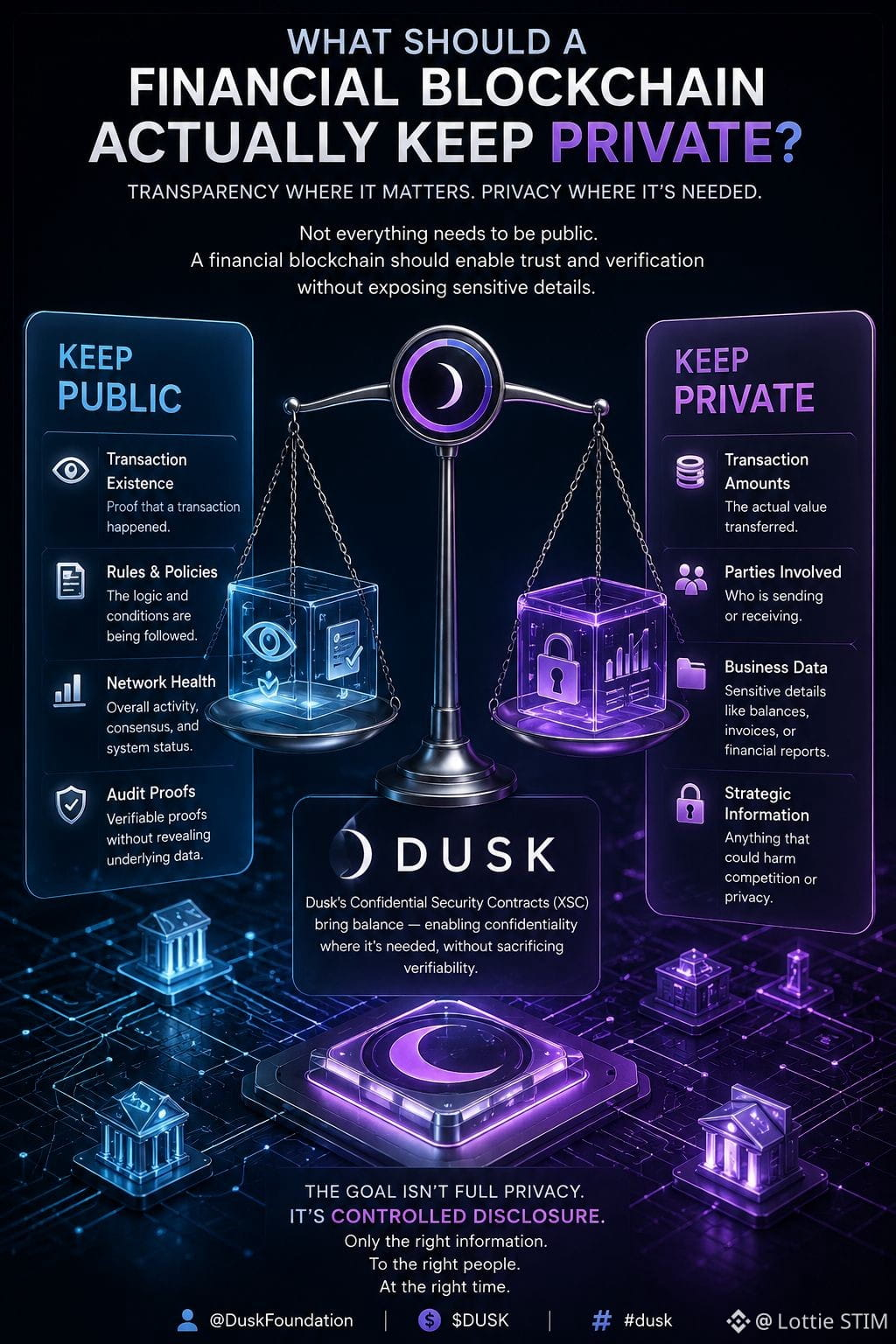
لقد فكرت في هذا الأمر أكثر منذ النظر إلى Dusk، ولا أعتقد أن الإجابة هي ببساطة «اجعل كل شيء خاصًا». يحتاج القطاع المالي إلى الشفافية. يجب أن يتمكن الناس من التحقق من أن المعاملات والقواعد يجري اتباعها. لكن هذا لا يعني أن كل جزء من المعلومات المالية يجب أن يكون مرئيًا للجميع.
خذ شركة تقوم بمدفوعات كبيرة. قد يكون من المهم إثبات أن المعاملة شرعية، لكن لماذا ينبغي للمنافسين تلقائيًا أن يتمكنوا من رؤية تفاصيل حساسة عن أعمال الشركة؟
لهذا أجد Dusk فكرة مثيرة للاهتمام. فهي طبقة-1 تركز على التطبيقات المالية، وتدعم معيار Confidential Security Contract (XSC) العقود الذكية السرّية.
ما يعجبني في هذه الفكرة هو التوازن. يمكنك أن يكون لديك معلومات يجب أن تكون قابلة للتحقق مع إبقاء تفاصيل أخرى بعيدًا عن التعرض غير الضروري.
ما زلت أبحث في الجانب التقني، لذا لا أزعم أن هذه مشكلة بسيطة. لكنني أعتقد أن المبدأ الأساسي منطقي: ليس كل شيء يحتاج إلى أن يكون عامًا فقط لأن حدوثه يتم على بلوكتشين.
بالنسبة لي، السؤال الأفضل ليس «عام أم خاص؟»
بل: ما الذي يجب أن يكون مرئيًا فعلاً، وما الذي ينبغي أن يبقى سريًا؟
إذا كنت تبني تطبيقًا ماليًا على بلوكتشين، فما المعلومات التي ستجعلها عامة؟
#dusk $DUSK @Dusk
لقد فكرت في هذا الأمر أكثر منذ النظر إلى Dusk، ولا أعتقد أن الإجابة هي ببساطة «اجعل كل شيء خاصًا». يحتاج القطاع المالي إلى الشفافية. يجب أن يتمكن الناس من التحقق من أن المعاملات والقواعد يجري اتباعها. لكن هذا لا يعني أن كل جزء من المعلومات المالية يجب أن يكون مرئيًا للجميع.
خذ شركة تقوم بمدفوعات كبيرة. قد يكون من المهم إثبات أن المعاملة شرعية، لكن لماذا ينبغي للمنافسين تلقائيًا أن يتمكنوا من رؤية تفاصيل حساسة عن أعمال الشركة؟
لهذا أجد Dusk فكرة مثيرة للاهتمام. فهي طبقة-1 تركز على التطبيقات المالية، وتدعم معيار Confidential Security Contract (XSC) العقود الذكية السرّية.
ما يعجبني في هذه الفكرة هو التوازن. يمكنك أن يكون لديك معلومات يجب أن تكون قابلة للتحقق مع إبقاء تفاصيل أخرى بعيدًا عن التعرض غير الضروري.
ما زلت أبحث في الجانب التقني، لذا لا أزعم أن هذه مشكلة بسيطة. لكنني أعتقد أن المبدأ الأساسي منطقي: ليس كل شيء يحتاج إلى أن يكون عامًا فقط لأن حدوثه يتم على بلوكتشين.
بالنسبة لي، السؤال الأفضل ليس «عام أم خاص؟»
بل: ما الذي يجب أن يكون مرئيًا فعلاً، وما الذي ينبغي أن يبقى سريًا؟
إذا كنت تبني تطبيقًا ماليًا على بلوكتشين، فما المعلومات التي ستجعلها عامة؟
#dusk $DUSK @Dusk