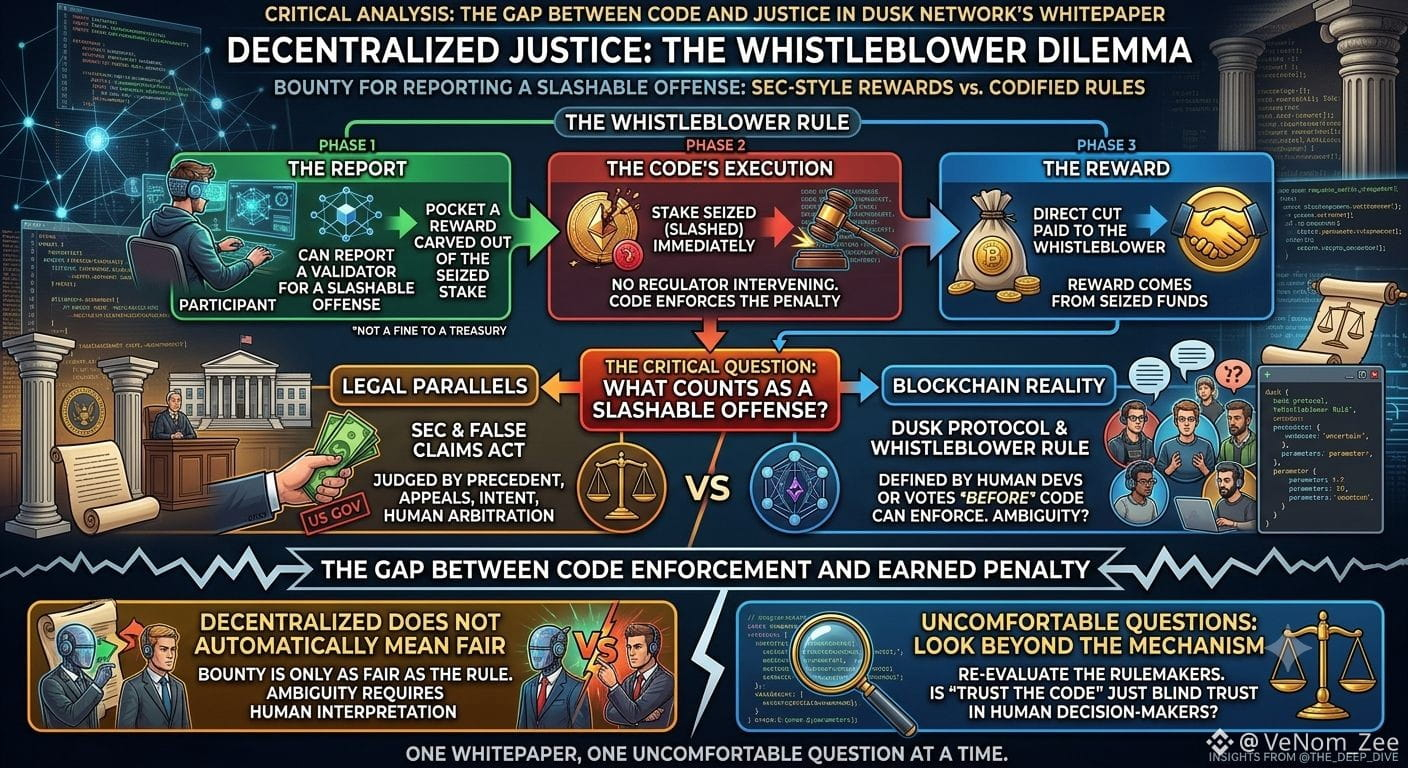
يوجد في ورقة Dusk Network البيضاء سطر أعود إليه مرارًا: يمكن لأي مشارك الإبلاغ عن مُتحقق (validator) لارتكاب مخالفة قابلة للـ slashing ثم اقتناص مكافأة مُقتطعة من الرصيد المُصادر. ليست غرامة تختفي في بعض الخزينة. إنها حصة تُدفع مباشرة إلى من أمسك بها.
تلك التفاصيل تبدو أقرب إلى القانون منها إلى الكود. الجهة SEC تدفع لمن يبلغ عن الاحتيال. يتيح قانون False Claims Act للمواطنين العاديين رفع دعوى نيابةً عن الحكومة والاحتفاظ بنسبة مما يتم استرداده. Dusk يشغّل نسخة من الفكرة نفسها، لكن عملية الإبلاغ وصرف المكافأة تتم كلاهما داخل البروتوكول، دون وجود جهة تنظيمية في المنتصف تقرر ما إذا كانت المطالبة تحمل فعلاً.
لكن هذا التشبيه لا يذهب بعيدًا. الورقة لا تذكر فعليًا—بعبارات واضحة—ما الذي يُعد مخالفة قابلة للـ slashing. في قاعة محكمة، مثل هذا الغموض يُحسم عبر السوابق القضائية والاستئنافات، وقاضي يوازن بين النية. على بلوكشين، ما يزال يتعين على شخص ما كتابة تعريف هذه المخالفة قبل أن يستطيع أي كود فرضها، سواء كان ذلك فريق تطوير صغير أو تصويتًا بين المُتحققين (validators). المكافأة مقابل الإبلاغ لا تكون عادلة إلا بقدر القاعدة التي بُنيت عليها.
يمكن للكود تنفيذ عقوبة فور تفعيلها. لكنه لا يزال لا يستطيع أن يخبرك ما إذا كانت تلك العقوبة قد استُحقت.
تلك الفجوة بين ما يفرضه الكود وبين ما يُحسب فعليًا عدالةً تستحق التوقف عندها قبل افتراض أن اللامركزية تعني تلقائيًا إنصافًا. لست أرفض الفكرة. فقط أعتقد أن الآلية تستحق نظرة ثانية قبل أن تُمنح الثقة.
ما زلت أعمل عليها—ورقة بيضاء تلو الأخرى—وسؤالًا غير مريحًا في كل مرة.
@Dusk #dusk $DUSK
تلك التفاصيل تبدو أقرب إلى القانون منها إلى الكود. الجهة SEC تدفع لمن يبلغ عن الاحتيال. يتيح قانون False Claims Act للمواطنين العاديين رفع دعوى نيابةً عن الحكومة والاحتفاظ بنسبة مما يتم استرداده. Dusk يشغّل نسخة من الفكرة نفسها، لكن عملية الإبلاغ وصرف المكافأة تتم كلاهما داخل البروتوكول، دون وجود جهة تنظيمية في المنتصف تقرر ما إذا كانت المطالبة تحمل فعلاً.
لكن هذا التشبيه لا يذهب بعيدًا. الورقة لا تذكر فعليًا—بعبارات واضحة—ما الذي يُعد مخالفة قابلة للـ slashing. في قاعة محكمة، مثل هذا الغموض يُحسم عبر السوابق القضائية والاستئنافات، وقاضي يوازن بين النية. على بلوكشين، ما يزال يتعين على شخص ما كتابة تعريف هذه المخالفة قبل أن يستطيع أي كود فرضها، سواء كان ذلك فريق تطوير صغير أو تصويتًا بين المُتحققين (validators). المكافأة مقابل الإبلاغ لا تكون عادلة إلا بقدر القاعدة التي بُنيت عليها.
يمكن للكود تنفيذ عقوبة فور تفعيلها. لكنه لا يزال لا يستطيع أن يخبرك ما إذا كانت تلك العقوبة قد استُحقت.
تلك الفجوة بين ما يفرضه الكود وبين ما يُحسب فعليًا عدالةً تستحق التوقف عندها قبل افتراض أن اللامركزية تعني تلقائيًا إنصافًا. لست أرفض الفكرة. فقط أعتقد أن الآلية تستحق نظرة ثانية قبل أن تُمنح الثقة.
ما زلت أعمل عليها—ورقة بيضاء تلو الأخرى—وسؤالًا غير مريحًا في كل مرة.
@Dusk #dusk $DUSK