أعود دائمًا إلى فكرة Dusk بشأن الخصوصية القابلة للبرمجة للأسواق الخاضعة للتنظيم، خصوصًا ما يحدث منها داخل Dusk Trade.
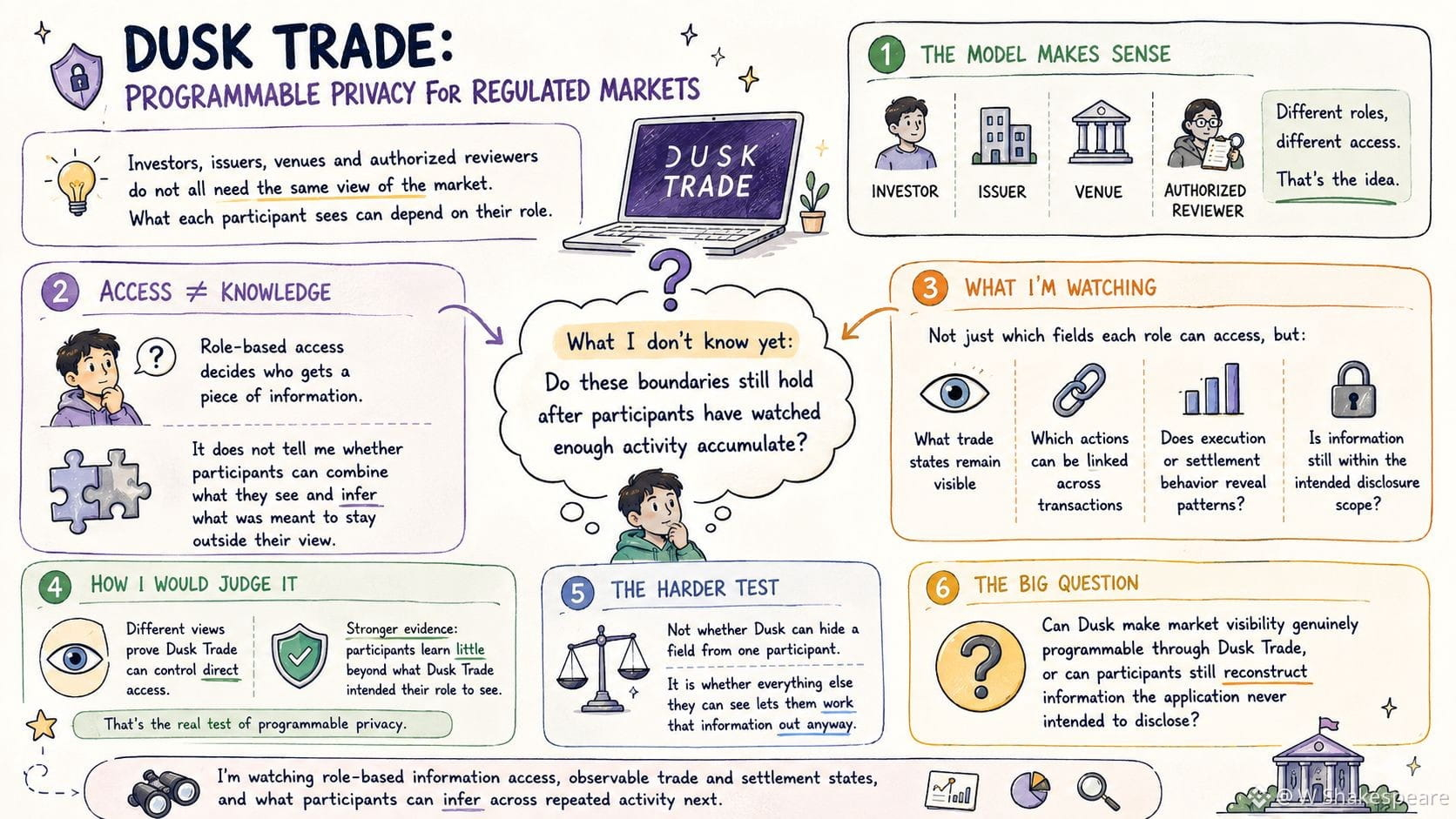
يبدو النموذج منطقيًا. فالمستثمرون والجهات المُصدِرة والمنصات والمراجعون المصرح لهم لا يحتاجون جميعًا إلى رؤية واحدة للسوق، لذلك يمكن أن يعتمد ما يراه كل مشارك على دوره.
لكن التحكم فيما يُعرض لشخص ما مباشرةً ليس هو الشيء نفسه مثل التحكم فيما يمكنه في النهاية أن يتعلمه.
يخبرني الوصول وفق الدور أن Dusk يمكنها تحديد من يحصل على جزء معيّن من المعلومات. لكنه لا يخبرني ما إذا كان بإمكان المشاركين تجميع ما يرونه من نشاط واستنتاج شيء كان المقصود أن يبقى خارج نطاق رؤيتهم.
ما لا أعرفه بعد هو ما إذا كانت هذه الحدود ما تزال قائمة بعد أن يشاهد المشاركون نشاطًا كافيًا يتراكم.
لذلك ليست الإشارات التي تستحق المراقبة مجرد تحديد الحقول التي يمكن لكل دور الوصول إليها، بل أيضًا ما الذي يظل ظاهرًا من حالات الصفقة، وما إذا كانت الإجراءات يمكن ربطها عبر المعاملات، وما إذا كان سلوك التنفيذ أو التسوية يكشف أنماطًا تتجاوز نطاق الإفصاح المقصود.
إتاحة آراء مختلفة لمشاركين مختلفين سيثبت أن Dusk Trade يمكنها التحكم في الوصول المباشر. والأدلة الأقوى ستكون أنهم يتعلمون القليل جدًا بما يتجاوز ما أرادت Dusk Trade أن يراه كل منهم وفق دوره.
هذا يغيّر الطريقة التي سأحكم بها على نموذج الخصوصية القابل للبرمجة لدى Dusk.
الاختبار الأصعب ليس ما إذا كانت Dusk قادرة على إخفاء حقل عن مشارك واحد. بل ما إذا كان كل شيء آخر يمكن لهذا المشارك رؤيته يسمح له باستخراج تلك المعلومات على أي حال.
السؤال هو ما إذا كانت Dusk قادرة على جعل وضوح السوق قابلًا للبرمجة حقًا عبر Dusk Trade، أم ما إذا كان بإمكان المشاركين ما زالوا إعادة بناء معلومات لم تكن التطبيقات تنوي الإفصاح عنها.
أنا أراقب الوصول إلى المعلومات وفق الدور، وحالات التداول والتسوية القابلة للرصد، وما يمكن للمشاركين استنتاجه مع تكرار النشاط في المرات اللاحقة.
#dusk $DUSK @Dusk ✨
يبدو النموذج منطقيًا. فالمستثمرون والجهات المُصدِرة والمنصات والمراجعون المصرح لهم لا يحتاجون جميعًا إلى رؤية واحدة للسوق، لذلك يمكن أن يعتمد ما يراه كل مشارك على دوره.
لكن التحكم فيما يُعرض لشخص ما مباشرةً ليس هو الشيء نفسه مثل التحكم فيما يمكنه في النهاية أن يتعلمه.
يخبرني الوصول وفق الدور أن Dusk يمكنها تحديد من يحصل على جزء معيّن من المعلومات. لكنه لا يخبرني ما إذا كان بإمكان المشاركين تجميع ما يرونه من نشاط واستنتاج شيء كان المقصود أن يبقى خارج نطاق رؤيتهم.
ما لا أعرفه بعد هو ما إذا كانت هذه الحدود ما تزال قائمة بعد أن يشاهد المشاركون نشاطًا كافيًا يتراكم.
لذلك ليست الإشارات التي تستحق المراقبة مجرد تحديد الحقول التي يمكن لكل دور الوصول إليها، بل أيضًا ما الذي يظل ظاهرًا من حالات الصفقة، وما إذا كانت الإجراءات يمكن ربطها عبر المعاملات، وما إذا كان سلوك التنفيذ أو التسوية يكشف أنماطًا تتجاوز نطاق الإفصاح المقصود.
إتاحة آراء مختلفة لمشاركين مختلفين سيثبت أن Dusk Trade يمكنها التحكم في الوصول المباشر. والأدلة الأقوى ستكون أنهم يتعلمون القليل جدًا بما يتجاوز ما أرادت Dusk Trade أن يراه كل منهم وفق دوره.
هذا يغيّر الطريقة التي سأحكم بها على نموذج الخصوصية القابل للبرمجة لدى Dusk.
الاختبار الأصعب ليس ما إذا كانت Dusk قادرة على إخفاء حقل عن مشارك واحد. بل ما إذا كان كل شيء آخر يمكن لهذا المشارك رؤيته يسمح له باستخراج تلك المعلومات على أي حال.
السؤال هو ما إذا كانت Dusk قادرة على جعل وضوح السوق قابلًا للبرمجة حقًا عبر Dusk Trade، أم ما إذا كان بإمكان المشاركين ما زالوا إعادة بناء معلومات لم تكن التطبيقات تنوي الإفصاح عنها.
أنا أراقب الوصول إلى المعلومات وفق الدور، وحالات التداول والتسوية القابلة للرصد، وما يمكن للمشاركين استنتاجه مع تكرار النشاط في المرات اللاحقة.
#dusk $DUSK @Dusk ✨