#termmax @TermMax #termmax
لماذا يرغب أي شخص في امتلاك توكن مصمم ليصل إلى 0 دولار؟
وجدت بالضبط ذلك أثناء قراءة توثيق TermMax.
يُطلق عليه XT (X Token) — وفي البداية بدت لي آلياته غريبة.
تم بناء TermMax حول هذه المعادلة:
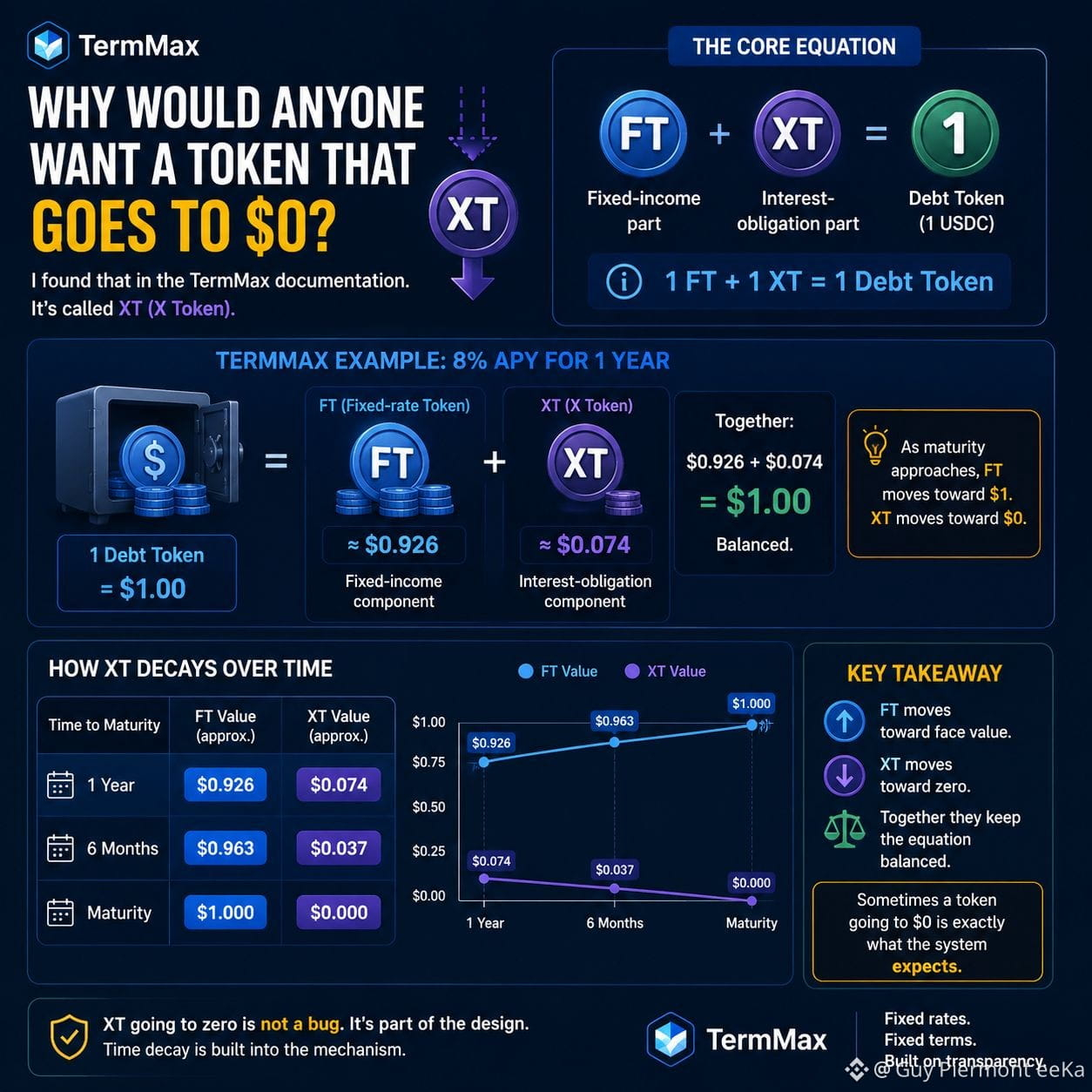
1 FT + 1 XT = 1 Debt Token
FT هو الجزء ذو الدخل الثابت. XT هو الجزء المكمل من التزام الفائدة.
أسهل طريقة لفهم ذلك هي باستخدام مثال TermMax الخاص بنسبة 8%.
لصفقة مدتها سنة واحدة:
1 Debt Token = $1
FT ≈ $0.926
XT ≈ $0.074
معًا:
$0.926 + $0.074 = $1
والآن يأتي الجزء المثير للاهتمام.
عندما تقترب الاستحقاقية، يتحرك FT باتجاه قيمة وجهه البالغة 1 دولار.
لكن إذا:
FT + XT = $1
فإن XT يجب أن يتحرك في الاتجاه المعاكس.
يوضح مثال TermMax ذلك بوضوح:
متبقي سنة → XT ≈ $0.074
متبقي 6 أشهر → XT ≈ $0.037
نهاية الاستحقاق → XT = $0
لذا فإن وصول XT إلى الصفر ليس خللًا.
بل هو جزء من التصميم.
يمتص FT قيمة الدخل الثابت مع اقتراب الاستحقاق، بينما يمثل XT جزء التزام الفائدة المتبقي.
وهذا يفسر أيضًا لماذا لا ينبغي النظر إلى XT على أنه توكن عادي؛ حيث إن “انخفاض السعر إلى الصفر” يعني تلقائيًا فشل المشروع.
هنا، تم دمج الانحلال الزمني ضمن الآلية.
كانت تلك هي التفاصيل التي جعلت نموذج FT/XT “يفهم” بالنسبة لي أخيرًا:
FT يتحرك نحو قيمة الوجه.
XT يتحرك نحو الصفر.
ومعهما يبقى توازن المعادلة محفوظًا.
أحيانًا يكون وصول التوكن إلى 0 دولار هو بالضبط ما يتوقعه النظام.
#DeFi #FixedRate #Crypto
لماذا يرغب أي شخص في امتلاك توكن مصمم ليصل إلى 0 دولار؟
وجدت بالضبط ذلك أثناء قراءة توثيق TermMax.
يُطلق عليه XT (X Token) — وفي البداية بدت لي آلياته غريبة.
تم بناء TermMax حول هذه المعادلة:
1 FT + 1 XT = 1 Debt Token
FT هو الجزء ذو الدخل الثابت. XT هو الجزء المكمل من التزام الفائدة.
أسهل طريقة لفهم ذلك هي باستخدام مثال TermMax الخاص بنسبة 8%.
لصفقة مدتها سنة واحدة:
1 Debt Token = $1
FT ≈ $0.926
XT ≈ $0.074
معًا:
$0.926 + $0.074 = $1
والآن يأتي الجزء المثير للاهتمام.
عندما تقترب الاستحقاقية، يتحرك FT باتجاه قيمة وجهه البالغة 1 دولار.
لكن إذا:
FT + XT = $1
فإن XT يجب أن يتحرك في الاتجاه المعاكس.
يوضح مثال TermMax ذلك بوضوح:
متبقي سنة → XT ≈ $0.074
متبقي 6 أشهر → XT ≈ $0.037
نهاية الاستحقاق → XT = $0
لذا فإن وصول XT إلى الصفر ليس خللًا.
بل هو جزء من التصميم.
يمتص FT قيمة الدخل الثابت مع اقتراب الاستحقاق، بينما يمثل XT جزء التزام الفائدة المتبقي.
وهذا يفسر أيضًا لماذا لا ينبغي النظر إلى XT على أنه توكن عادي؛ حيث إن “انخفاض السعر إلى الصفر” يعني تلقائيًا فشل المشروع.
هنا، تم دمج الانحلال الزمني ضمن الآلية.
كانت تلك هي التفاصيل التي جعلت نموذج FT/XT “يفهم” بالنسبة لي أخيرًا:
FT يتحرك نحو قيمة الوجه.
XT يتحرك نحو الصفر.
ومعهما يبقى توازن المعادلة محفوظًا.
أحيانًا يكون وصول التوكن إلى 0 دولار هو بالضبط ما يتوقعه النظام.
#DeFi #FixedRate #Crypto