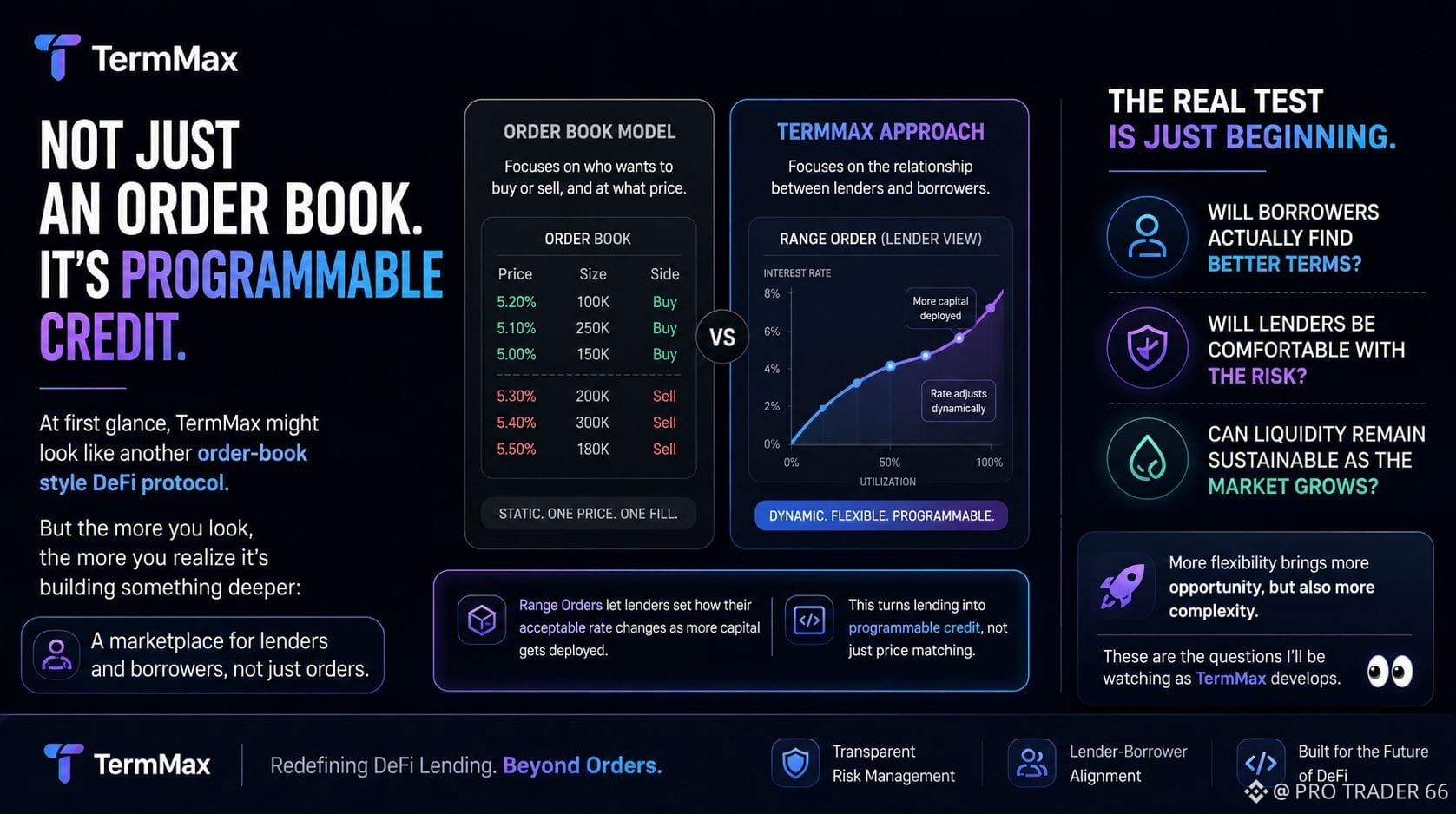
في البداية، نظرتُ إلى @TermMax وقلتُ: بروتوكول DeFi آخر بأسلوب دفتر الأوامر.
كلما درستُه أكثر، بدا أن هذا الوصف لا يطابقه بقدرٍ كافٍ.
يخبرك دفتر الأوامر في الأساس من يرغب في الشراء أو البيع، وبأي سعر. يبدو TermMax أكثر تركيزًا على العلاقة بين المقرضين والمقترضين.
تُعد الأوامر ذات النطاق مثالًا جيدًا. يمكن للمقرض أن يحدد كيف يتغير سعره/معدلُه المقبول مع زيادة رأس المال المُستَثمر، بدل الاعتماد على معدل ثابت واحد.
عندها يبدأ الأمر في أن يبدو أقل كدفتر أوامر بسيط وأكثر كائتمان قابل للبرمجة.
لكن هنا أعتقد أن الاختبار الحقيقي يبدأ.
قد تبدو المرونة مفيدة، لكنها تجلب أيضًا مزيدًا من التعقيد.
هل سيجد المقترضون شروطًا أفضل فعليًا؟
هل سيكون المقرضون مرتاحين تجاه المخاطر؟
وهل يمكن أن تظل السيولة مستدامة مع نمو السوق؟
هذه هي الأسئلة التي سأراقبها بينما يتطور TermMax. 👀
@TermMax #TermMax
$BOME
$MAGMA
$RED
كلما درستُه أكثر، بدا أن هذا الوصف لا يطابقه بقدرٍ كافٍ.
يخبرك دفتر الأوامر في الأساس من يرغب في الشراء أو البيع، وبأي سعر. يبدو TermMax أكثر تركيزًا على العلاقة بين المقرضين والمقترضين.
تُعد الأوامر ذات النطاق مثالًا جيدًا. يمكن للمقرض أن يحدد كيف يتغير سعره/معدلُه المقبول مع زيادة رأس المال المُستَثمر، بدل الاعتماد على معدل ثابت واحد.
عندها يبدأ الأمر في أن يبدو أقل كدفتر أوامر بسيط وأكثر كائتمان قابل للبرمجة.
لكن هنا أعتقد أن الاختبار الحقيقي يبدأ.
قد تبدو المرونة مفيدة، لكنها تجلب أيضًا مزيدًا من التعقيد.
هل سيجد المقترضون شروطًا أفضل فعليًا؟
هل سيكون المقرضون مرتاحين تجاه المخاطر؟
وهل يمكن أن تظل السيولة مستدامة مع نمو السوق؟
هذه هي الأسئلة التي سأراقبها بينما يتطور TermMax. 👀
@TermMax #TermMax
$BOME
$MAGMA
$RED