I've watched DeFi try to build term structures for years. Most attempts collapse because they can't solve the liquidity problem.
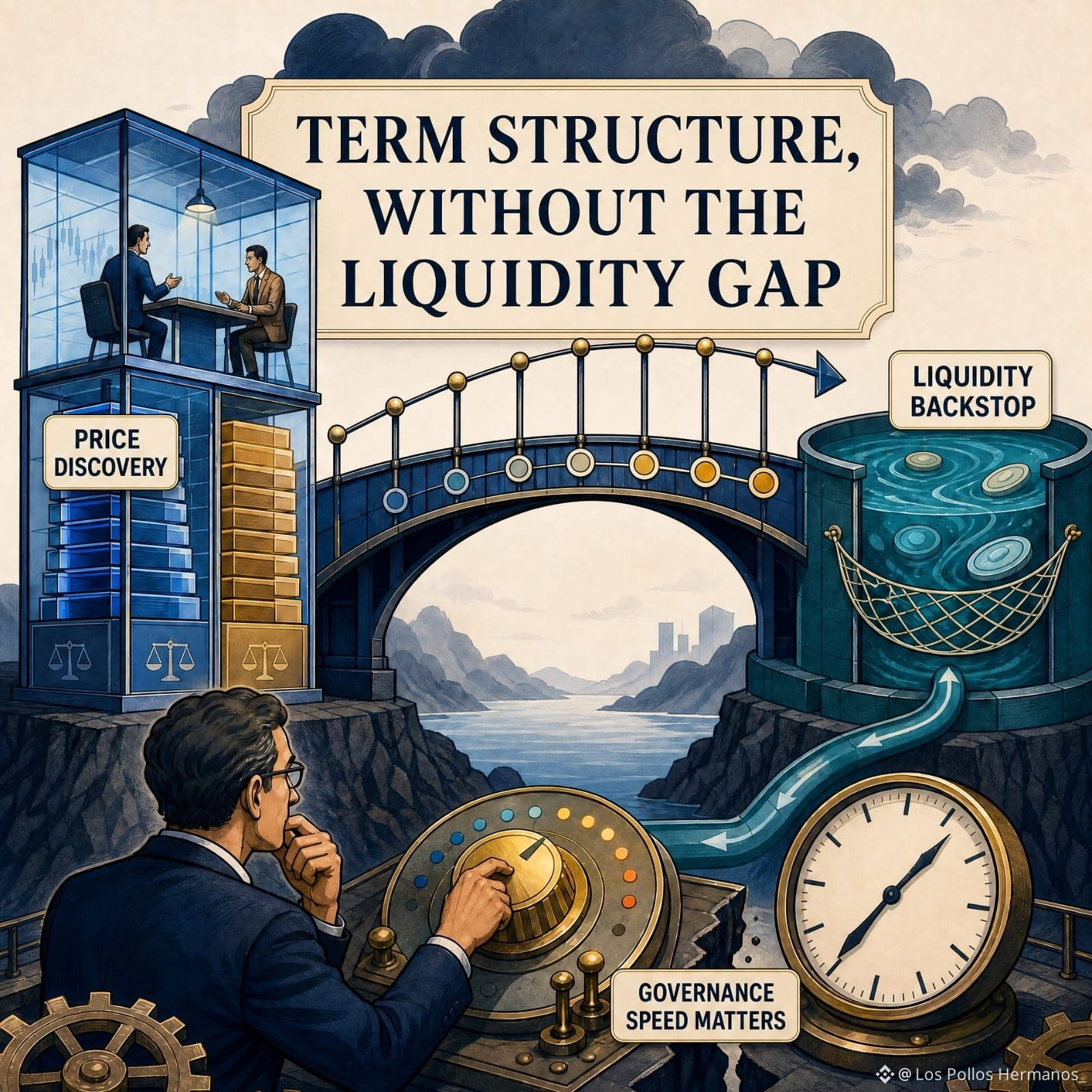
Orderbooks need depth on both sides. AMMs need capital sitting idle in pools. Neither works cleanly for fixed-rate lending on its own. TermMax combines both.
The orderbook handles price discovery lenders and borrowers negotiate rates directly. The AMM layer provides liquidity backstop when one side of the book runs thin.
I thought that combination would create complexity that breaks under pressure. Looking at how the mechanics interact, it's more elegant than I expected.
The real question is whether the AMM parameters get tuned correctly as market conditions shift. That's a governance decision.
And governance decisions in DeFi don't always happen fast enough when they need to.
#termmax @TermMax
$BOME
$RE
$BTW
Orderbooks need depth on both sides. AMMs need capital sitting idle in pools. Neither works cleanly for fixed-rate lending on its own. TermMax combines both.
The orderbook handles price discovery lenders and borrowers negotiate rates directly. The AMM layer provides liquidity backstop when one side of the book runs thin.
I thought that combination would create complexity that breaks under pressure. Looking at how the mechanics interact, it's more elegant than I expected.
The real question is whether the AMM parameters get tuned correctly as market conditions shift. That's a governance decision.
And governance decisions in DeFi don't always happen fast enough when they need to.
#termmax @TermMax
$BOME
$RE
$BTW