
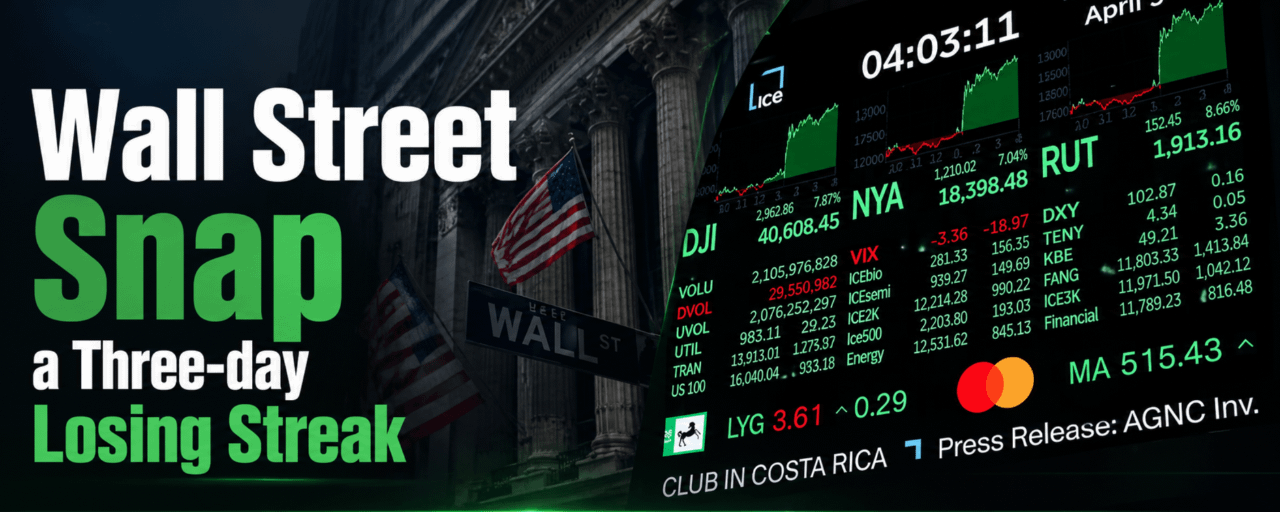
Wall Street opened Wednesday in a different mood entirely, after three straight sessions of losses driven by surging bond yields and a chipmaker selloff. The Treasury Department said it would upscale its buyback operations for securities maturing in 10 to 30 years, covering the 10-to-20-year and 20-to-30-year sectors specifically, at least doubling the size of each operation from $2 billion to at least $4 billion, with the larger operations running for the next two months.
Bond prices rose on the news, pushing yields lower. The 30-year Treasury yield dropped roughly 9 basis points to around 5.19%, one of its sharper one-day reversals in months and a retreat from Tuesday's fresh high above 5.3%, its worst level since 2007. The benchmark 10-year yield eased to about 4.64%.
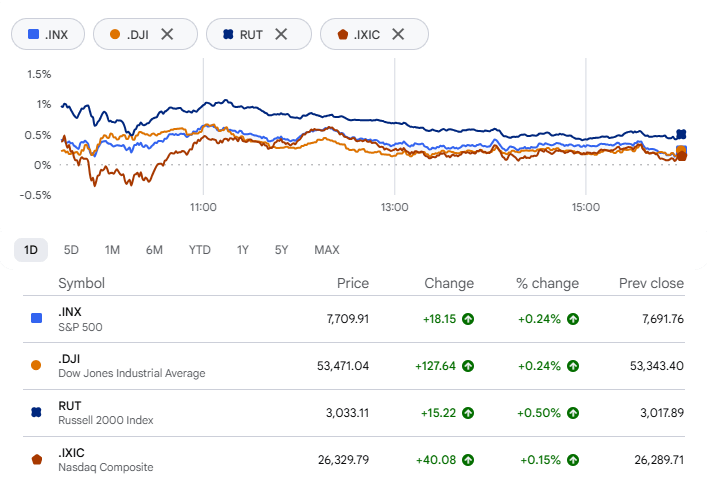
That was enough to snap a three-day losing streak for stocks. All four major U.S. indexes rose out of the gate, though the rally faded as the session wore on and indices finished only modestly higher rather than holding their early gains. The rate-sensitive Russell 2000 led with a 0.5% gain, while the S&P 500, the Nasdaq Composite and the Dow Jones Industrial Average all added roughly 0.2% apiece, enough to end the S&P's own three-day skid.
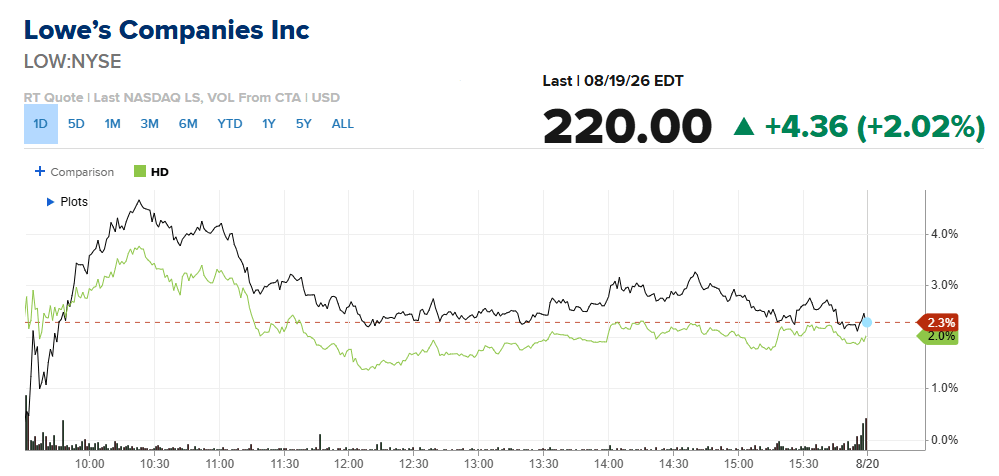
Stocks seen as beneficiaries of lower rates picked up the baton. Lowe's and Home Depot both gained around 2%. The mechanism is fairly straightforward: doubling buybacks of long-dated Treasuries injects fresh demand into the bond market, pushing prices up and yields down, and because long-term yields anchor 30-year mortgage rates, that spells near-term borrowing relief. Cheaper mortgages could thaw a stagnant housing market, and investors bid up home-improvement retailers on hopes of a revival in big-ticket remodelling work.
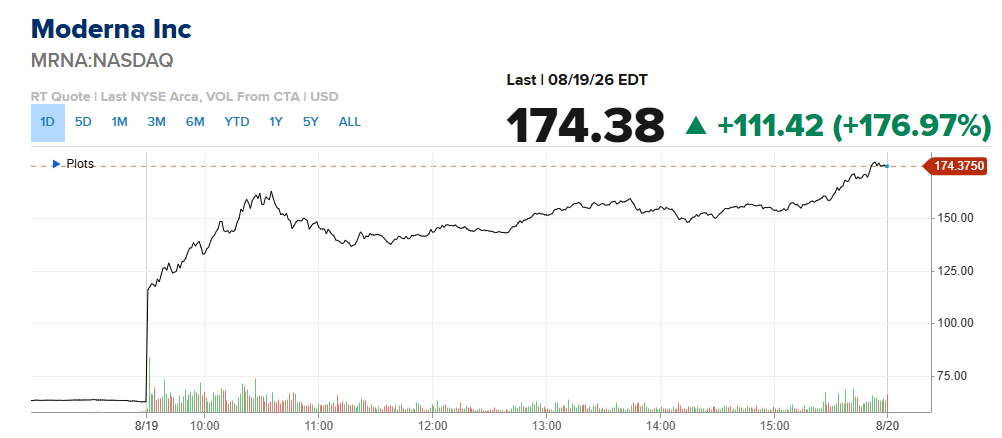
Moderna did more than pick up the baton. It ran off with it. Shares surged more than 177% after the company and partner Merck reported that an experimental mRNA cancer vaccine, tested alongside Merck's immunotherapy Keytruda in more than 1,100 high-risk melanoma patients, succeeded in preventing the cancer from returning or spreading. The result sent Moderna's share price soaring, and Merck climbed more than 12% alongside it, as investors priced in the potential for more blockbusters to follow. It is the second major oncology breakthrough in recent months.
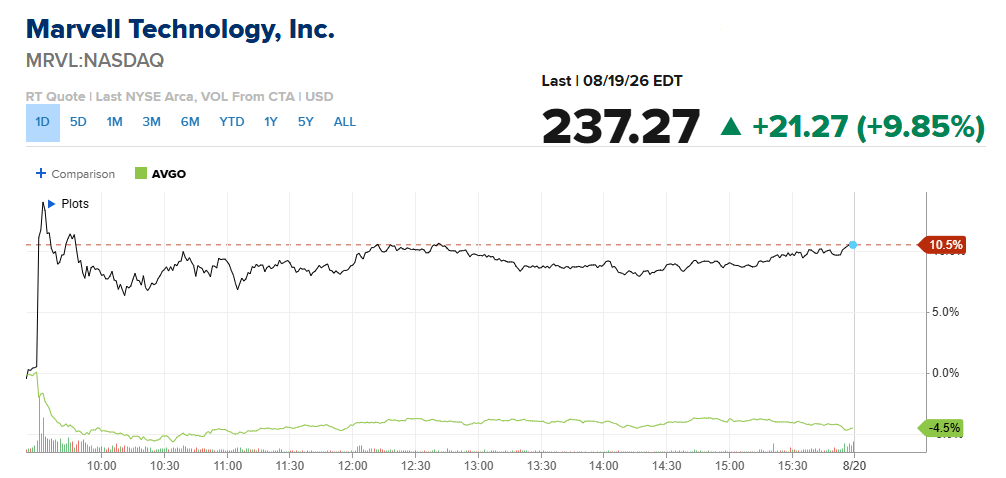
Marvell Technology, meanwhile, expanded its partnership with Google to develop custom AI chips for the search giant's Tensor Processing Unit ecosystem. To seal it, Marvell granted Google warrants to buy up to 58.97 million shares at $206.58 each, a potential $12.2 billion stake. Crucially, most of those shares vest only as Google actually buys the hardware, unlocking in tranches for every $500 million of custom-chip revenue it brings Marvell. Fully exercised, the warrant would make Google one of Marvell's largest shareholders. The stock surged nearly 10% on the news. Broadcom, which has been Google's primary custom-chip partner for the best part of a decade, dropped 4.6% a reminder that Alphabet is working hard to diversify its AI supply chain rather than lean on a single vendor.
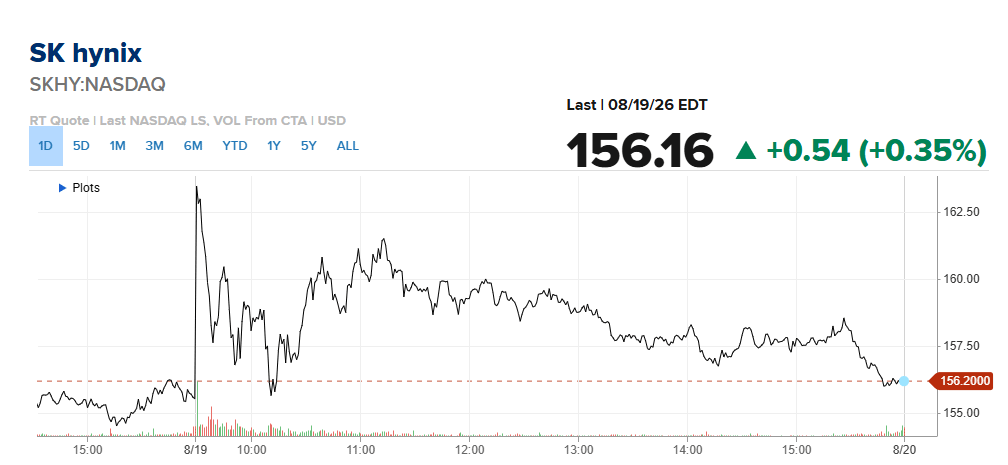
SK Hynix moved to stabilise its own stock, unveiling plans to buy back and cancel roughly 24 million shares, about 3.3% of the company outstanding, for $29 billion, and to lift its shareholder-return pledge to more than 50% of cumulative free cash flow through 2027, after shares fell more than 50% in two months. The buyback runs from Thursday through mid-November and follows the $26.5 billion the chipmaker raised only a month ago in a US listing, struck at the height of enthusiasm for the AI rally. Investors have grown wary since about how durable AI hardware spending really is, and they have been demanding a payout to match. Shares closed up 0.4%.
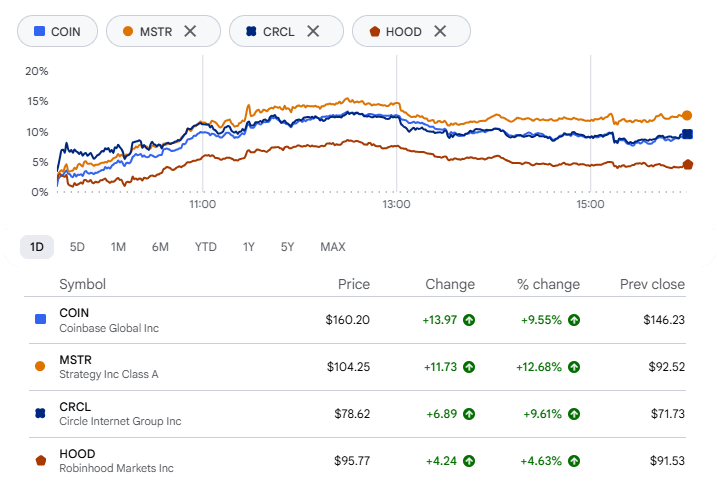
Crypto followed the same script as housing stocks: cheaper money, more risk appetite. Traders took the doubled buybacks as a green light for risk assets generally, and cryptocurrencies rallied hard. Bitcoin jumped more than 5% to trade above $68,600. Ether added 8% to trade near $2,072, and solana popped 5% to above $81. Coinbase and Circle both rose more than 9%, Strategy climbed nearly 13%, and Robinhood gained more than 4%.
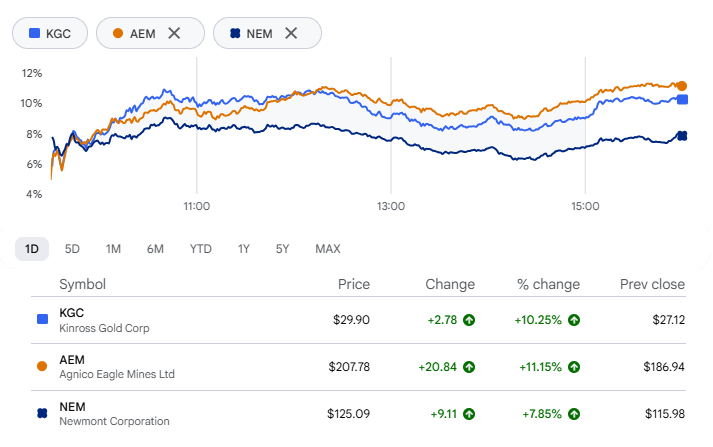
Gold did the opposite of what a risk-on day usually implies, and rallied anyway, helped along by a softer dollar. December futures rose as high as $4,557.60 a troy ounce, the highest since 2 June, when they touched $4,571.30, up more than 3% on the day. The rally extended across the wider precious-metals complex, with silver, platinum and palladium futures climbing too. Miners rode the move: Kinross Gold closed up more than 10% for its best day since November 2022, Agnico Eagle Mines rose 11% for its strongest session since March 2020, and Newmont added nearly 8%.
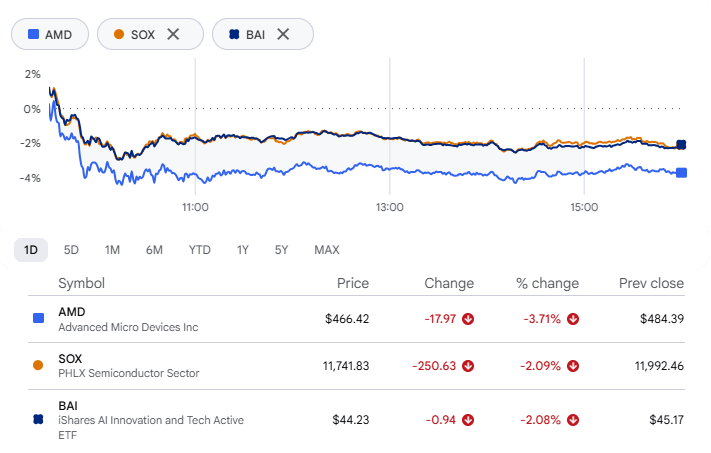
Not every corner of tech got the memo. The Wall Street Journal reported that OpenAI's second-quarter results disappointed investors revenue grew 18% quarter on quarter, but so did the losses, feeding fresh doubts about the payback on all that AI infrastructure spending. Advanced Micro Devices shed nearly 4%, the iShares AI Innovation and Tech Active ETF fell roughly 2%, and the PHLX Semiconductor Index dropped another 2.1%, stretching its cumulative decline since Monday's close to more than 7%.
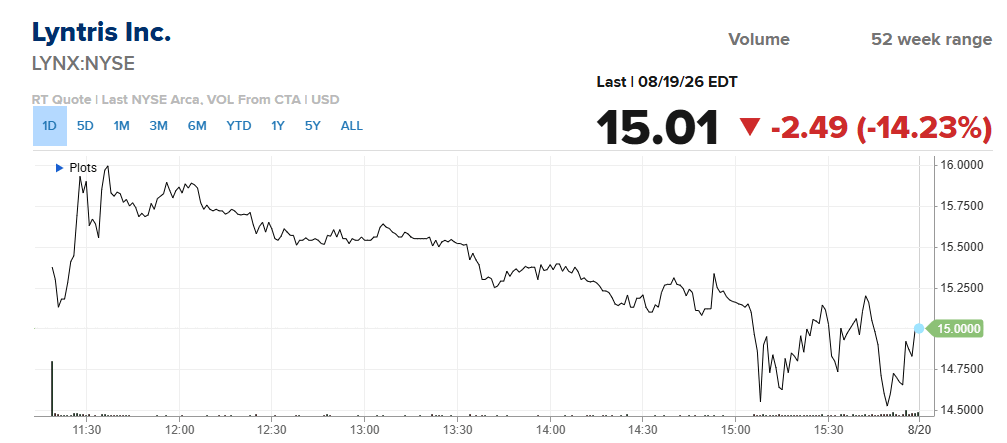
Defence-tech firm Lyntris had a rockier debut still. The Falls Church, Virginia-based sensor and connectivity specialist saw its shares drop 11.4% to close near $15.50 after pricing its downsized IPO at $17.50, even though the offering raised $297.5 million, a chunk of which is earmarked to pay down existing debt. A $924 million contract backlog was not enough to calm investors. A $13 million net loss in the first half of the year, combined with broader hesitation over valuations for smaller defence names, kept the stock under pressure through its opening session. Lyntris is only the latest in a wave of defence-technology firms that have sought New York listings since the spring, as boardrooms look to capitalise on investor appetite for the sector.
Sector Analysis:
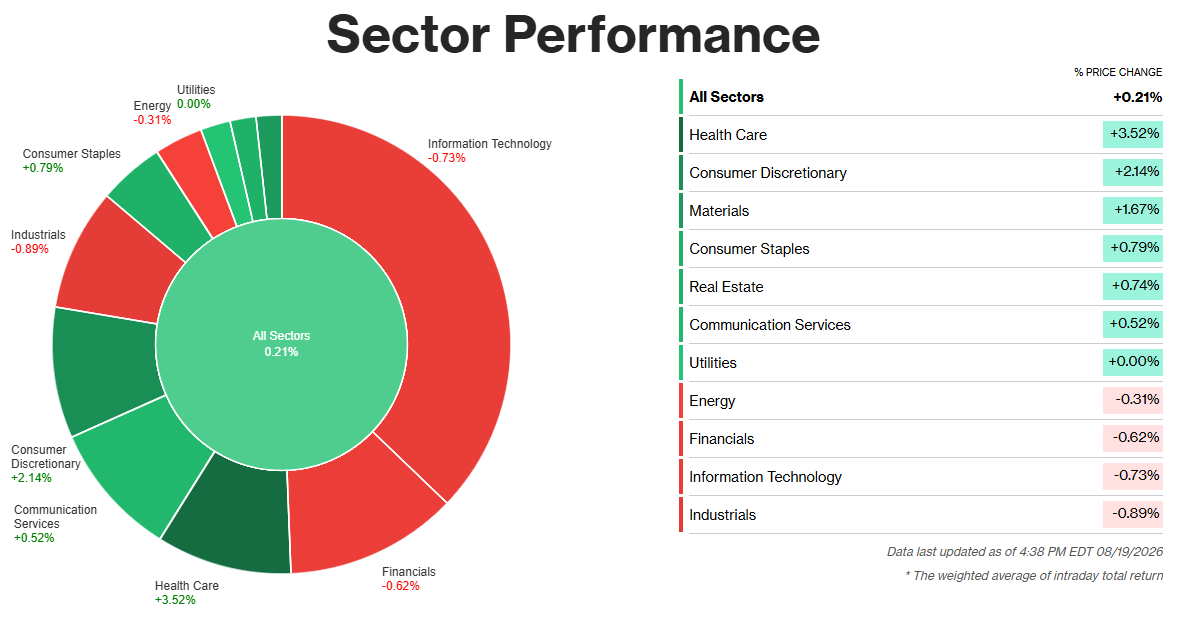
Beneath the headline numbers, the market was stronger than it looked. The equal-weighted S&P 500, which strips out the outsized influence of the largest mega-cap names, gained 1.0% against the cap-weighted index's more modest 0.2%, and breadth improved, with seven of eleven sectors higher on the day. That gap is usually a sign that a rally has legs beyond a handful of giant stocks.
Health care led the pack, up 3.5%, on the back of the Moderna and Merck trial results. Combined with Tuesday's gain, it was the sector's second-best two-day advance since November 2020, a reminder of how quickly a single clinical readout can move an entire sector's fortunes. Rate-sensitive corners of the market homebuilders, consumer names caught the same tailwind from falling yields, and materials outperformed as precious metals and mining stocks rallied on gold's break through a key technical threshold.
Not everything joined in. Information technology lagged, down 0.73%, as profit-taking in high-flying AI and semiconductor names continued amid worries about stretched valuations and rising financing costs. Financials slipped 0.62%, weighed down by the same surge in bond-market activity and multi-year highs in Treasury yields that have been raising borrowing costs and fuelling macro uncertainty. Industrials fell 0.89%, a cyclical drag as mixed economic data and cautious retail and housing numbers cooled investor enthusiasm.
Nordson reports after Wednesday's close, and the calendar turns busier from there. Walmart (consensus EPS of $0.75 on revenue near $185.8 billion) and Alibaba ($1.57 EPS, $39.9 billion revenue) report before Thursday's opening bell, alongside Deere (40.70 EPS, $10.7 billion revenue) and NetEase ($2.32 EPS, $4.36 billion revenue) a fresh set of retail and industrial numbers for traders to weigh against the bond market's next move.