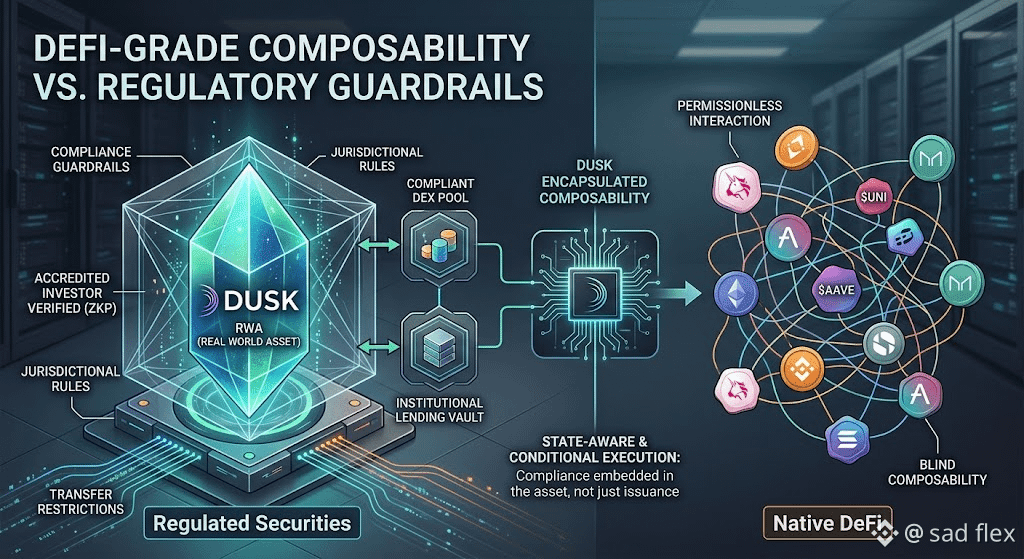
كلما فكرت أكثر في "قابلية التراكيب على مستوى DeFi" وجدت نفسي أهبط على شيء يبدو كأنه مجاملة لكنه في الحقيقة سؤال معقّد
في سياق DeFi عادةً ما تعني قابلية التراكيب أن الأمور مباحة: توكن من بروتوكول يركّب نفسه داخل بروتوكول آخر دون طلب إذن، ويُستخدم كضمان في مكان آخر، ويمر عبر عدة عقود في معاملة واحدة. هذه هي جاذبيتها: الجمع دون إذن
تَعِد Dusk Trade بتوفير قابلية تراكيب على مستوى DeFi لـ MMFs وETFs والسندات وRWAs والأوراق المالية المنظمة الحقيقية
لذلك فالسؤال ليس ما إذا كانت قابلية التراكيب تضيف قيمة هنا
فهي تضيف قيمة بوضوح؛ التسوية الفورية والقدرة على البرمجة تحسينان حقيقيان مقارنةً بالمسارات الأبطأ لدى TradFi
لكن السؤال هو: هل يمكن أن تكون الورقة المالية المُنظَّمة قابلة للتراكيب بالفعل بالطريقة التي يكون بها توكن DeFi، أم أن عبارة "على مستوى DeFi" تقوم بدور تسويقي أكبر من كونها عملاً تقنيًا
الورقة المالية المُنظَّمة ليست أداة لحامل الأسهم تنتقل بحرية بمجرد إصدارها. غالبًا ما ترافق متطلبات الأهلية وقيود التحويل وحدود الاختصاص القانوني الأصلَ نفسه، وليس مجرد ما يحدث عند الإصدار. سندٌ يشترط أن يكون حاملُه مستثمرًا معتمدًا لا يتوقف عن اشتراط ذلك بمجرد أن تصبح قابلة للتراكيب. فالقابلية للتراكيب الحقيقية هنا يجب أن تحمل منطق الامتثال إلى كل استخدام لاحق، لا أن تُنزَع منها للراحة
وهذا أصعب في البناء من قابلية التراكيب المعتادة في DeFi، وإذا استطاعت Dusk تنفيذ ذلك، فسيكون إنجازًا أكبر مما توحي به العبارة
لكن هذا يعني أيضًا أن قابلية التراكيب هنا أضيق بطبيعتها. توكن DeFi يتراكم مع أي شيء. أما ورقة مالية مُنظَّمة على Dusk فمن المحتمل أن تتراكم فقط مع العقود التي تحترم أيضًا قيودها—وهو نطاق أصغر وأكثر تحكمًا مما توحي به كلمة "قابلية التراكيب" عادةً
ما لم أستقر عليه بعد هو ما إذا كانت تسمية ذلك قابلية تراكيب على مستوى DeFi تُقلّل من شأن مدى تقيّده اللازم ليظل ممتثلًا، أم أن Dusk قد حلّت حقًا مشكلة قابلية التراكيب بحيث تحمل قواعدها الخاصة معها
#dusk @Dusk $DUSK $MAGMA $STAR
في سياق DeFi عادةً ما تعني قابلية التراكيب أن الأمور مباحة: توكن من بروتوكول يركّب نفسه داخل بروتوكول آخر دون طلب إذن، ويُستخدم كضمان في مكان آخر، ويمر عبر عدة عقود في معاملة واحدة. هذه هي جاذبيتها: الجمع دون إذن
تَعِد Dusk Trade بتوفير قابلية تراكيب على مستوى DeFi لـ MMFs وETFs والسندات وRWAs والأوراق المالية المنظمة الحقيقية
لذلك فالسؤال ليس ما إذا كانت قابلية التراكيب تضيف قيمة هنا
فهي تضيف قيمة بوضوح؛ التسوية الفورية والقدرة على البرمجة تحسينان حقيقيان مقارنةً بالمسارات الأبطأ لدى TradFi
لكن السؤال هو: هل يمكن أن تكون الورقة المالية المُنظَّمة قابلة للتراكيب بالفعل بالطريقة التي يكون بها توكن DeFi، أم أن عبارة "على مستوى DeFi" تقوم بدور تسويقي أكبر من كونها عملاً تقنيًا
الورقة المالية المُنظَّمة ليست أداة لحامل الأسهم تنتقل بحرية بمجرد إصدارها. غالبًا ما ترافق متطلبات الأهلية وقيود التحويل وحدود الاختصاص القانوني الأصلَ نفسه، وليس مجرد ما يحدث عند الإصدار. سندٌ يشترط أن يكون حاملُه مستثمرًا معتمدًا لا يتوقف عن اشتراط ذلك بمجرد أن تصبح قابلة للتراكيب. فالقابلية للتراكيب الحقيقية هنا يجب أن تحمل منطق الامتثال إلى كل استخدام لاحق، لا أن تُنزَع منها للراحة
وهذا أصعب في البناء من قابلية التراكيب المعتادة في DeFi، وإذا استطاعت Dusk تنفيذ ذلك، فسيكون إنجازًا أكبر مما توحي به العبارة
لكن هذا يعني أيضًا أن قابلية التراكيب هنا أضيق بطبيعتها. توكن DeFi يتراكم مع أي شيء. أما ورقة مالية مُنظَّمة على Dusk فمن المحتمل أن تتراكم فقط مع العقود التي تحترم أيضًا قيودها—وهو نطاق أصغر وأكثر تحكمًا مما توحي به كلمة "قابلية التراكيب" عادةً
ما لم أستقر عليه بعد هو ما إذا كانت تسمية ذلك قابلية تراكيب على مستوى DeFi تُقلّل من شأن مدى تقيّده اللازم ليظل ممتثلًا، أم أن Dusk قد حلّت حقًا مشكلة قابلية التراكيب بحيث تحمل قواعدها الخاصة معها
#dusk @Dusk $DUSK $MAGMA $STAR