



الوصول إلى مكتب Binance OTC عبر بوابة VIP
أبرز النقاط
يتواجد البيتكوين في وضع تذبذب منخفض ومضغوط، حيث يقترب DVOL من أدنى مستوياته لهذا العام، ويبدو السوق بشكل متزايد كزنبركٍ مُشدود.
إن برنامج إعادة شراء السندات الحكومية الأمريكية الموسّع للأجل الطويل يُعد إشارةً إيجابيةً من حيث السيولة، إذ يساعد سندات الخزانة طويلة الأجل على الارتفاع ويُخفف عائقًا ماكرويًا رئيسيًا أمام الأصول ذات المخاطر.
كما تحسنت المؤشرات الداخلية الخاصة بالعملات المشفرة، حيث جذبت صناديق BTC الفورية المتداولة في البورصة نحو 237 مليون دولار خلال الأيام الخمسة الماضية للتداول.
تشترك بنية BTC الحالية في أوجه تشابه مع أواخر 2022 / أوائل 2023، ما يشير إلى احتمال وجود عملية تراكم في مرحلة متأخرة بدلًا من انعكاس مؤكد بالكامل.
لا تزال المخاطر الجيوسياسية والتضخمية حقيقية، إذ دفعت التوترات المتجددة بين الولايات المتحدة وإيران أسعار النفط إلى الارتفاع وأعادت احتمال مسار أكثر تشددًا للاحتياطي الفيدرالي.
يميل فريقنا إلى النظرة البنّاءة لكن الحذرة، إذ يتحسن إعداد الاختراق، لكن التأكيد لا يزال يعتمد على استعادة السعر لخط الاتجاه الهابط طويل الأجل مع حجم تداول قوي.
قضى البيتكوين الأشهر القليلة الماضية في التداول الجانبي عند مستويات منخفضة نسبيًا، مع انضغاط متواصل في التقلبات. فمنذ الارتفاع الحاد في فبراير، عندما وصل DVOL لفترة وجيزة إلى نحو 92، هبط التقلب الضمني إلى حوالي 37.6، أي بالقرب من أدنى نطاقه السنوي. وعادةً ما يخبرنا هذا النوع من الانضغاط المطول أن السوق يخزن الطاقة. والسؤال ليس ما إذا كان التقلب سيعود، بل ما هو المحفز الذي سيطلقه في النهاية.
الماكرو: إعادة شراء سندات الخزانة تحسن خلفية السيولة
أهم تطور كلي هذا الأسبوع جاء من وزارة الخزانة الأمريكية.
في 19 أغسطس، قالت وزارة الخزانة إنها ستضاعف الحد الأقصى لكل عملية لإعادة شراء سندات الخزانة طويلة الأجل من 2 مليار دولار إلى 4 مليارات دولار على الأقل، ليشمل شرائح الاستحقاق من 10 إلى 20 سنة ومن 20 إلى 30 سنة. يمتد البرنامج من 9 سبتمبر إلى 4 نوفمبر، مضيفًا ما يقرب من 14 مليار دولار من قدرة إعادة الشراء الإضافية، ويرفع السقف الإجمالي لإعادة الشراء إلى حوالي 83 مليار دولار.
كان رد فعل السوق فوريًا: ارتفعت سندات الخزانة طويلة الأجل وانخفضت العوائد. وهذا مهم لأن ارتفاع عوائد الأجل الطويل كان أحد أبرز العوامل السلبية الكلية للأصول عالية المخاطر هذا العام. ومن خلال دعم الجزء الطويل من سوق السندات الحكومية، فإن الحكومة تساعد فعليًا على تقليص علاوة الأجل وتخفيف شروط التمويل.
بالنسبة للأصول عالية المخاطر، فإن آلية الانتقال بسيطة. انخفاض عوائد الأجل الطويل يخفض معدلات الخصم، ويحسن السيولة، ويدعم عمومًا الأصول الحساسة للظروف المالية الأوسع — بما في ذلك الأسهم والذهب والبيتكوين. لا نعتبر ذلك تيسيرًا كميًا رسميًا، لكنه يحمل أثرًا شبيهًا بالتيسير الكمي من حيث إنه يضخ سيولة نقدية ويحسن بيئة السيولة الأوسع.
وهذا يجعل ذلك أحد أكثر التطورات الكلية دعمًا للبيتكوين خلال عدة أسابيع.
Crypto Internals: ETF Flows and Volatility Support the Case
كما أن الإشارة الكلية تتماشى أيضًا مع تحسن المؤشرات الداخلية الخاصة بالعملات المشفرة.
سجلت صناديق البيتكوين الفورية المتداولة في البورصة تدفقات صافية داخلة بنحو 237 مليون دولار خلال الأيام الخمسة الماضية للتداول، مع تعويض الارتداد في 17–18 أغسطس للتدفقات الخارجة التي شوهدت في الجلسات الثلاث السابقة. هذا ليس اندفاعًا هائلًا في الطلب، لكنه تحسن واضح ويشير إلى أن المعنويات المؤسسية أصبحت أقل دفاعية.
تروي التقلبات قصة مشابهة. تبدو مرحلة الانضغاط الحالية أقرب من الناحية الهيكلية إلى فترة التراكم في أوائل 2023 منها إلى حالة الذعر الشديدة في أواخر 2022. وبعبارة أخرى، لا يبدو أن السوق ما يزال في وضع التصفية القسرية. بل يبدو أكثر كسوق استوعب الضغوط السابقة وينتظر الآن محفزًا.
هذا لا يعني أن الاختراق مضمون. لكنه يعني أن الوضع أصبح أكثر ملاءمة.
مقارنة الدورة: 2022 و2026 تبدوان متشابهتين هيكليًا
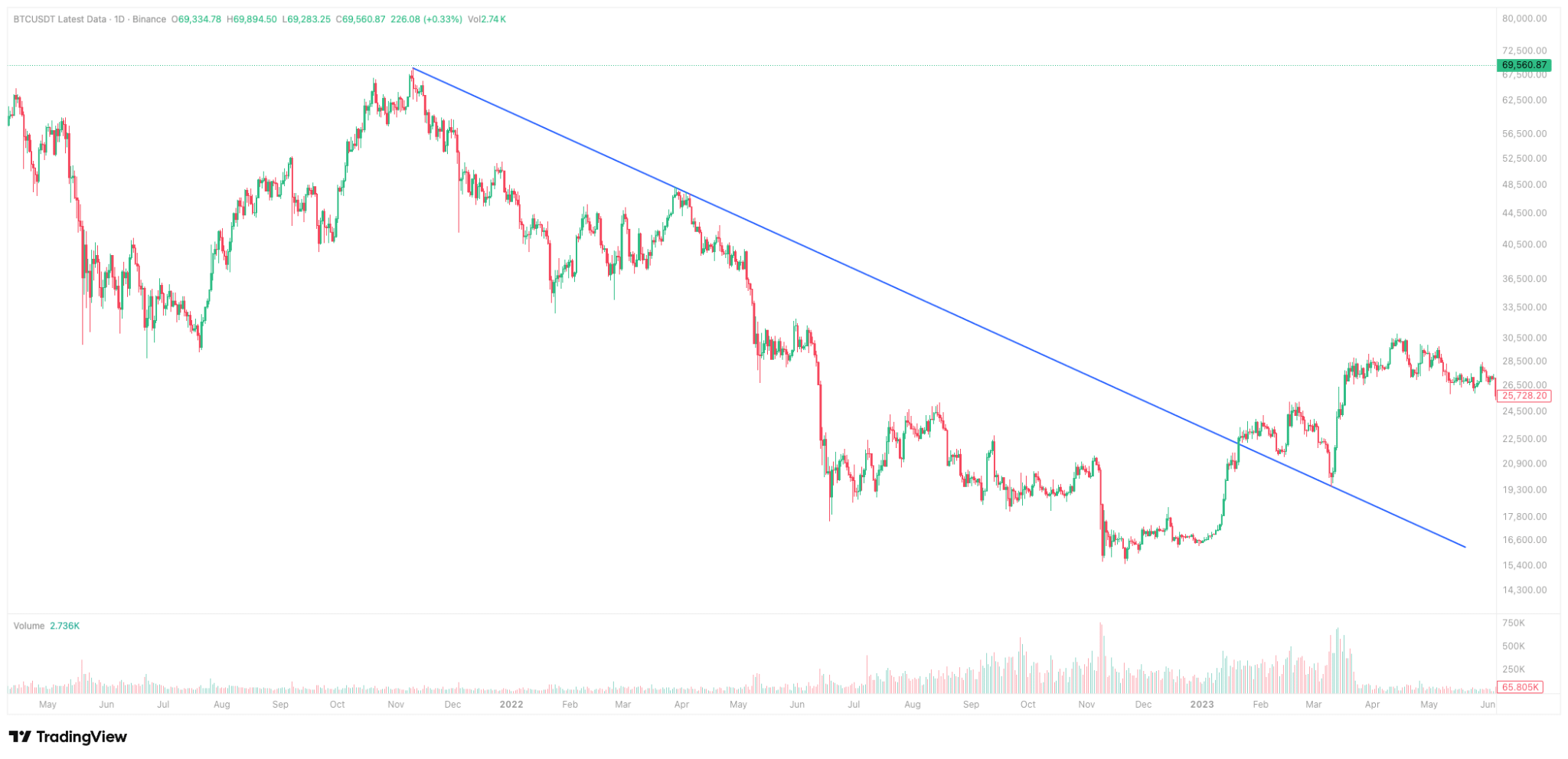
Tradingview: 2022 BTC chart
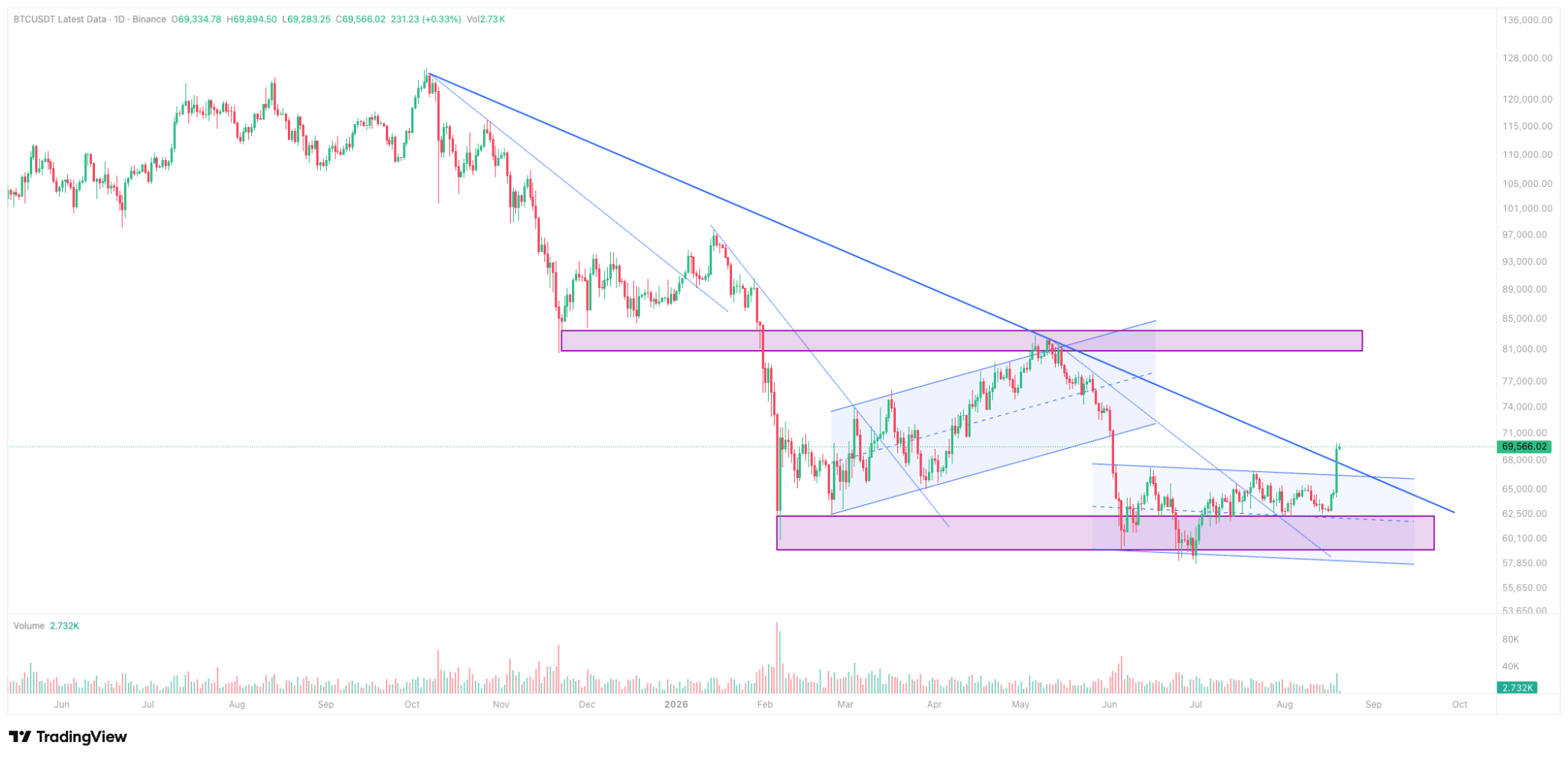
Tradingview: 2026 BTC chart
عندما نقارن البنية الحالية بدورة 2022–2023، فإن أوجه التشابه ملحوظة.
في الدورة السابقة، بلغ البيتكوين ذروته قرب 69,000 دولار في نوفمبر 2021، ثم اتجه هبوطًا، قبل أن يستسلم أثناء انهيار FTX قرب 15,500–16,000 دولار. بعد ذلك، أمضى السعر شهورًا في بناء قاعدة قبل أن يستعيد أخيرًا خط الاتجاه الهابط طويل الأجل في أوائل 2023. وكان هذا الاسترداد هو التأكيد الحقيقي على أن مرحلة السوق الهابطة قد انتهت.
تبدو الدورة الحالية مشابهة من حيث الشكل. فقد بلغ البيتكوين ذروته قرب 128,000 دولار في أكتوبر 2025، ثم تحرك هبوطًا على طول خط اتجاه هابط طويل الأجل. وبعد الانهيار الرئيسي في فبراير، دخل السعر في قناة هبوطية متقلبة. والآن، ومع تداول BTC قرب 69,500 دولار، يقترب السعر مرة أخرى من ذلك الخط الهابط طويل الأجل.
باستخدام إطار تجميع وايكوف، يعتقد فريقنا أن السوق يبدو أقرب إلى الانتقال من المرحلة C إلى المرحلة D منه إلى موجة هبوط جديدة. ببساطة، من المرجح أن القاع الذعري والانهيار الكاذب قد حدثا بالفعل، ويبدو أن السوق يختبر الدعم بشكل متكرر الآن بينما يبني سببًا لاحتمال حدوث اختراق.
ومع ذلك، يبقى هذا تفسيرًا وليس تأكيدًا. إلى أن يخترق BTC خط الاتجاه الهابط فوقه بحجم تداول مقنع، سيظل السوق أقرب إلى نطاق تراكم واسع منه إلى انعكاس مؤكد بالكامل.
المستويات الفنية: الاختراق لا يزال يحتاج إلى تأكيد
هناك منطقتان أفقيتان رئيسيتان تستحقان المتابعة.
تقع المنطقة السفلى حول 58,000–62,500 دولار، حيث استقر سعر البيتكوين مرتين في الأشهر الأخيرة. وبمفهوم وايكوف، يمكن النظر إليها كمنطقة Spring / LPS محتملة.
تقع المنطقة العليا حول 81,000–85,000 دولار، وهي تمثل منطقة مقاومة سابقة ذات حجم تداول مرتفع، ومن المرجح أن تصبح الهدف الرئيسي التالي إذا تم حل هيكل التراكم باتجاه الصعود.
في الوقت الحالي، يحاول BTC استعادة خط الاتجاه الهابط. وإذا تمكن السعر من الاختراق والاستقرار فوقه مع حجم تداول قوي، فقد يتحرك السوق بسرعة مع اضطرار البائعين على المكشوف إلى تغطية مراكزهم. لكن إلى أن يحدث ذلك، لا يزال الهيكل متوسط الأجل يبدو أقرب إلى تجميع كبير منه إلى انعكاس مؤكد للاتجاه.
المخاطر الكلية: النفط والفيدرالي يعقدان المشهد
السبب الرئيسي للحذر هو أن المشهد الكلي الأوسع لا يزال مختلطًا.
بدأت التوترات بين الولايات المتحدة وإيران بالتصاعد مجددًا. توقفت محادثات السلام في منتصف أغسطس، وبحلول 20 أغسطس كان خام برنت عند حوالي 91.87 دولارًا بينما كان خام WTI عند حوالي 85.81 دولارًا. وقد ارتفع برنت بنحو 15% من حوالي 79 دولارًا قبل أسبوعين فقط. وعلى الرغم من أن مضيق هرمز لا يزال مفتوحًا جزئيًا، إلا أن الشحن تباطأ، وأصبح السوق مرة أخرى يضع المخاطر الجيوسياسية في التسعير.
وهذا مهم لأن ارتفاع أسعار النفط يهدد مباشرة قصة انخفاض التضخم.
عززت محاضر اجتماع اللجنة الفيدرالية للسوق المفتوحة لشهر يوليو هذا الخطر. وقد صدرت في 19 أغسطس، وأظهرت أن بعض المسؤولين يعتقدون أن رفع الفائدة قد يكون ضروريًا إذا لم يهدأ التضخم، كما أن قرار يوليو نفسه انقسم 9–3، مع تفضيل ثلاثة رؤساء للبنوك الفيدرالية الإقليمية لرفع الفائدة. وقد تحول تسعير السوق منذ ذلك الحين من نقاش بسيط حول “خفض أم تثبيت” إلى نقاش أقرب إلى “رفع أم تثبيت”.
لذا، وبينما تساعد إعادة شراء سندات الخزانة في دعم السيولة، فإن ارتفاع النفط واتخاذ الفيدرالي موقفًا أكثر تشددًا يسحبان في الاتجاه المعاكس.
رؤية المكتب
يرى فريقنا أن الوضع الحالي إيجابي، لكن مع بقاء الحذر قائمًا.
يُعد إعلان وزارة الخزانة عن إعادة الشراء داعمًا بوضوح للسيولة وللإقبال على المخاطرة. فقد تحسنت تدفقات صناديق ETF، وانضغط التقلب، كما أن البنية الحالية تشبه فعلًا مرحلة تراكم متأخرة مشابهة لأواخر 2022 / أوائل 2023.
لكن السوق ما يزال مشدودًا في اتجاهين متعاكسين. فقد ترتفع أسعار النفط إذا ساءت الأوضاع الجيوسياسية، وقد يؤدي ذلك سريعًا إلى إحياء ضغوط التضخم وإجبار الاحتياطي الفيدرالي على اتخاذ موقف أكثر تشددًا. ولهذا السبب، نعتقد أن البيتكوين قد يعود إلى نطاق 61,000–67,000 دولار قبل تأكيد أي اختراق واضح.
إذًا، فإن الحالة الأساسية بنّاءة، لكنها ليست صعودية بقوة. هناك حركة اتجاهية تتشكل، وتحيزنا يميل إلى التفاؤل الحذر — لكن السعر لا يزال بحاجة إلى إثبات ذلك.
لماذا تتداول OTC؟
تقدم Binance لعملائنا طرقًا متعددة للوصول إلى تداول OTC، بما في ذلك قنوات التواصل عبر الدردشة ومنصة Binance OTC (https://www.binance.com/en/otc) لتسعير الأسعار يدويًا وخدمات التنفيذ.
البريد الإلكتروني: trading@binance.com للمزيد من المعلومات.
انضم إلى قناة تيليجرام الخاصة بنا @BinanceOTCTrading (https://t.me/+0mkJQnbQiOdlZjk0) للبقاء على اطلاع دائم بالأسواق!
يمكنك أيضًا التواصل معنا عبر تيليجرام (@Binance_OTC_Desk) للتواصل مباشرة مع متداولينا ذوي الخبرة لتلبية احتياجاتك في تداول OTC. نتطلع إلى مساعدتك وتقديم خدمة متميزة لجميع معاملات OTC الخاصة بك.