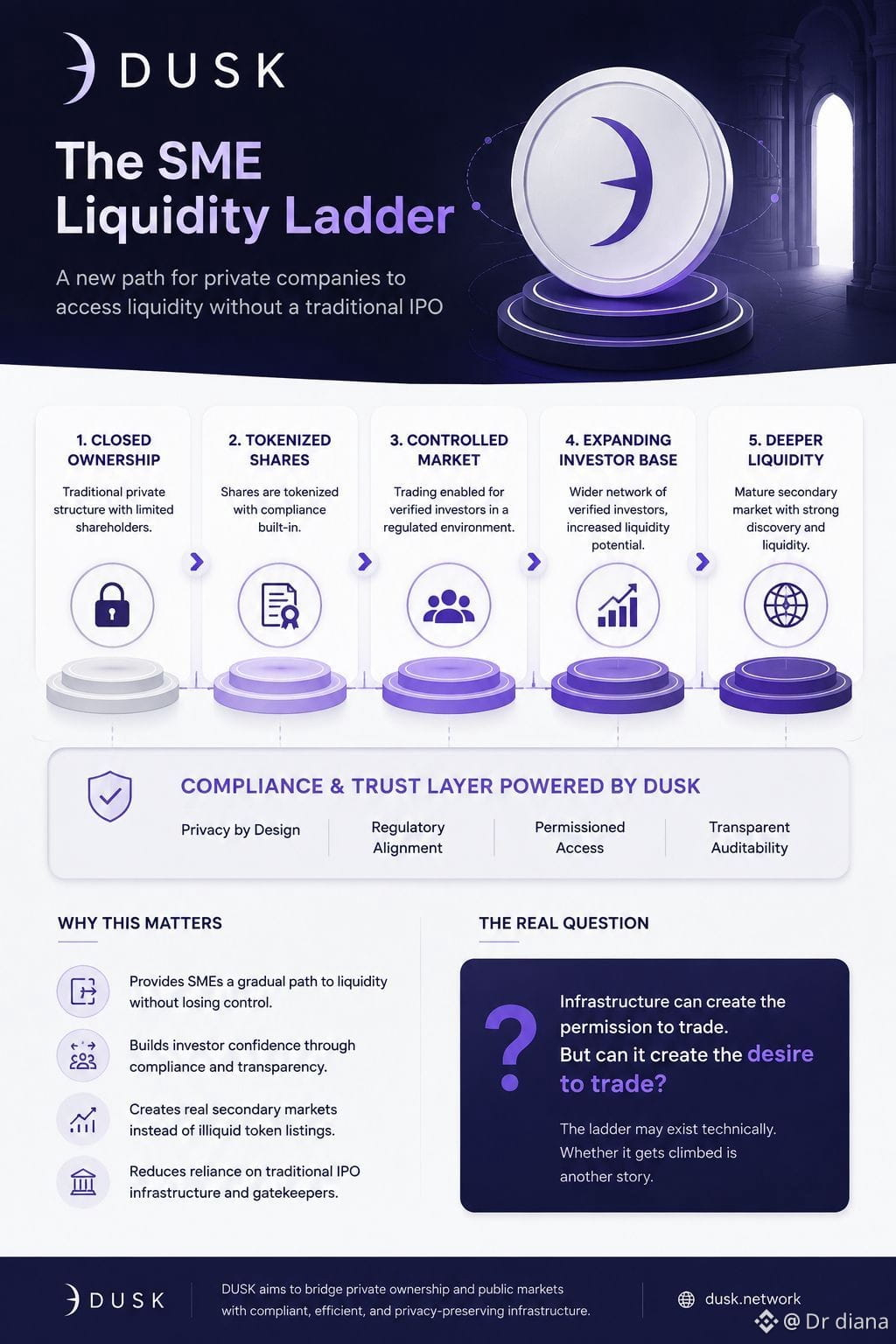
أظل أفكر في مدى الغرابة التي تبدو عليها القفزة من شركة خاصة إلى سوق عام بالفعل. يمكن للشركة أن تقضي سنوات مع قاعدة مساهمين صغيرة ومغلقة، ثم فجأة يطلب منها طرحٌ أولي (IPO) أن تتصرف كما لو كانت منشأة مخصّصة للملكية العامة المستمرة والسيولة. لا يوجد قدر كبير من حالة وسطية.
لذلك أنا فضولي لمعرفة ما إذا كان بإمكان DUSK إنشاء شيء أقرب إلى «سُلّم» سيولة خاص بالمشروعات الصغيرة والمتوسطة (SME).
على ما أفهمه، ليست هناك ضرورة لأن تقفز الشركة الخاصة مباشرةً من الملكية المغلقة إلى سوقٍ عامة بالكامل. يمكنها ترميز الأسهم (tokenize shares)، والسماح للمستثمرين المُتحققين بالوصول إليها، والحفاظ على عمليات النقل داخل قواعد الامتثال، ثم توسيع شبكة المستثمرين تدريجيًا. تصبح الملكية أكثر سيولة دون أن تصبح منفتحة بالكامل.
ولكن من ناحية أخرى، لا تظهر السيولة لمجرد أن الأسهم أصبحت قابلة للتحويل.
هذا الفرق يزعجني. البنية التحتية يمكنها أن تخلق إذنًا بالتداول. لكنها لا تستطيع أن تخلق الرغبة في التداول.
إذا انتقلت شركة صغيرة ومتوسطة من 20 مساهمًا إلى 200، ثم إلى 2,000 مستثمر مُتحقق، فالإشارة المثيرة للاهتمام ليست فقط عدد المحافظ المؤهلة. بل ما إذا كانت المعاملات الثانوية تتكرر، وما إذا كان المشترون يعودون، وما إذا كان بإمكان البائعين الخروج دون أن يؤدي ذلك إلى تدمير اكتشاف السعر.
ربما يخلق ذلك مسارًا جديدًا: شركة خاصة → سوق خاضع للتحكم → سيولة مُنظمة أكثر عمقًا، دون أن يكون الطرح الأولي (IPO) الوجهة التقليدية الحتمية.
ومع ذلك، إذا بقي طلب المستثمرين خفيفًا، فإن السُلّم موجود تقنيًا بينما لا يصعده أحد فعليًا. وأعتقد أن هذه هي النقطة التي تستحق المتابعة.
#dusk $DUSK @Dusk $RE $TRUMP
لذلك أنا فضولي لمعرفة ما إذا كان بإمكان DUSK إنشاء شيء أقرب إلى «سُلّم» سيولة خاص بالمشروعات الصغيرة والمتوسطة (SME).
على ما أفهمه، ليست هناك ضرورة لأن تقفز الشركة الخاصة مباشرةً من الملكية المغلقة إلى سوقٍ عامة بالكامل. يمكنها ترميز الأسهم (tokenize shares)، والسماح للمستثمرين المُتحققين بالوصول إليها، والحفاظ على عمليات النقل داخل قواعد الامتثال، ثم توسيع شبكة المستثمرين تدريجيًا. تصبح الملكية أكثر سيولة دون أن تصبح منفتحة بالكامل.
ولكن من ناحية أخرى، لا تظهر السيولة لمجرد أن الأسهم أصبحت قابلة للتحويل.
هذا الفرق يزعجني. البنية التحتية يمكنها أن تخلق إذنًا بالتداول. لكنها لا تستطيع أن تخلق الرغبة في التداول.
إذا انتقلت شركة صغيرة ومتوسطة من 20 مساهمًا إلى 200، ثم إلى 2,000 مستثمر مُتحقق، فالإشارة المثيرة للاهتمام ليست فقط عدد المحافظ المؤهلة. بل ما إذا كانت المعاملات الثانوية تتكرر، وما إذا كان المشترون يعودون، وما إذا كان بإمكان البائعين الخروج دون أن يؤدي ذلك إلى تدمير اكتشاف السعر.
ربما يخلق ذلك مسارًا جديدًا: شركة خاصة → سوق خاضع للتحكم → سيولة مُنظمة أكثر عمقًا، دون أن يكون الطرح الأولي (IPO) الوجهة التقليدية الحتمية.
ومع ذلك، إذا بقي طلب المستثمرين خفيفًا، فإن السُلّم موجود تقنيًا بينما لا يصعده أحد فعليًا. وأعتقد أن هذه هي النقطة التي تستحق المتابعة.
#dusk $DUSK @Dusk $RE $TRUMP