اعتدتُ أن أظنّ أن خصوصية البلوك تشين تعني إخفاء المعلومات.
بعد دراسة ورقة DUSK البيضاء، أعتقد أن المشكلة الأصعب أكثر إثارة للاهتمام:
كيف يمكن إبقاء المعلومات المالية خاصةً مع الاستمرار في إثبات أن القواعد قد تم اتباعها؟
هنا لفت انتباهي DUSK.
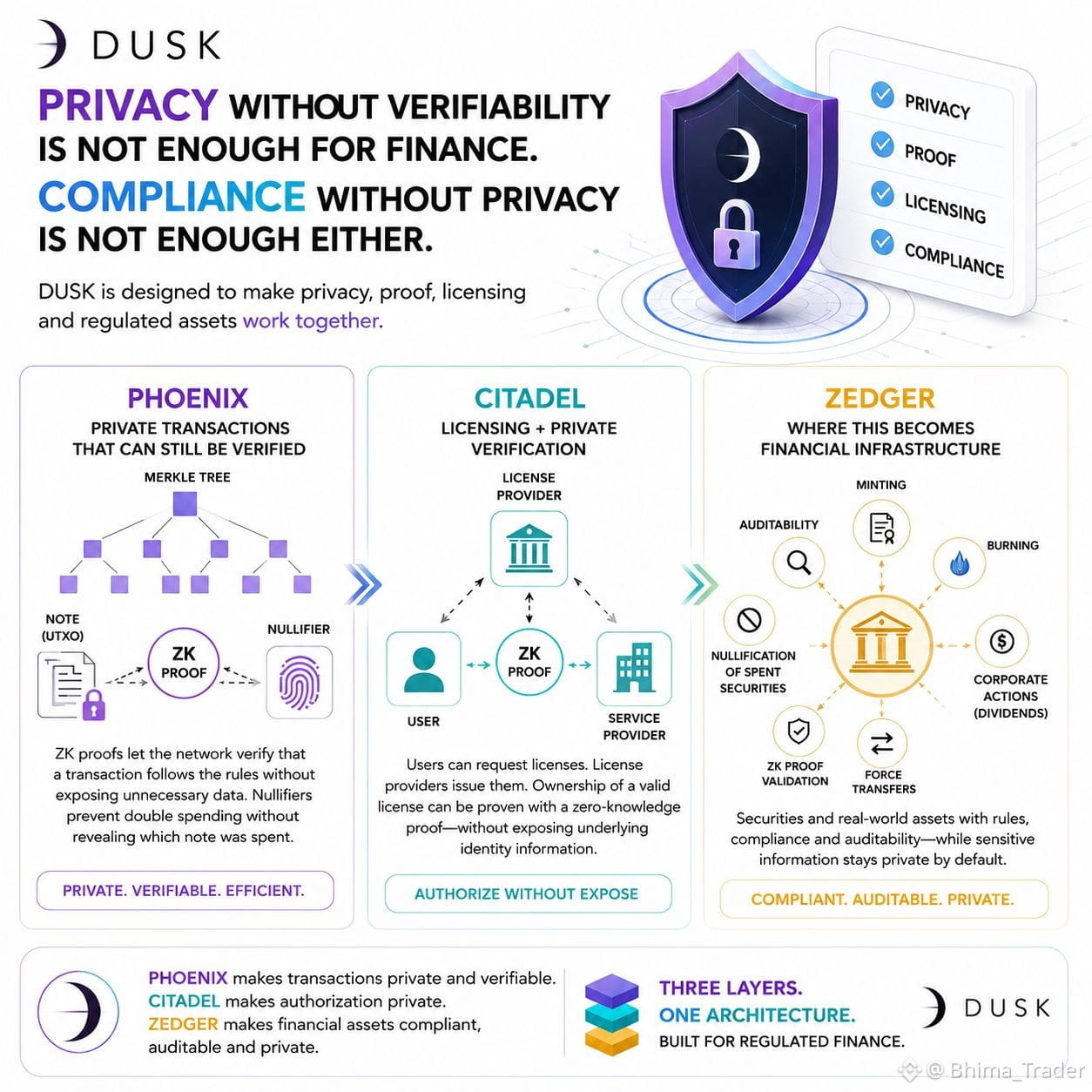
تستخدم Phoenix نموذجًا مبنيًا على UTXO حيث تُخزَّن الإيصالات (notes) في شجرة ميركل. عند إنفاق الإيصال، يتيح إثبات ZK للشبكة التحقق من المعاملة دون كشف تفاصيل غير ضرورية. تمنع مُبطِّلات (nullifiers) ذلك الإيصال من إنفاقه مرة أخرى، بينما لا تحتاج الشبكة إلى الكشف عن الإيصال المحدد الذي تم إنفاقه.
هذه ليست خصوصية من أجل السرية.
إنها خصوصية مع إثبات.
ثم تضيف Citadel عنصرًا مهمًا آخر: الترخيص.
تم تصميم النظام حول إصدار التراخيص والتحقق منها، مع تتبّع الشبكة فيما إذا كان الترخيص صالحًا أم منتهيًا أم مُلغى أم مُجدَّد. أما الفكرة الأعمق فهي إمكانية إثبات التفويض دون تحويل كل جزء من المعلومات الأساسية إلى بيانات عامة.
ويصبح ذلك أكثر معنى مع Zedger.
تم تصميم Zedger للأوراق المالية وRWAs، ويدعم أشياء مثل الإشـداد (minting) والحرق (burning) وتوزيعات الأرباح (dividends) والتحويلات القسرية (force transfers) والتحقق من إثباتات ZK والإبطال (nullification) وقابلية التدقيق (auditability).
لكنني لا أراها كميزات منفصلة.
أراها معمارية واحدة:
Phoenix → معاملات خاصة وقابلة للتحقق
Citadel → تفويض خاص عبر الترخيص
Zedger → أصول مالية بقواعد والامتثال وقابلية التدقيق
هذه هي الجزئية من DUSK التي أجدها مقنعة حقًا.
لأن التمويل المُنظَّم لا يحتاج للاختيار بين الخصوصية والامتثال.
يحتاج إلى طريقة تجعل الخصوصية والإثبات والامتثال تتعايش.
وربما هذه هي الفكرة الحقيقية وراء DUSK:
لا تُخفِ القواعد.
لا تُظهِر كل شيء أيضًا.
أثبت ما يجب إثباته — واحمِ ما لا ينبغي كشفه.
@Dusk #DUSK $DUSK
بعد دراسة ورقة DUSK البيضاء، أعتقد أن المشكلة الأصعب أكثر إثارة للاهتمام:
كيف يمكن إبقاء المعلومات المالية خاصةً مع الاستمرار في إثبات أن القواعد قد تم اتباعها؟
هنا لفت انتباهي DUSK.
تستخدم Phoenix نموذجًا مبنيًا على UTXO حيث تُخزَّن الإيصالات (notes) في شجرة ميركل. عند إنفاق الإيصال، يتيح إثبات ZK للشبكة التحقق من المعاملة دون كشف تفاصيل غير ضرورية. تمنع مُبطِّلات (nullifiers) ذلك الإيصال من إنفاقه مرة أخرى، بينما لا تحتاج الشبكة إلى الكشف عن الإيصال المحدد الذي تم إنفاقه.
هذه ليست خصوصية من أجل السرية.
إنها خصوصية مع إثبات.
ثم تضيف Citadel عنصرًا مهمًا آخر: الترخيص.
تم تصميم النظام حول إصدار التراخيص والتحقق منها، مع تتبّع الشبكة فيما إذا كان الترخيص صالحًا أم منتهيًا أم مُلغى أم مُجدَّد. أما الفكرة الأعمق فهي إمكانية إثبات التفويض دون تحويل كل جزء من المعلومات الأساسية إلى بيانات عامة.
ويصبح ذلك أكثر معنى مع Zedger.
تم تصميم Zedger للأوراق المالية وRWAs، ويدعم أشياء مثل الإشـداد (minting) والحرق (burning) وتوزيعات الأرباح (dividends) والتحويلات القسرية (force transfers) والتحقق من إثباتات ZK والإبطال (nullification) وقابلية التدقيق (auditability).
لكنني لا أراها كميزات منفصلة.
أراها معمارية واحدة:
Phoenix → معاملات خاصة وقابلة للتحقق
Citadel → تفويض خاص عبر الترخيص
Zedger → أصول مالية بقواعد والامتثال وقابلية التدقيق
هذه هي الجزئية من DUSK التي أجدها مقنعة حقًا.
لأن التمويل المُنظَّم لا يحتاج للاختيار بين الخصوصية والامتثال.
يحتاج إلى طريقة تجعل الخصوصية والإثبات والامتثال تتعايش.
وربما هذه هي الفكرة الحقيقية وراء DUSK:
لا تُخفِ القواعد.
لا تُظهِر كل شيء أيضًا.
أثبت ما يجب إثباته — واحمِ ما لا ينبغي كشفه.
@Dusk #DUSK $DUSK