
لقد أمضيت وقتًا طويلًا في سماع الكثير عن أمان المحفظة لدرجة أنني كدت أتوقف عن التشكيك في الافتراض الأساسي الكامن وراء ذلك: إذا فقدت المفاتيح، فقدت الوصول. في التشفير العادي، تكون هذه القاعدة قاسية لكنها مألوفة. أما مع الأصول المُنظَّمة، فلست متأكدًا أنها تبقى كما هي دون تغيير.
وهنا تجعلني شركة Dusk Trade أفكر.
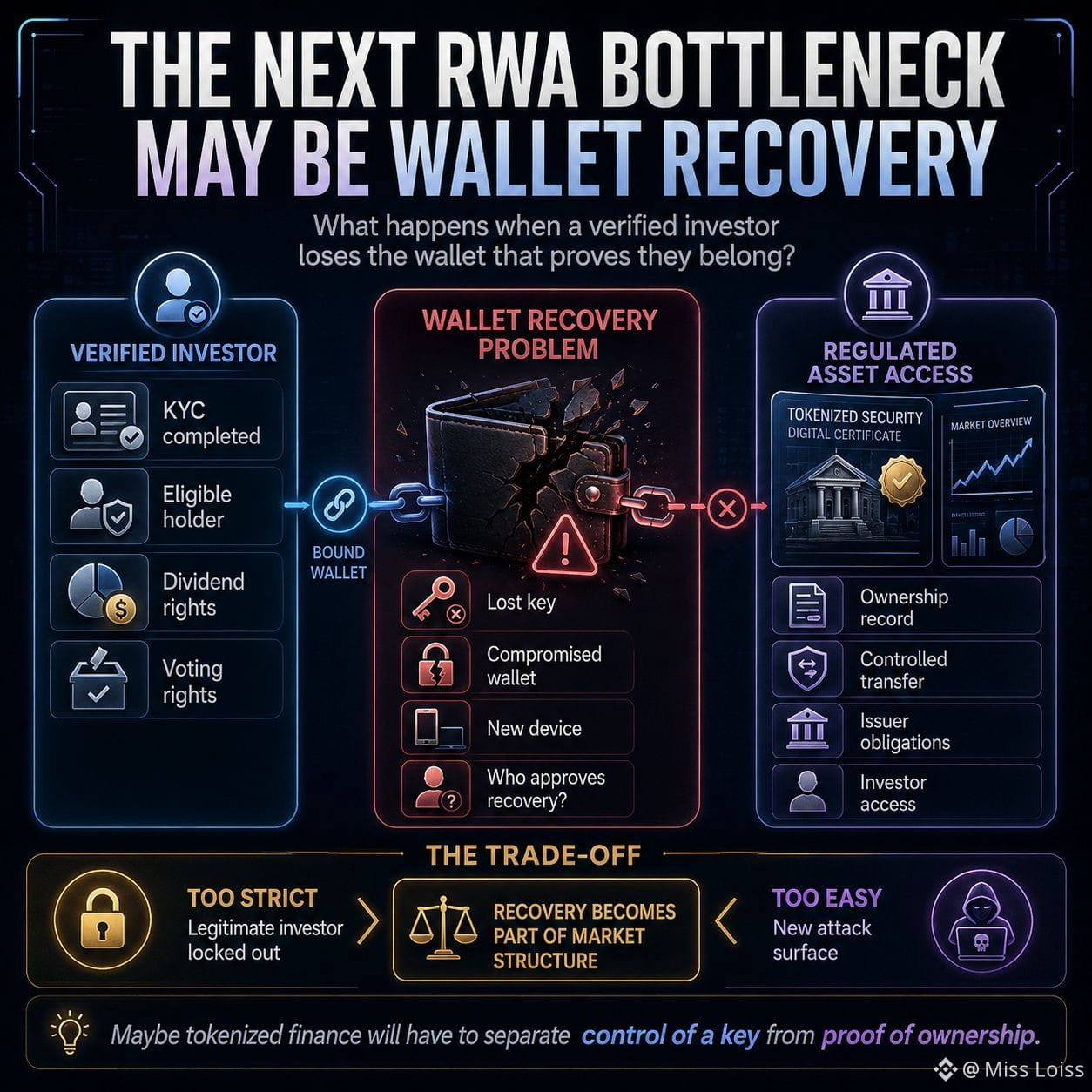
إذا تم التحقق من المستثمر، وربطه بمحفظة، ومن حقه قانونًا امتلاك ورقة مالية مُرمّزة، فماذا يحدث عندما تُختَرَق تلك المحفظة أو تختفي ببساطة؟ لم يعد الأصل مجرد عملة. قد توجد سجلات ملكية، وفحوص أهلية، والتزامات جهة الإصدار، وربما حتى أرباح أو حقوق تصويت مرتبطة بهذا المركز.
لذلك يبدو أن الاسترداد لا يبدأ كميزة تقنية فحسب، بل كجزء من بنية السوق.
لكنني لا أعتقد أن الإجابة واضحة. إن جعلت الاسترداد سهلًا جدًا، فإنك تخلق سطح هجوم جديدًا. وإن جعلته صارمًا جدًا، فقد يؤدي فقدان مفتاح واحد إلى حبس مستثمر شرعي عن أصل ما يزال يملكه قانونًا.
ثم توجد مشكلة التنسيق. من الذي يوافق على المحفظة الجديدة؟ الجهة المُصدِرة؟ مزوّد الامتثال؟ عقد استرداد ما؟ وكيف تمنع هذه العملية من أن تتحول إلى نقطة اختناق مركزية؟
لست متأكدًا بعد أين يكمن التوازن النظيف.
ربما يفرض التمويل المُرمّز في النهاية على التشفير فصل “التحكم في مفتاح” عن “إثبات الملكية”.
#dusk $DUSK @Dusk $RE $MVLLB
وهنا تجعلني شركة Dusk Trade أفكر.
إذا تم التحقق من المستثمر، وربطه بمحفظة، ومن حقه قانونًا امتلاك ورقة مالية مُرمّزة، فماذا يحدث عندما تُختَرَق تلك المحفظة أو تختفي ببساطة؟ لم يعد الأصل مجرد عملة. قد توجد سجلات ملكية، وفحوص أهلية، والتزامات جهة الإصدار، وربما حتى أرباح أو حقوق تصويت مرتبطة بهذا المركز.
لذلك يبدو أن الاسترداد لا يبدأ كميزة تقنية فحسب، بل كجزء من بنية السوق.
لكنني لا أعتقد أن الإجابة واضحة. إن جعلت الاسترداد سهلًا جدًا، فإنك تخلق سطح هجوم جديدًا. وإن جعلته صارمًا جدًا، فقد يؤدي فقدان مفتاح واحد إلى حبس مستثمر شرعي عن أصل ما يزال يملكه قانونًا.
ثم توجد مشكلة التنسيق. من الذي يوافق على المحفظة الجديدة؟ الجهة المُصدِرة؟ مزوّد الامتثال؟ عقد استرداد ما؟ وكيف تمنع هذه العملية من أن تتحول إلى نقطة اختناق مركزية؟
لست متأكدًا بعد أين يكمن التوازن النظيف.
ربما يفرض التمويل المُرمّز في النهاية على التشفير فصل “التحكم في مفتاح” عن “إثبات الملكية”.
#dusk $DUSK @Dusk $RE $MVLLB