هل يجعل DuskEVM عقود Solidity خاصة تلقائيًا؟
يُنشئ DuskEVM افتراضًا سهلاً: إذا كان تطبيق ما يعمل على Dusk، فيجب أن يرث تلقائيًا نموذج الخصوصية الخاص بـ Dusk.
لكن المعمار يقول شيئًا أدق.
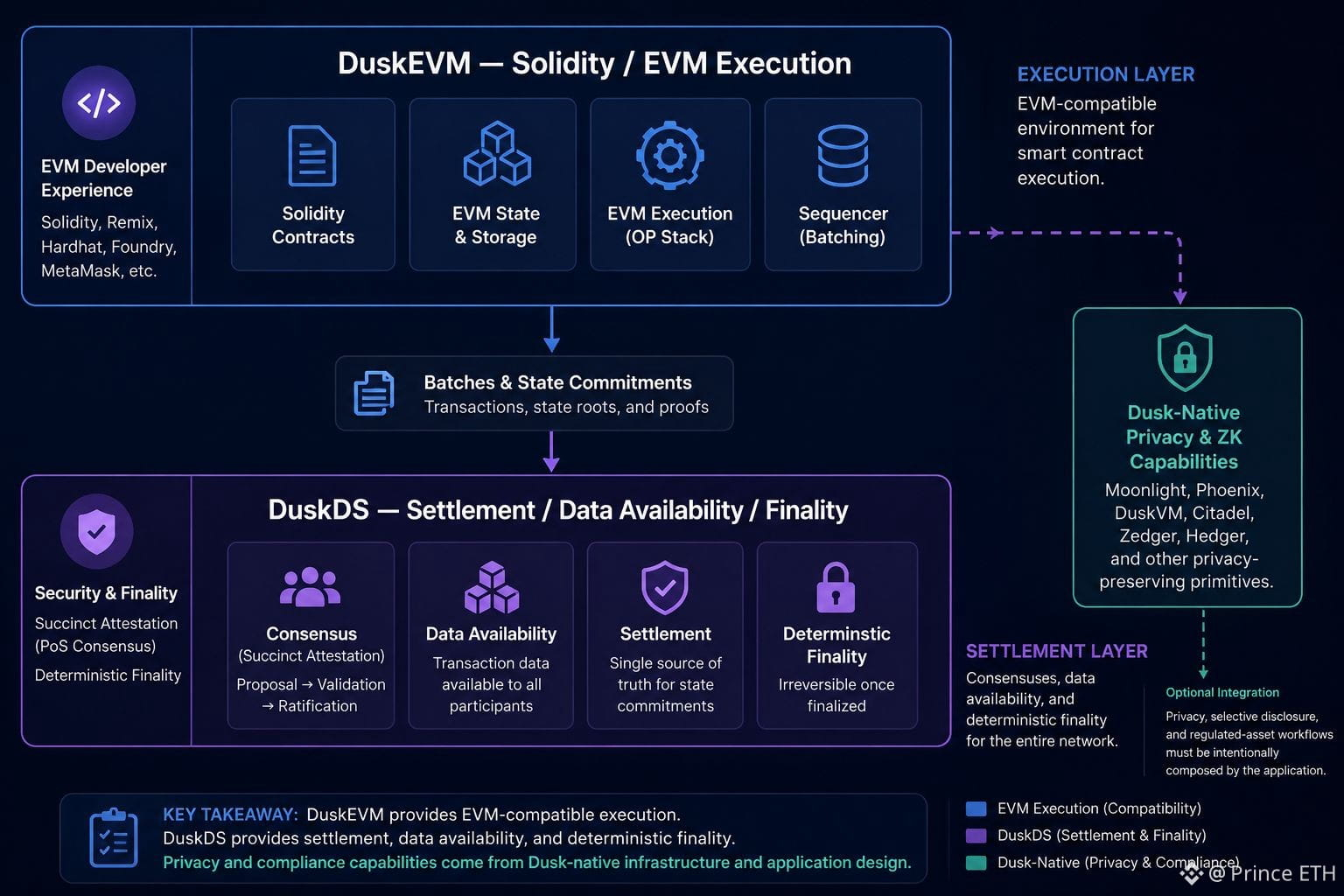
يُعد DuskEVM بيئة تنفيذ EVM مبنية على OP Stack. تُنفَّذ عقود Solidity هناك بأدوات Ethereum المألوفة، بينما تُسوي الدُفعات والالتزامات بالحالة عبر DuskDS، الذي يوفر توافقًا إجماعيًا وإتاحة البيانات ونهائية حتمية.
تتأثر الأهمية هنا لأن قابلية التوافق في التنفيذ وإمكانية الخصوصية ليست ضمانين متطابقين.
تضع وثائق Dusk الخاصة بـ DuskVM كمسار للعقود التي تحتاج إلى وصول مباشر إلى أصول L1، ونماذج المعاملات، وإمكانات الخصوصية أو الإثباتات الصفرية المعرفة. أما DuskEVM، في المقابل، فيحل مشكلة مختلفة أولاً: تنفيذ مكافئ لـ EVM وتوافق المطورين. يمكن للمنصات التي تركز على الخصوصية أن تتصل بمكدس Dusk الأوسع، لكن يظل ذلك يعتمد على كيفية تصميم التطبيق.
لذا، السؤال المفيد ليس: “هل يستطيع مطورو Ethereum نشر عقود على Dusk؟” يمكنهم ذلك.
السؤال الأصعب هو: ما الضمانات التي تأتي من طبقة EVM، وما الذي يجب دمجه عمدًا من DuskDS أو من بدائيات Dusk الأصلية؟
هذا يغيّر النموذج الذهني. لا يقوم Dusk فقط بتغليف الخصوصية حول EVM. بل يفصل بين التنفيذ والتسوية وبنية تحتية داعمة للخصوصية، بحيث يمكن للمطورين اختيار مصدر كل ضمان.
بالنسبة للتمويل المنظم، تُعد هذه المزاوجة المعيارية قوة—لكنها أيضًا تجعل خيارات المعمار جزءًا من نموذج الامتثال والسرية.
@Dusk $DUSK #dusk $HEMI $ACE
يُنشئ DuskEVM افتراضًا سهلاً: إذا كان تطبيق ما يعمل على Dusk، فيجب أن يرث تلقائيًا نموذج الخصوصية الخاص بـ Dusk.
لكن المعمار يقول شيئًا أدق.
يُعد DuskEVM بيئة تنفيذ EVM مبنية على OP Stack. تُنفَّذ عقود Solidity هناك بأدوات Ethereum المألوفة، بينما تُسوي الدُفعات والالتزامات بالحالة عبر DuskDS، الذي يوفر توافقًا إجماعيًا وإتاحة البيانات ونهائية حتمية.
تتأثر الأهمية هنا لأن قابلية التوافق في التنفيذ وإمكانية الخصوصية ليست ضمانين متطابقين.
تضع وثائق Dusk الخاصة بـ DuskVM كمسار للعقود التي تحتاج إلى وصول مباشر إلى أصول L1، ونماذج المعاملات، وإمكانات الخصوصية أو الإثباتات الصفرية المعرفة. أما DuskEVM، في المقابل، فيحل مشكلة مختلفة أولاً: تنفيذ مكافئ لـ EVM وتوافق المطورين. يمكن للمنصات التي تركز على الخصوصية أن تتصل بمكدس Dusk الأوسع، لكن يظل ذلك يعتمد على كيفية تصميم التطبيق.
لذا، السؤال المفيد ليس: “هل يستطيع مطورو Ethereum نشر عقود على Dusk؟” يمكنهم ذلك.
السؤال الأصعب هو: ما الضمانات التي تأتي من طبقة EVM، وما الذي يجب دمجه عمدًا من DuskDS أو من بدائيات Dusk الأصلية؟
هذا يغيّر النموذج الذهني. لا يقوم Dusk فقط بتغليف الخصوصية حول EVM. بل يفصل بين التنفيذ والتسوية وبنية تحتية داعمة للخصوصية، بحيث يمكن للمطورين اختيار مصدر كل ضمان.
بالنسبة للتمويل المنظم، تُعد هذه المزاوجة المعيارية قوة—لكنها أيضًا تجعل خيارات المعمار جزءًا من نموذج الامتثال والسرية.
@Dusk $DUSK #dusk $HEMI $ACE