I keep thinking about a specific tension in how @Dusk describes privacy, and it's less obvious than it sounds at first. Most people assume privacy and regulation pull in opposite directions you get one or the other, not both.
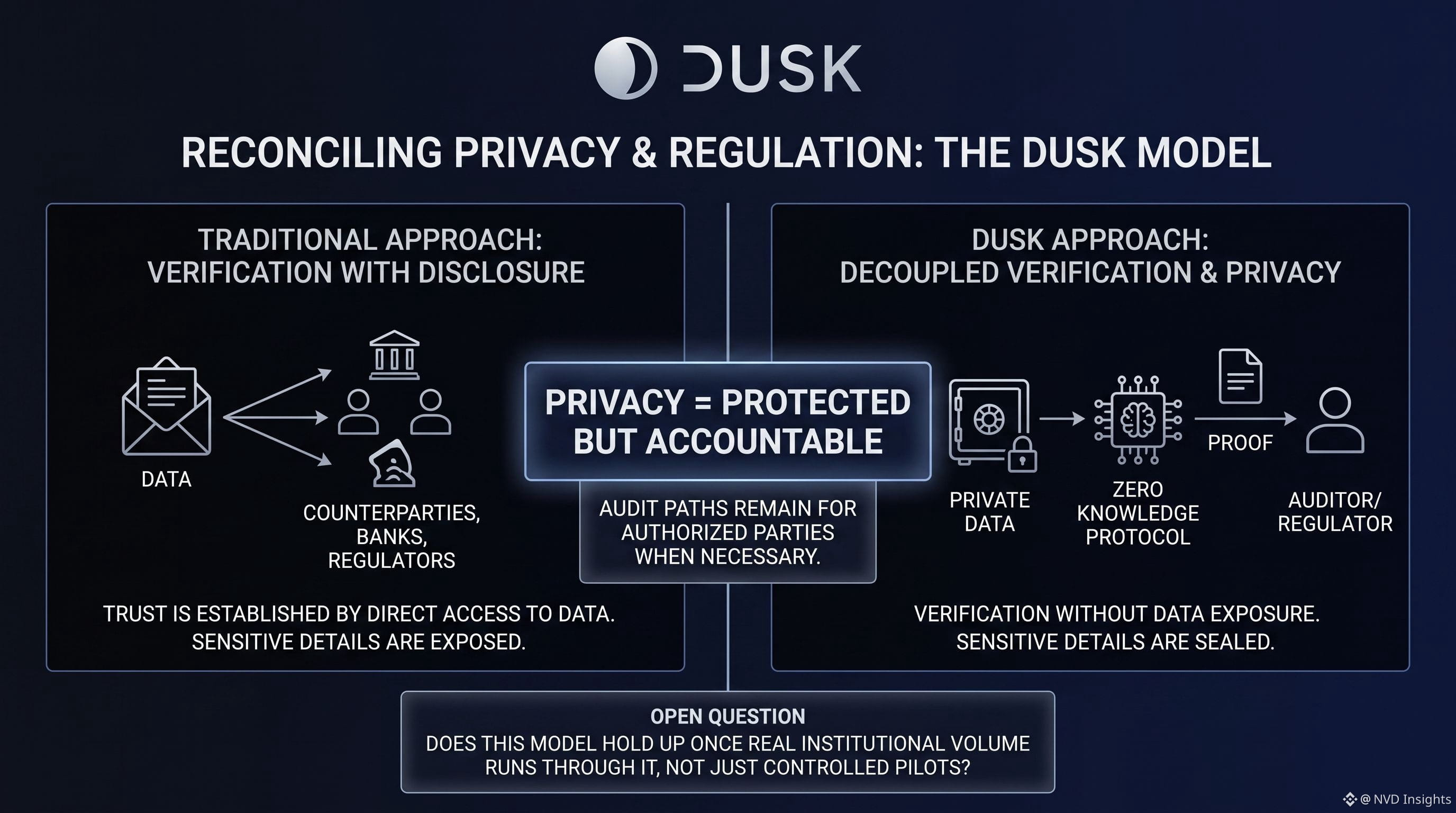
The thing is, Dusk's model does not force that choice. Zero knowledge verification lets the network confirm a transaction followed the rules without exposing what those specifics actually were. Traditional finance can not d0 that it solves trust by making banks, counterparties, and regulators look directly at the data before anything gets signed off. Dusk decouples verification from disclosure entirely.
That's the real shift, honestly sensitive details stay sealed, but authorized parties still get a working audit path when it actually matters. Privacy stops meaning "off the grid" and starts meaning "protected but accountable," which is a different design goal than most privacy focused chains are even attempting.
The open question I can not get past: does this hold up once real institutional volume runs through it, not just controlled pilots where everything's clean by design.
Still, building toward that balance from day one is a more serious bet than retrofitting compliance later.
Is anyone actually tracking how this performs once real regulated assets start moving at scale?
#dusk $DUSK
The thing is, Dusk's model does not force that choice. Zero knowledge verification lets the network confirm a transaction followed the rules without exposing what those specifics actually were. Traditional finance can not d0 that it solves trust by making banks, counterparties, and regulators look directly at the data before anything gets signed off. Dusk decouples verification from disclosure entirely.
That's the real shift, honestly sensitive details stay sealed, but authorized parties still get a working audit path when it actually matters. Privacy stops meaning "off the grid" and starts meaning "protected but accountable," which is a different design goal than most privacy focused chains are even attempting.
The open question I can not get past: does this hold up once real institutional volume runs through it, not just controlled pilots where everything's clean by design.
Still, building toward that balance from day one is a more serious bet than retrofitting compliance later.
Is anyone actually tracking how this performs once real regulated assets start moving at scale?
#dusk $DUSK