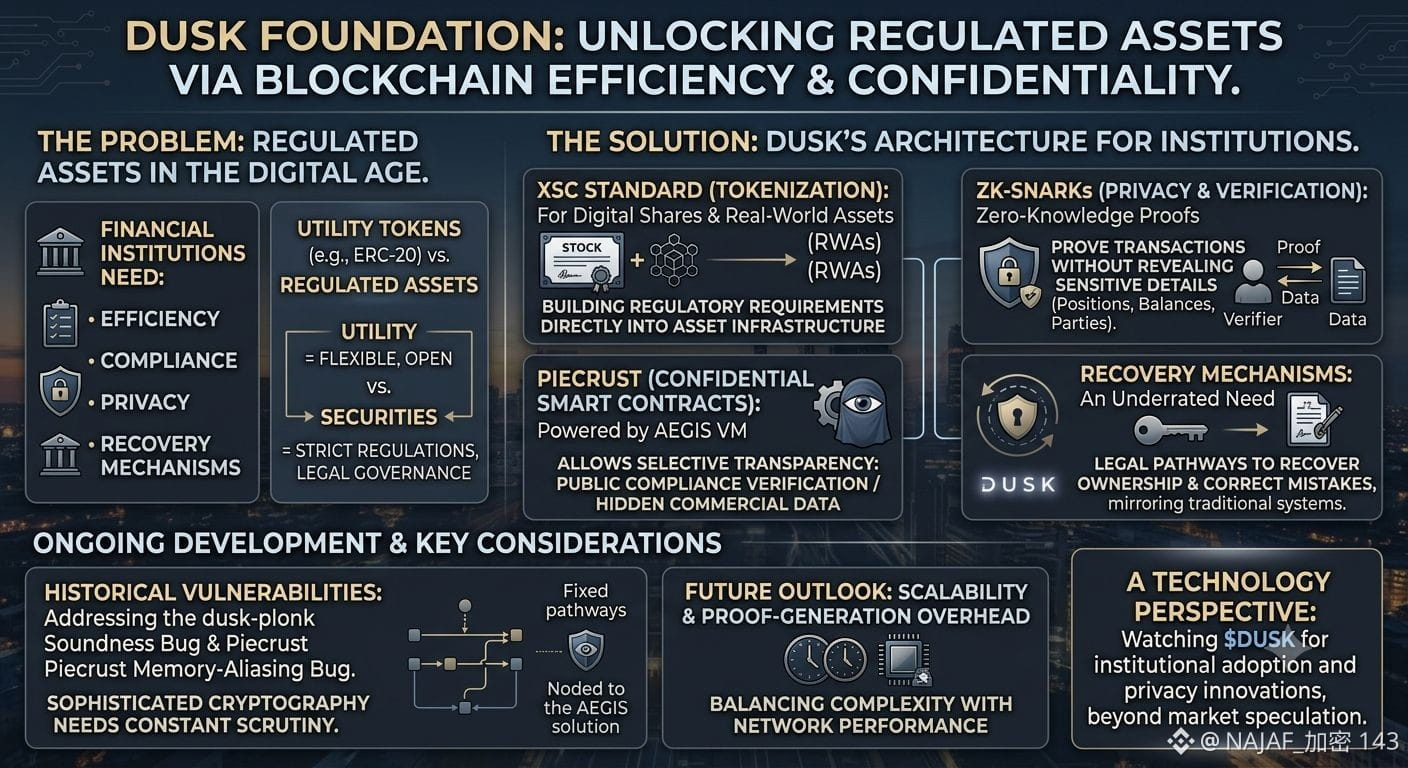

كلما بحثت أكثر عن @Dusk_Foundation، زادت قناعتي بأن الجزء الأكثر إثارة للاهتمام في Dusk هو المشكلة التي يحاول حلّها: الأصول المُنظَّمة تحتاج إلى كفاءة البلوك تشين، لكن المؤسسات المالية تحتاج أيضًا إلى الخصوصية وآليات الامتثال والاسترداد.
معيار XSC الخاص بـ Dusk هو جزء واحد من هذه اللغز. ويمكن مقارنته بشكل غير صارم بـ ERC-20 لأن كليهما يوفّران إطارًا للأصول المُحوّلة إلى توكنات، لكن XSC موجّه تحديدًا إلى الأوراق المالية والأصول المُنظَّمة. وهذا التمييز مهم لأن السهم الرقمي ليس بالضرورة محكومًا بالقواعد نفسها التي تحكم توكن المرافق العادي.
قد يتيح ذلك للشركات تمثيل الأوراق المالية أو الأصول الواقعية المُشفَّرة (RWAs) على السلسلة، مع تضمين متطلبات تنظيمية داخل البنية التحتية للأصل نفسها.
لكنني أعتقد أن الاسترداد مسألة مُقلَّلة من حيث أهميتها. إذا فقد أحد المساهمين مفتاحًا خاصًا، فهل يجب أن يختفي ملكه القانوني إلى الأبد؟ لدى أنظمة الأوراق المالية التقليدية آليات لتصحيح الأخطاء واستعادة الملكية. وقد تحتاج الأوراق المالية المُحوّلة إلى توكنات إلى مسارات قانونية مماثلة.
الخصوصية جزء كبير آخر من تصميم Dusk. يمكن لـ zk-SNARKs إثبات أن المعاملة تستوفي شروطًا معيّنة دون كشف كل المعلومات الحساسة الكامنة وراءها. بالنسبة للأسواق المالية، قد يعني ذلك التحقق دون بث كل تفاصيل المركز أو الرصيد أو المعاملة.
تمضي Piecrust بعقودها الذكية السرّية بالمفهوم إلى أبعد من ذلك. تخيّل أن معلومات الامتثال يمكن التحقق منها علنًا، بينما تبقى البيانات المالية الحساسة تجاريًا مخفية.
وهنا تصبح الشفافية الانتقائية مثيرة للاهتمام.
ومع ذلك، لن أتعامل مع Dusk باعتباره حلًا مكتملًا. إن خلل soundness التاريخي في dusk-plonk وخلل تغيير/التلاعب بالذاكرة في Piecrust هما تذكير بأن التشفير المتقدم والتنفيذ المَخبّأ/السرّي يحتاجان إلى تدقيق مستمر. تم معالجة مشكلة تغيير الذاكرة في AEGIS، لكن كلفة توليد الإثباتات وقابلية التوسع ما زالت أسئلة مهمة.
أنا أراقب $DUSK من منظور تقني، لا من منظور سوقي فقط.
@Dusk $DUSK #dusk
معيار XSC الخاص بـ Dusk هو جزء واحد من هذه اللغز. ويمكن مقارنته بشكل غير صارم بـ ERC-20 لأن كليهما يوفّران إطارًا للأصول المُحوّلة إلى توكنات، لكن XSC موجّه تحديدًا إلى الأوراق المالية والأصول المُنظَّمة. وهذا التمييز مهم لأن السهم الرقمي ليس بالضرورة محكومًا بالقواعد نفسها التي تحكم توكن المرافق العادي.
قد يتيح ذلك للشركات تمثيل الأوراق المالية أو الأصول الواقعية المُشفَّرة (RWAs) على السلسلة، مع تضمين متطلبات تنظيمية داخل البنية التحتية للأصل نفسها.
لكنني أعتقد أن الاسترداد مسألة مُقلَّلة من حيث أهميتها. إذا فقد أحد المساهمين مفتاحًا خاصًا، فهل يجب أن يختفي ملكه القانوني إلى الأبد؟ لدى أنظمة الأوراق المالية التقليدية آليات لتصحيح الأخطاء واستعادة الملكية. وقد تحتاج الأوراق المالية المُحوّلة إلى توكنات إلى مسارات قانونية مماثلة.
الخصوصية جزء كبير آخر من تصميم Dusk. يمكن لـ zk-SNARKs إثبات أن المعاملة تستوفي شروطًا معيّنة دون كشف كل المعلومات الحساسة الكامنة وراءها. بالنسبة للأسواق المالية، قد يعني ذلك التحقق دون بث كل تفاصيل المركز أو الرصيد أو المعاملة.
تمضي Piecrust بعقودها الذكية السرّية بالمفهوم إلى أبعد من ذلك. تخيّل أن معلومات الامتثال يمكن التحقق منها علنًا، بينما تبقى البيانات المالية الحساسة تجاريًا مخفية.
وهنا تصبح الشفافية الانتقائية مثيرة للاهتمام.
ومع ذلك، لن أتعامل مع Dusk باعتباره حلًا مكتملًا. إن خلل soundness التاريخي في dusk-plonk وخلل تغيير/التلاعب بالذاكرة في Piecrust هما تذكير بأن التشفير المتقدم والتنفيذ المَخبّأ/السرّي يحتاجان إلى تدقيق مستمر. تم معالجة مشكلة تغيير الذاكرة في AEGIS، لكن كلفة توليد الإثباتات وقابلية التوسع ما زالت أسئلة مهمة.
أنا أراقب $DUSK من منظور تقني، لا من منظور سوقي فقط.
@Dusk $DUSK #dusk