لقد شاهدتُ ما يكفي من الدورات لأعرف أن “RWA” يمكن أن تتحول إلى مجرد تسمية أخرى يلقيها الناس على أي شيء يتضمن توكنًا وأصلًا مرتبطًا بالعالم الحقيقي.
ما لفت انتباهي في bStocks من Binance وDusk هو أنهما يبدو أنهما يسلطان الضوء على مشكلتين مختلفتين تمامًا.
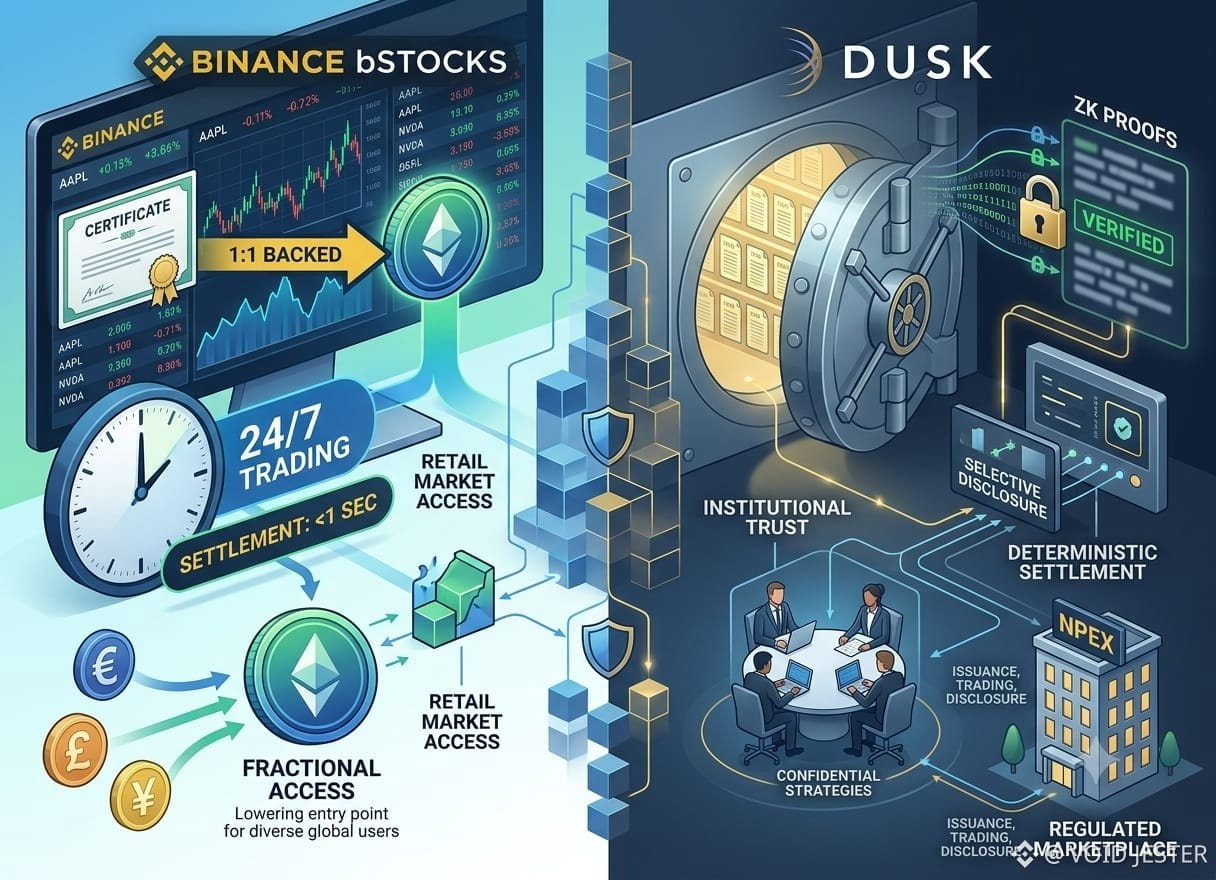
يجعل bStocks الجزء الأول يبدو تقريبًا سهلاً. الأسهم الأمريكية الحقيقية مدعومة بنسبة 1:1، ويعمل التداول 24/7، وغالبًا ما يستغرق التسوية أقل من ثانية، ويؤدي الوصول الكسري إلى خفض نقطة الدخول بشكل كبير. بالنسبة إلى مستخدم التجزئة، يبدو هذا بالضبط ما كان من المفترض أن تقدمه أسواق السلسلة.
لكن بعد ذلك أفكر في المؤسسات.
لقد رأيت هذا من قبل: تحلّ العملات المشفرة الميكانيكيات ثم تكتشف أن المشكلة الحقيقية هي الثقة. الشفافية الكاملة رائعة حتى يتمكن منافسوك من مراقبة مراكزكم وأرصدةكم وأطراف التعامل واستراتيجيتكم. وهذا ليس مجرد إزعاج بسيط في التمويل.
هنا يشعر لي Dusk بأنه مختلف. فمعماره مبني على الخصوصية مع الإفصاح الانتقائي: إبقِ الحالة الحساسة خاصة، مع السماح في الوقت نفسه للأطراف المصرح لها بالتحقق مما يحتاجون إليه. لا توجد إثباتات ZK وضوابط الوصول والتسوية الحتمية فقط لجعل السلسلة تبدو متقدمة؛ بل هي موجهة إلى المنطقة الوسطى المزعجة التي تحتاجها الأسواق المنظمة بالفعل.
كما أن اتصال NPEX مهم أيضًا. لا يتحدث Dusk فقط عن توكنة الأصول؛ بل يحاول ربط الإصدار والتداول والإفصاح والتسوية داخل إطار سوق منظم.
لستُ متأكدًا بعد مما إذا كان هذا يعمل على نطاق مؤسسي حقيقي. لا أثق بالكامل بأي قصة من قصص RWA حتى يكون السوق قد اختبرها تحت ضغط.
لكن هناك شيء ما في هذا يبدو مختلفًا.
ربما يجعل bStocks الناس يشعرون بالراحة تجاه الأصول على السلسلة. وربما البنية التحتية مثل Dusk هي ما يجعل المؤسسات في النهاية تشعر بالراحة وهي تبقى هناك.
هذا العائق الثاني هو الذي أستمر في متابعته.
@Dusk #dusk $DUSK
ما لفت انتباهي في bStocks من Binance وDusk هو أنهما يبدو أنهما يسلطان الضوء على مشكلتين مختلفتين تمامًا.
يجعل bStocks الجزء الأول يبدو تقريبًا سهلاً. الأسهم الأمريكية الحقيقية مدعومة بنسبة 1:1، ويعمل التداول 24/7، وغالبًا ما يستغرق التسوية أقل من ثانية، ويؤدي الوصول الكسري إلى خفض نقطة الدخول بشكل كبير. بالنسبة إلى مستخدم التجزئة، يبدو هذا بالضبط ما كان من المفترض أن تقدمه أسواق السلسلة.
لكن بعد ذلك أفكر في المؤسسات.
لقد رأيت هذا من قبل: تحلّ العملات المشفرة الميكانيكيات ثم تكتشف أن المشكلة الحقيقية هي الثقة. الشفافية الكاملة رائعة حتى يتمكن منافسوك من مراقبة مراكزكم وأرصدةكم وأطراف التعامل واستراتيجيتكم. وهذا ليس مجرد إزعاج بسيط في التمويل.
هنا يشعر لي Dusk بأنه مختلف. فمعماره مبني على الخصوصية مع الإفصاح الانتقائي: إبقِ الحالة الحساسة خاصة، مع السماح في الوقت نفسه للأطراف المصرح لها بالتحقق مما يحتاجون إليه. لا توجد إثباتات ZK وضوابط الوصول والتسوية الحتمية فقط لجعل السلسلة تبدو متقدمة؛ بل هي موجهة إلى المنطقة الوسطى المزعجة التي تحتاجها الأسواق المنظمة بالفعل.
كما أن اتصال NPEX مهم أيضًا. لا يتحدث Dusk فقط عن توكنة الأصول؛ بل يحاول ربط الإصدار والتداول والإفصاح والتسوية داخل إطار سوق منظم.
لستُ متأكدًا بعد مما إذا كان هذا يعمل على نطاق مؤسسي حقيقي. لا أثق بالكامل بأي قصة من قصص RWA حتى يكون السوق قد اختبرها تحت ضغط.
لكن هناك شيء ما في هذا يبدو مختلفًا.
ربما يجعل bStocks الناس يشعرون بالراحة تجاه الأصول على السلسلة. وربما البنية التحتية مثل Dusk هي ما يجعل المؤسسات في النهاية تشعر بالراحة وهي تبقى هناك.
هذا العائق الثاني هو الذي أستمر في متابعته.
@Dusk #dusk $DUSK