This is a much sharper risk thesis than simply saying “fixed-rate lending is safer.”
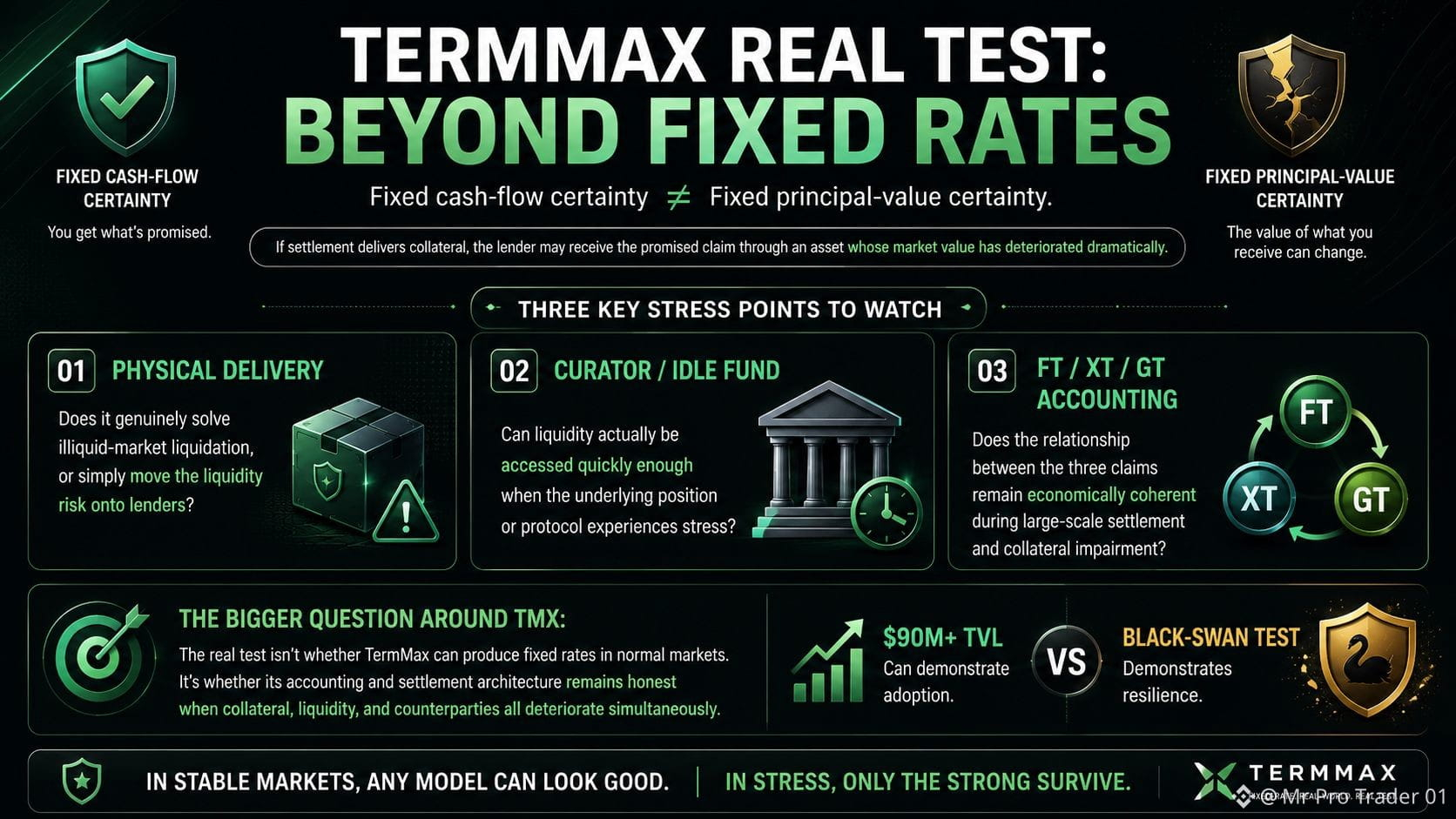
The distinction you’re making is important: fixed cash-flow certainty ≠ fixed principal-value certainty. If settlement ultimately delivers collateral, the lender may receive the promised debt claim through an asset whose market value has deteriorated dramatically.
The three areas you highlighted are also the right stress points to watch:
1. Physical delivery: Does it genuinely solve illiquid-market liquidation, or simply move the liquidity risk onto lenders?
2. Curator/Idle Fund: Can liquidity actually be accessed quickly enough when the underlying position or protocol experiences stress?
3. FT/XT/GT accounting: Does the relationship between the three claims remain economically coherent during large-scale settlement and collateral impairment?
And that leads to the bigger question around TMX:
The real test isn't whether TermMax can produce fixed rates during normal markets. It's whether its accounting and settlement architecture remains honest when collateral, liquidity, and counterparties all deteriorate simultaneously.
$90M+ TVL can demonstrate adoption. The real black-swan test demonstrates resilience.#termmax @TermMax
The distinction you’re making is important: fixed cash-flow certainty ≠ fixed principal-value certainty. If settlement ultimately delivers collateral, the lender may receive the promised debt claim through an asset whose market value has deteriorated dramatically.
The three areas you highlighted are also the right stress points to watch:
1. Physical delivery: Does it genuinely solve illiquid-market liquidation, or simply move the liquidity risk onto lenders?
2. Curator/Idle Fund: Can liquidity actually be accessed quickly enough when the underlying position or protocol experiences stress?
3. FT/XT/GT accounting: Does the relationship between the three claims remain economically coherent during large-scale settlement and collateral impairment?
And that leads to the bigger question around TMX:
The real test isn't whether TermMax can produce fixed rates during normal markets. It's whether its accounting and settlement architecture remains honest when collateral, liquidity, and counterparties all deteriorate simultaneously.
$90M+ TVL can demonstrate adoption. The real black-swan test demonstrates resilience.#termmax @TermMax