#termmax @TermMax
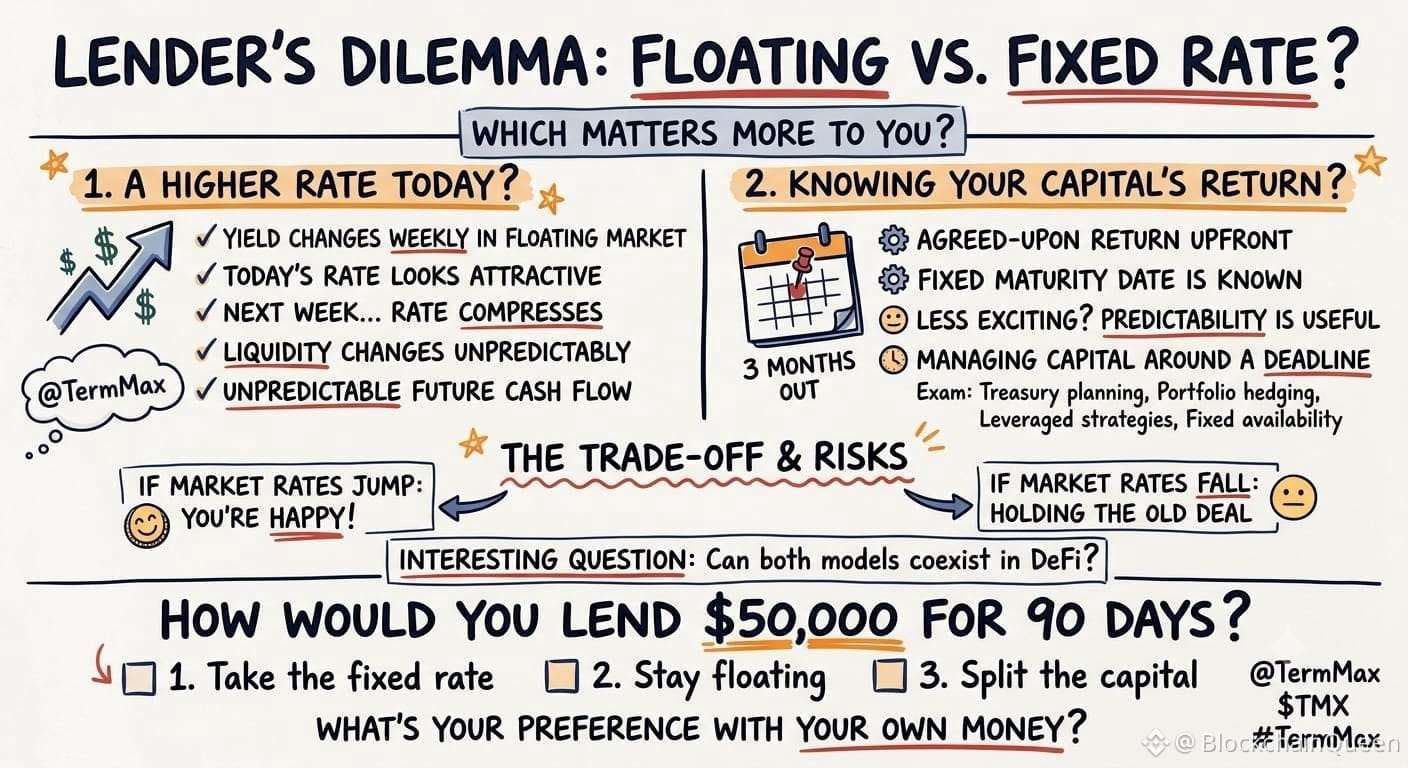
ما الذي يهمّ المقرض أكثر:
هل معدل أعلى اليوم؟
أم معرفة بالضبط ما الذي سيفعله رأس مالك بعد ثلاثة أشهر؟
هذا هو السؤال الذي أعود إليه دائمًا مع @TermMax .
في سوق الفائدة المتغيرة، يمكن أن يتغير العائد بينما تكون بالفعل في الصفقة.
يبدو اليوم جذابًا.
الأسبوع القادم ينكمش المعدل.
بعد بضعة أيام تتغير السيولة مرة أخرى.
أنت تحقق أرباحًا، لكن التدفق النقدي المستقبلي ليس قابلًا للتنبؤ بالكامل.
الإقراض بمعدل ثابت يغيّر هذه العلاقة.
يتم الاتفاق على العائد مسبقًا ويُعرف تاريخ الاستحقاق.
يبدو ذلك أقل إثارة.
لكنني أعتقد أن هذا هو المقصود.
إن القدرة على التنبؤ تكون مفيدة عندما تدير رأس المال ضمن موعد نهائي.
تخطيط الخزانة.
تحوط المحفظة.
استراتيجيات بالرافعة.
رأس مال يحتاج إلى أن يكون متاحًا في تاريخ محدد.
المقايضة واضحة أيضًا.
لا تتحسن الصفقة الثابتة تلقائيًا لمجرد أن المعدل يمكن التنبؤ به.
إذا قفزت معدلات السوق أعلى بعد أن تدخل، فستكون سعيدًا.
وإذا انخفضت المعدلات بشكل حاد، فستكون أنت من يحمل الصفقة القديمة.
لذلك فالسؤال المثير للاهتمام ليس ما إذا كان نموذج TermMax ذو الفائدة الثابتة يتفوق على الإقراض بمعدل متغير في كل مكان.
على الأرجح لا ينبغي أن يكون ذلك.
السؤال الأفضل هو ما إذا كان لدى DeFi مجال ليكون للأسواق المختلفة مكان للتعايش.
أحدهما يُحسّن المرونة.
والآخر يُحسّن اليقين.
إذا كان لديك 50,000 دولار للإقراض للأيام الـ90 القادمة:
1. خذ السعر الثابت
2. ابقَ بمعدل متغير
3. قسّم رأس المال
أنا مهتم بمعرفة ما الذي يفضله الناس فعليًا عندما يكون المال مالهم.
@TermMax $TMX #TermMax
ما الذي يهمّ المقرض أكثر:
هل معدل أعلى اليوم؟
أم معرفة بالضبط ما الذي سيفعله رأس مالك بعد ثلاثة أشهر؟
هذا هو السؤال الذي أعود إليه دائمًا مع @TermMax .
في سوق الفائدة المتغيرة، يمكن أن يتغير العائد بينما تكون بالفعل في الصفقة.
يبدو اليوم جذابًا.
الأسبوع القادم ينكمش المعدل.
بعد بضعة أيام تتغير السيولة مرة أخرى.
أنت تحقق أرباحًا، لكن التدفق النقدي المستقبلي ليس قابلًا للتنبؤ بالكامل.
الإقراض بمعدل ثابت يغيّر هذه العلاقة.
يتم الاتفاق على العائد مسبقًا ويُعرف تاريخ الاستحقاق.
يبدو ذلك أقل إثارة.
لكنني أعتقد أن هذا هو المقصود.
إن القدرة على التنبؤ تكون مفيدة عندما تدير رأس المال ضمن موعد نهائي.
تخطيط الخزانة.
تحوط المحفظة.
استراتيجيات بالرافعة.
رأس مال يحتاج إلى أن يكون متاحًا في تاريخ محدد.
المقايضة واضحة أيضًا.
لا تتحسن الصفقة الثابتة تلقائيًا لمجرد أن المعدل يمكن التنبؤ به.
إذا قفزت معدلات السوق أعلى بعد أن تدخل، فستكون سعيدًا.
وإذا انخفضت المعدلات بشكل حاد، فستكون أنت من يحمل الصفقة القديمة.
لذلك فالسؤال المثير للاهتمام ليس ما إذا كان نموذج TermMax ذو الفائدة الثابتة يتفوق على الإقراض بمعدل متغير في كل مكان.
على الأرجح لا ينبغي أن يكون ذلك.
السؤال الأفضل هو ما إذا كان لدى DeFi مجال ليكون للأسواق المختلفة مكان للتعايش.
أحدهما يُحسّن المرونة.
والآخر يُحسّن اليقين.
إذا كان لديك 50,000 دولار للإقراض للأيام الـ90 القادمة:
1. خذ السعر الثابت
2. ابقَ بمعدل متغير
3. قسّم رأس المال
أنا مهتم بمعرفة ما الذي يفضله الناس فعليًا عندما يكون المال مالهم.
@TermMax $TMX #TermMax