بعد عددٍ كافٍ من دورات التشفير، تعلّمتُ أن اليقين غالبًا هو أول شيء تبيعه البروتوكولات وآخر شيء يمكنها فعليًا تقديمه.
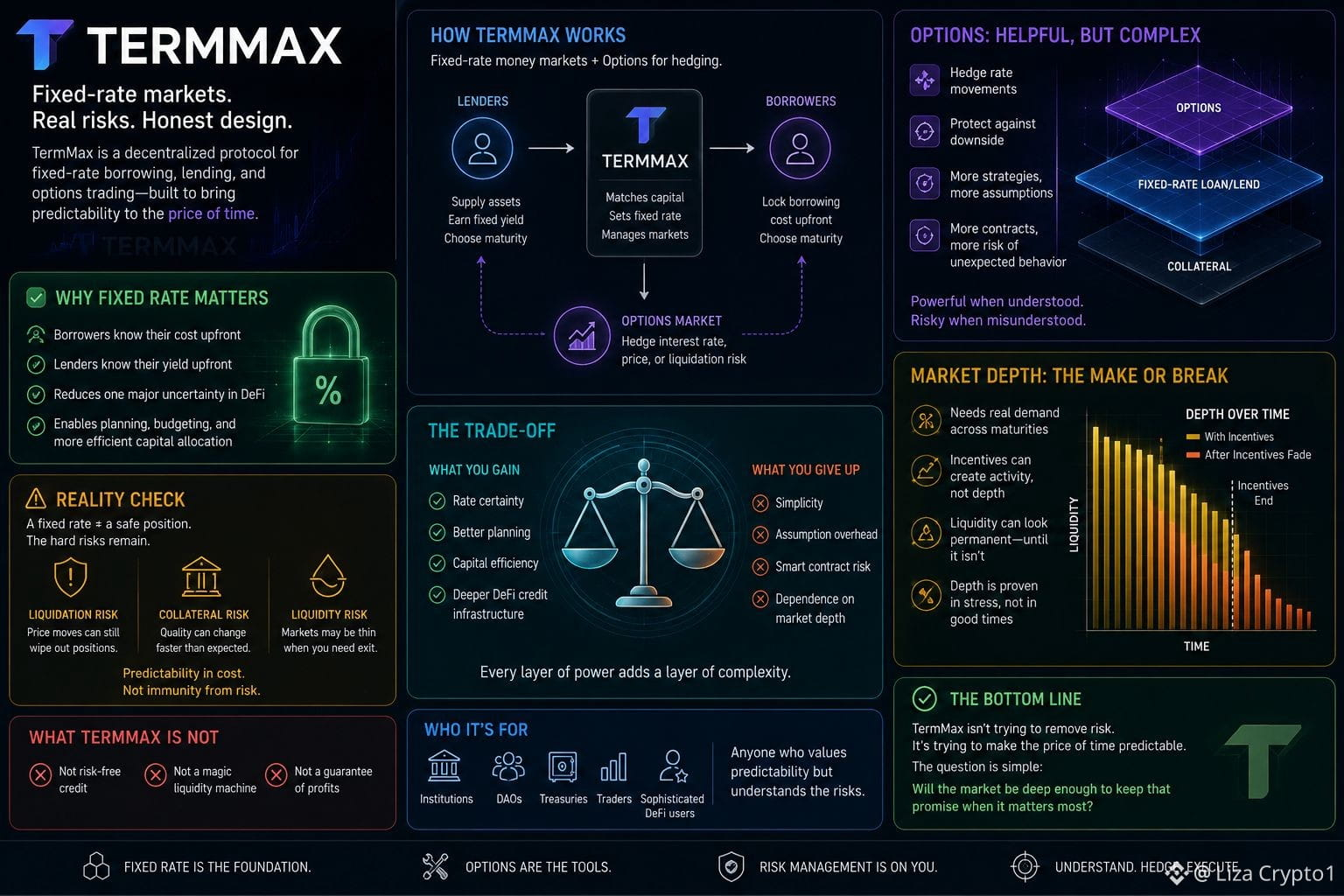
ولهذا السبب يثير TermMax اهتمامي. الاقتراض والإقراض بسعر ثابت يبدو قريبًا من الأمور المعتادة، لكن «المعتاد» ما زال نادرًا في التمويل اللامركزي. أغلب الائتمان على السلسلة يطلب من المستخدمين قبول معدلات متحركة، وسيولة غير مستقرة، وضمانات قد تغيّر طبيعتها بين ليلة وضحاها. إن قفل السعر يزيل عدم يقين واحدًا، لكنه يترك التحديات الأكثر صعوبة دون معالجة.
تكلفة ثابتة لا تضمن وضعًا آمنًا. لا يزال المقترضون يواجهون التصفية، ولا يزال المُقرضون يعتمدون على جودة الضمانات، وكلا الطرفين يحتاجان إلى أن تكون الأسواق عميقة بما يكفي عندما يريدان الخروج. قد تساعد الخيارات على التحوّط من تلك المخاطر، لكنها في المقابل تُدخل افتراضات تسعير إضافية، وعقودًا أكثر، وطرقًا أكثر يمكن بموجبها أن يتصرف المركز بشكل مختلف عن المتوقع.
لاحظتُ أيضًا أن التشفير كثيرًا ما يتعامل مع «قابلية التركيب» وكأن دمج عدة أدوات مفيدة تلقائيًا ينتج منتجًا أفضل. أحيانًا يحدث ذلك. وأحيانًا ينقل التعقيد فقط خلف واجهة واحدة، حيث يتوقف الناس عن رؤيته حتى يعود الضغط.
سيتطلب TermMax أيضًا طلبًا حقيقيًا عبر آجال استحقاق مفيدة. يمكن للحوافز أن تصنّع نشاطًا، لكنني رأيت ذلك من قبل: تبدو السيولة وكأنها دائمة بينما تدفقت المكافآت، ثم تصبح فجأة انتقائية بشكل غريب عندما تتوقف.
ومع ذلك، يبدو أن التركيز يمنح شيئًا من الواقعية. TermMax لا يحاول القضاء على المخاطر؛ بل يحاول جعل سعر الزمن أكثر قابلية للتنبؤ. لستُ مقتنعًا بالكامل بأن السوق سيكون عميقًا بما يكفي للحفاظ على هذا الوعد تحت الضغط. لكنّه على الأقل يعالج مشكلة مالية قائمة تتجاوز السرد الحالي.
#termmax @TermMax
ولهذا السبب يثير TermMax اهتمامي. الاقتراض والإقراض بسعر ثابت يبدو قريبًا من الأمور المعتادة، لكن «المعتاد» ما زال نادرًا في التمويل اللامركزي. أغلب الائتمان على السلسلة يطلب من المستخدمين قبول معدلات متحركة، وسيولة غير مستقرة، وضمانات قد تغيّر طبيعتها بين ليلة وضحاها. إن قفل السعر يزيل عدم يقين واحدًا، لكنه يترك التحديات الأكثر صعوبة دون معالجة.
تكلفة ثابتة لا تضمن وضعًا آمنًا. لا يزال المقترضون يواجهون التصفية، ولا يزال المُقرضون يعتمدون على جودة الضمانات، وكلا الطرفين يحتاجان إلى أن تكون الأسواق عميقة بما يكفي عندما يريدان الخروج. قد تساعد الخيارات على التحوّط من تلك المخاطر، لكنها في المقابل تُدخل افتراضات تسعير إضافية، وعقودًا أكثر، وطرقًا أكثر يمكن بموجبها أن يتصرف المركز بشكل مختلف عن المتوقع.
لاحظتُ أيضًا أن التشفير كثيرًا ما يتعامل مع «قابلية التركيب» وكأن دمج عدة أدوات مفيدة تلقائيًا ينتج منتجًا أفضل. أحيانًا يحدث ذلك. وأحيانًا ينقل التعقيد فقط خلف واجهة واحدة، حيث يتوقف الناس عن رؤيته حتى يعود الضغط.
سيتطلب TermMax أيضًا طلبًا حقيقيًا عبر آجال استحقاق مفيدة. يمكن للحوافز أن تصنّع نشاطًا، لكنني رأيت ذلك من قبل: تبدو السيولة وكأنها دائمة بينما تدفقت المكافآت، ثم تصبح فجأة انتقائية بشكل غريب عندما تتوقف.
ومع ذلك، يبدو أن التركيز يمنح شيئًا من الواقعية. TermMax لا يحاول القضاء على المخاطر؛ بل يحاول جعل سعر الزمن أكثر قابلية للتنبؤ. لستُ مقتنعًا بالكامل بأن السوق سيكون عميقًا بما يكفي للحفاظ على هذا الوعد تحت الضغط. لكنّه على الأقل يعالج مشكلة مالية قائمة تتجاوز السرد الحالي.
#termmax @TermMax