#termmax @TermMax لفتت انتباهي لأول مرة في أبريل. أضفتها إلى قائمة المتابعة بدون أمل كبير بصراحة. لكن مع شحن الإصدار v2 تغير كل شيء.
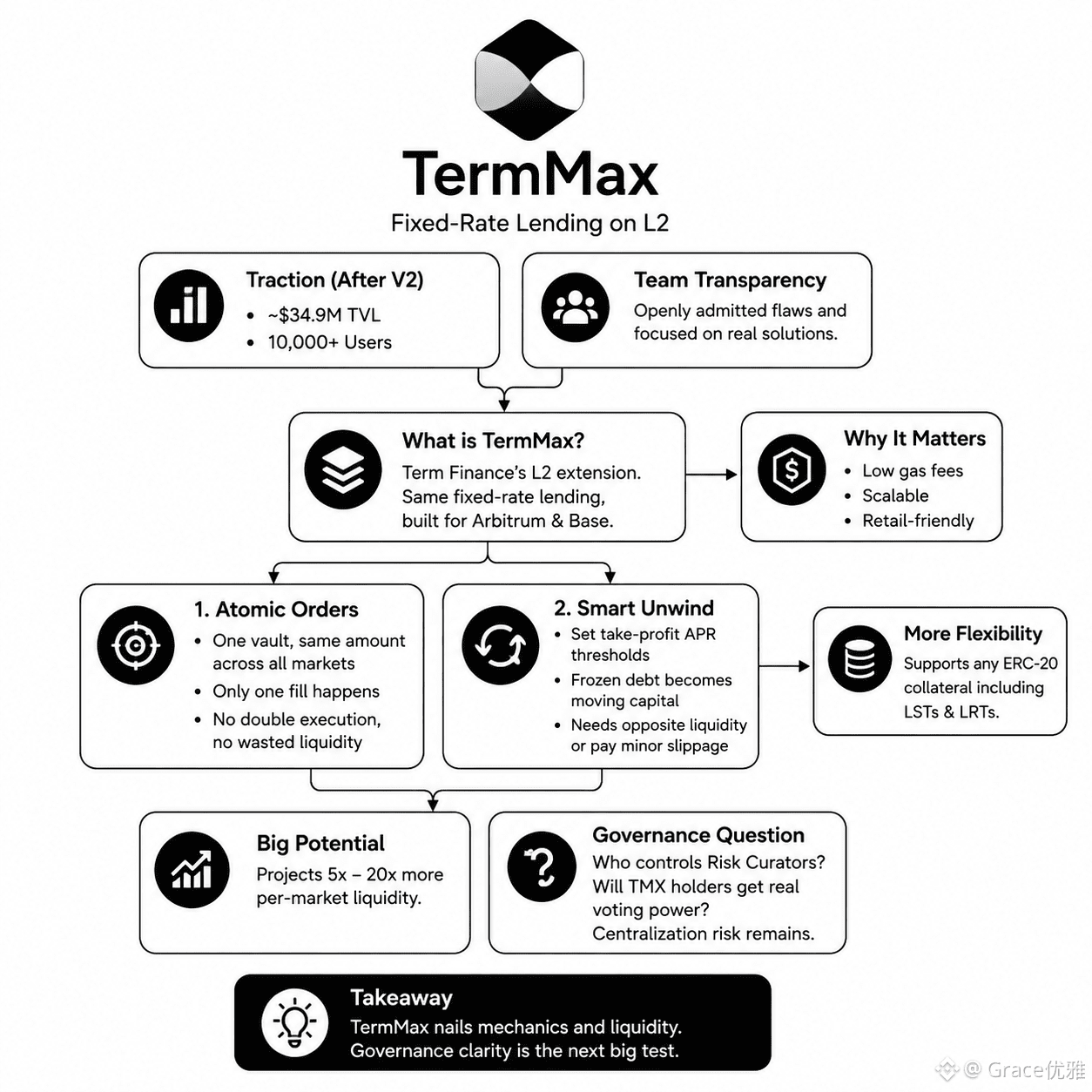
توقفت عن التتبع السلبي وبدأت البحث في الآليات الفعلية. بعد خمسة أشهر، تتحدث الأرقام عن حوالي 34.9 مليون دولار محجوزة ويضم النظام 10,000+ مستخدم. لكن ما جذبني لم يكن مجرد الزخم. بل الطريقة التي اعترف بها الفريق خلف TermMax بشكل صريح بما لم يكن يعمل.
معظم الفرق تخفي العيوب، لكن هؤلاء لم يفعلوا. أشاروا مباشرةً إلى المشكلات مثل رأس المال المحبوس حتى النضج، وتجزؤ السيولة، والأصول التي تبقى دون استخدام. هذا النوع من الشفافية نادر في مساحة مليئة بتكرارات قروض منسوخة.
الأمر المهم الذي يفوته الناس: ليس TermMax بروتوكولًا جديدًا بالكامل. إنه امتداد L2 لـ Term Finance. نفس بنية الإقراض بسعر ثابت لكن مصممة لحلول التوسع مثل Arbitrum وBase. ولهذا تظل رسوم الغاز منخفضة بما يكفي للمستخدمين الأفراد.
والآن إلى الحلول نفسها. Atomic Orders—أحد المستودعات التي تعرض نفس المبلغ 1.1 مليون $USDC عبر كل سوق. لكن يحدث تعبئة واحدة فقط. بمجرد تنفيذها تختفي في كل مكان فورًا. لا يوجد تنفيذ مزدوج، ولا سيولة مهدرة.
ثم Smart Unwind. يحدد المقترضون عتبات APR لتحقيق الربح قبل تاريخ الاستحقاق. يصبح الدين “المجمّد” رأس مالًا متحركًا. يمكن لتحريك 5 $ETH الذي كان جالسًا بلا فائدة لمدة ثلاثين يومًا أن يدور عدة مرات. لكن هنا المفارقة: Smart Unwind ليس مجانيًا. تحتاج إلى سيولة مقابلة متاحة، أو تدفع انزلاقًا بسيطًا. مع ذلك فهو أفضل من رأس مال محبوس.
يدعم الإصدار v2 أيضًا أي أصل ERC-20 كضمان، بما في ذلك LSTs وLRTs. هذا ضخم بالنسبة لسرعة دوران رأس المال.
تخطط TermMax لزيادة سيولة كل سوق بمقدار 5x إلى 20x. طموح للغاية لكن يبدو أن البنية قوية.
ما يزعجني ما يزال هو الحوكمة. عندما يبدأ Risk Curators في توسيع هؤلاء الخبراء من الأطراف الثالثة الذين يضعون نسب الضمان وحدود التصفية—من الذي يتحكم بهم؟ هل يحصل حاملو TMX على قوة تصويت حقيقية أم أن الفريق الأساسي يبقي المفاتيح؟ سؤال المركزية هذا لا يزال دون حل بالنسبة لي.
بالنسبة للصيادين في المراحل المبكرة: كيف توازن بين آليات قوية وحوكمة ضعيفة؟ TermMax ضبطت الآليات. أما جانب الحوكمة فما زال يبدو غير مستقر.
توقفت عن التتبع السلبي وبدأت البحث في الآليات الفعلية. بعد خمسة أشهر، تتحدث الأرقام عن حوالي 34.9 مليون دولار محجوزة ويضم النظام 10,000+ مستخدم. لكن ما جذبني لم يكن مجرد الزخم. بل الطريقة التي اعترف بها الفريق خلف TermMax بشكل صريح بما لم يكن يعمل.
معظم الفرق تخفي العيوب، لكن هؤلاء لم يفعلوا. أشاروا مباشرةً إلى المشكلات مثل رأس المال المحبوس حتى النضج، وتجزؤ السيولة، والأصول التي تبقى دون استخدام. هذا النوع من الشفافية نادر في مساحة مليئة بتكرارات قروض منسوخة.
الأمر المهم الذي يفوته الناس: ليس TermMax بروتوكولًا جديدًا بالكامل. إنه امتداد L2 لـ Term Finance. نفس بنية الإقراض بسعر ثابت لكن مصممة لحلول التوسع مثل Arbitrum وBase. ولهذا تظل رسوم الغاز منخفضة بما يكفي للمستخدمين الأفراد.
والآن إلى الحلول نفسها. Atomic Orders—أحد المستودعات التي تعرض نفس المبلغ 1.1 مليون $USDC عبر كل سوق. لكن يحدث تعبئة واحدة فقط. بمجرد تنفيذها تختفي في كل مكان فورًا. لا يوجد تنفيذ مزدوج، ولا سيولة مهدرة.
ثم Smart Unwind. يحدد المقترضون عتبات APR لتحقيق الربح قبل تاريخ الاستحقاق. يصبح الدين “المجمّد” رأس مالًا متحركًا. يمكن لتحريك 5 $ETH الذي كان جالسًا بلا فائدة لمدة ثلاثين يومًا أن يدور عدة مرات. لكن هنا المفارقة: Smart Unwind ليس مجانيًا. تحتاج إلى سيولة مقابلة متاحة، أو تدفع انزلاقًا بسيطًا. مع ذلك فهو أفضل من رأس مال محبوس.
يدعم الإصدار v2 أيضًا أي أصل ERC-20 كضمان، بما في ذلك LSTs وLRTs. هذا ضخم بالنسبة لسرعة دوران رأس المال.
تخطط TermMax لزيادة سيولة كل سوق بمقدار 5x إلى 20x. طموح للغاية لكن يبدو أن البنية قوية.
ما يزعجني ما يزال هو الحوكمة. عندما يبدأ Risk Curators في توسيع هؤلاء الخبراء من الأطراف الثالثة الذين يضعون نسب الضمان وحدود التصفية—من الذي يتحكم بهم؟ هل يحصل حاملو TMX على قوة تصويت حقيقية أم أن الفريق الأساسي يبقي المفاتيح؟ سؤال المركزية هذا لا يزال دون حل بالنسبة لي.
بالنسبة للصيادين في المراحل المبكرة: كيف توازن بين آليات قوية وحوكمة ضعيفة؟ TermMax ضبطت الآليات. أما جانب الحوكمة فما زال يبدو غير مستقر.