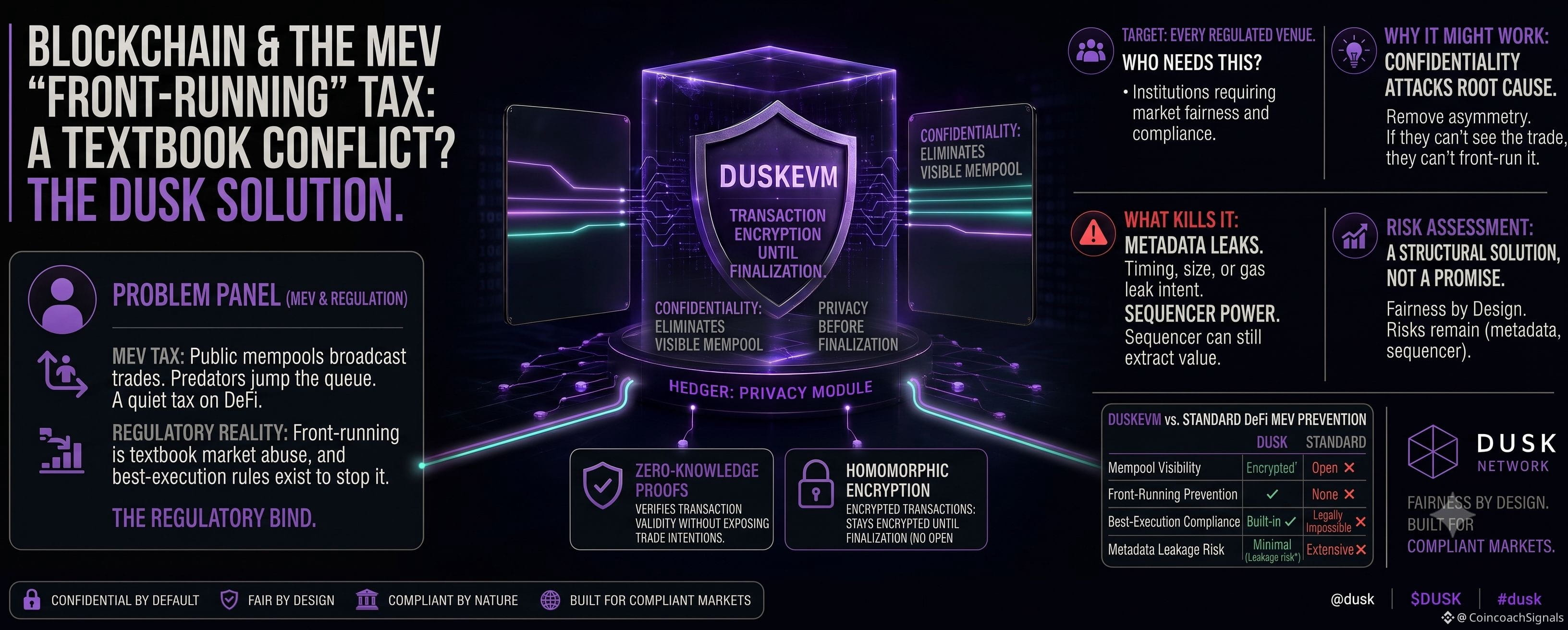
لقد استغرق الأمر بعض الوقت لألاحظ أنه على سلسلة عامة، يمكن رؤية تداولك قبل حدوثه. توجد المعاملات في مجمّع ذاكرة مفتوح (مِيمبول) بانتظار التأكيد — وأي شخص يراقب يمكنه أن يرى معاملتك القادمة ويقفز في الطابور. في عالم التمويل اللامركزي (DeFi) لهذا اسم: MEV — ضريبة خفيّة على ما يقرب من كل عملية تداول.
بالنسبة لسوق منظّم، هذا ليس مجرد إزعاج — بل هو أمر غير قانوني. إن تنفيذ أوامر عميلك قبل أن يصل دوره (Front-running) هو مثال واضح على إساءة استخدام سلوك السوق، وتوجد قواعد أفضل تنفيذ موجودة بالضبط لمنع ذلك. لا يمكنك تشغيل منصة امتثال على سكك تُبث فيها نوايا العميل إلى مفترسين قبل ثوانٍ من لحظة تنفيذ الصفقة.
الحلول المعتادة ضعيفة. أعد توجيه الأوامر عبر مرسل (Relayer) خاص، وبذلك تكون قد أعدت وسيطًا موثوقًا يرى كل شيء الآن. أو ادّعِ أن أحدًا لا يراقب الميمبول — لكنهم يراقبون.
وهنا تؤدي خصوصية @Dusk دورًا بنيويًا. إذا ظلت المعاملات مشفّرة حتى يتم اعتمادها نهائيًا، فلن يكون هناك ما يمكن تنفيذه مسبقًا. لا يمكنك القفز للأمام في طلب لا تستطيع قراءته. الخصوصية لم تعد مجرد إخفاء المراكز؛ بل تزيل اختلال التوازن الذي يسمح بوجود التنفيذ المسبق أصلاً.
ما زلت متشككًا. المعاملات المشفّرة قد تسرب بيانات وصفية — التوقيت، الحجم، الغاز — ومن يقوم بترتيبها يمتلك قوة حقيقية. «لا يوجد ميمبول مرئي» لا يعني تلقائيًا «لا يوجد MEV».
من يحتاج هذا؟ كل منصة منظّمة، لأن البديل غير قانوني. لماذا قد ينجح: الخصوصية تستهدف السبب الجذري. ما الذي قد يقتله: تسرب البيانات الوصفية، أو مُجدول (sequencer) ما زال يستخرج.
يجدر بالمراقبة. الإنصاف بالتصميم يتفوّق على الإنصاف بوعدٍ ما.
$DUSK #dusk
بالنسبة لسوق منظّم، هذا ليس مجرد إزعاج — بل هو أمر غير قانوني. إن تنفيذ أوامر عميلك قبل أن يصل دوره (Front-running) هو مثال واضح على إساءة استخدام سلوك السوق، وتوجد قواعد أفضل تنفيذ موجودة بالضبط لمنع ذلك. لا يمكنك تشغيل منصة امتثال على سكك تُبث فيها نوايا العميل إلى مفترسين قبل ثوانٍ من لحظة تنفيذ الصفقة.
الحلول المعتادة ضعيفة. أعد توجيه الأوامر عبر مرسل (Relayer) خاص، وبذلك تكون قد أعدت وسيطًا موثوقًا يرى كل شيء الآن. أو ادّعِ أن أحدًا لا يراقب الميمبول — لكنهم يراقبون.
وهنا تؤدي خصوصية @Dusk دورًا بنيويًا. إذا ظلت المعاملات مشفّرة حتى يتم اعتمادها نهائيًا، فلن يكون هناك ما يمكن تنفيذه مسبقًا. لا يمكنك القفز للأمام في طلب لا تستطيع قراءته. الخصوصية لم تعد مجرد إخفاء المراكز؛ بل تزيل اختلال التوازن الذي يسمح بوجود التنفيذ المسبق أصلاً.
ما زلت متشككًا. المعاملات المشفّرة قد تسرب بيانات وصفية — التوقيت، الحجم، الغاز — ومن يقوم بترتيبها يمتلك قوة حقيقية. «لا يوجد ميمبول مرئي» لا يعني تلقائيًا «لا يوجد MEV».
من يحتاج هذا؟ كل منصة منظّمة، لأن البديل غير قانوني. لماذا قد ينجح: الخصوصية تستهدف السبب الجذري. ما الذي قد يقتله: تسرب البيانات الوصفية، أو مُجدول (sequencer) ما زال يستخرج.
يجدر بالمراقبة. الإنصاف بالتصميم يتفوّق على الإنصاف بوعدٍ ما.
$DUSK #dusk