لقد شاهدتُ ما يكفي من دورات الـDeFi لأعرف أن كلمة “اليقين” غالبًا ما تجعلني أشك. تبدو بريئة، لكن ما إن تفكر فيها بعمق، تبدأ بالتساؤل عمّا الذي يتم جعله “مؤكدًا” فعلًا وأين ذهب الخطر الحقيقي.
وهذا ما جعل TermMax يلفت انتباهي.
في البداية، كنت بصراحة أظن أن هذا مجرد طريقة أخرى لجعل الأسهم المرمّزة أكثر إنتاجية. لقد أدخلت Ondo بالفعل الأسهم المُرمّزة إلى أسواق الإقراض، لذا لم يبدُ لي أن نظام الاقتراض بسعر ثابت يمثل اختراقًا كبيرًا.
لكن كلما نظرت أكثر إلى TermMax، قلّت منطقية هذا التفسير.
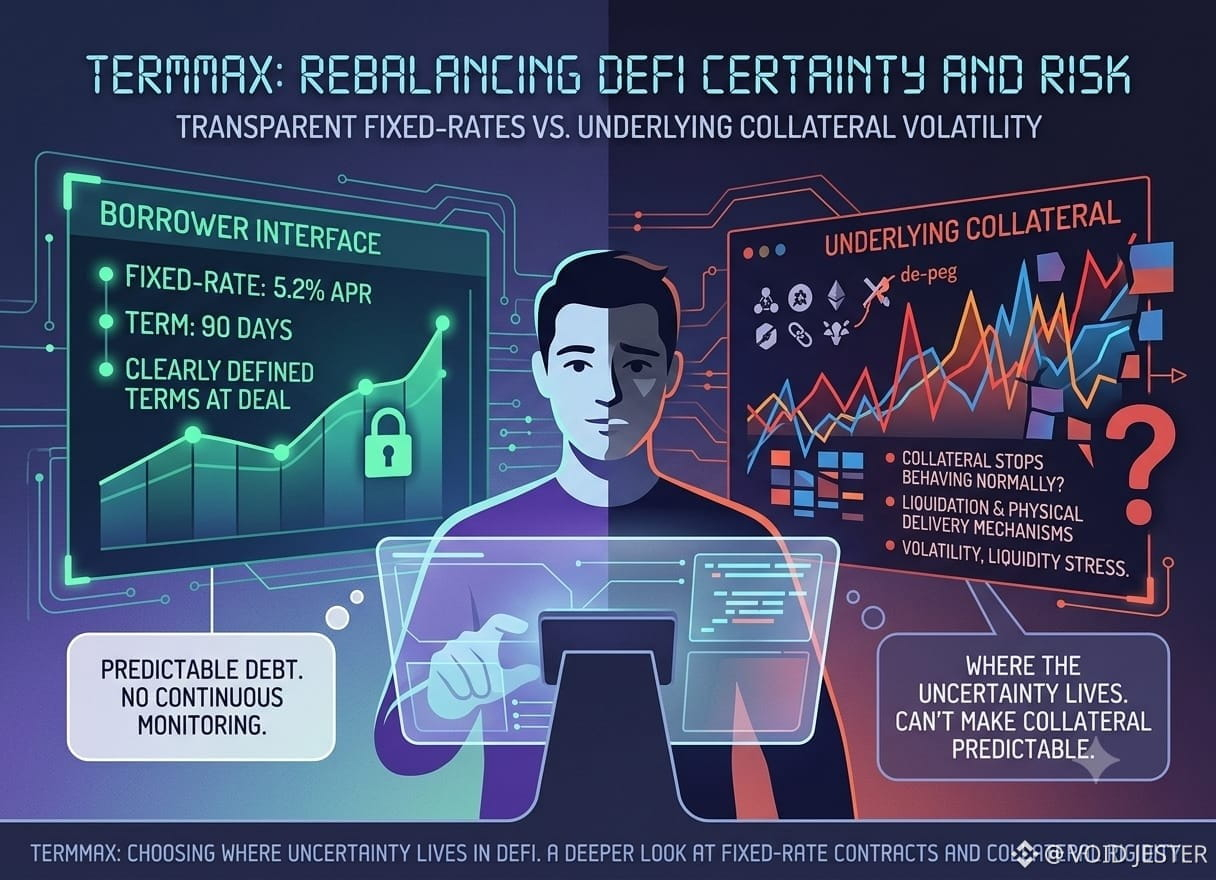
الجزء المثير للاهتمام هو أن تكلفة الاقتراض وشروط القرض تُعرض بوضوح عند إتمام الصفقة، بدل ترك المقترض مكشوفًا لسعر يستمر في التغير.
وبصراحة، أفهم ذلك.
بعد سنوات من متابعة عالم العملات المشفرة، أعرف مدى الإحباط الذي قد تسببه عبارة “تابع موقفك باستمرار”.
لكن ما زلت غير مرتاح لما يحدث عندما يتوقف الضمان نفسه عن التصرف بشكل طبيعي.
يمتلك TermMax آليات للتصفية، وحتى للتسليم الفعلي عندما تصبح التقلبات أو السيولة سيئة. هذا منطقي على الورق، لكنه أيضًا يوضح أين تستقر الضغوط الحقيقية في النهاية.
العقد بسعر ثابت يمكنه أن يجعل الدين قابلًا للتنبؤ. لكنه لا يستطيع أن يجعل الضمان قابلًا للتنبؤ.
وهذه هي النقطة التي أعود إليها دائمًا.
إذا تعرض أصل مُرمّز لانفصال كبير عن سعره المستهدف (de-peg)، فهل يحميك “اليقين” فعلًا، أم أنه يخلق مطالبة صارمة داخل سوق لا تتوفر فيه سيولة كافية لدعمها؟
لا أزال غير متأكد بعد. أنا لا أثق بالكامل بالأسعار الثابتة لمجرد أنها تبدو أكثر نظافة. لقد رأينا الكثير من البنى “المستقرة” تكتشف أن الاستقرار كان موجودًا فقط إلى أن أراد الجميع الخروج في الوقت نفسه.
لكن هناك شيء في TermMax يبدو مختلفًا، على أي حال.
ربما لأنه لا يتظاهر بأن حالة عدم اليقين قد اختفت. بل إنه يختار مكان وجودها.
وفي DeFi، أعتقد أن هذا التمييز مهم.
@TermMax #TermMax
وهذا ما جعل TermMax يلفت انتباهي.
في البداية، كنت بصراحة أظن أن هذا مجرد طريقة أخرى لجعل الأسهم المرمّزة أكثر إنتاجية. لقد أدخلت Ondo بالفعل الأسهم المُرمّزة إلى أسواق الإقراض، لذا لم يبدُ لي أن نظام الاقتراض بسعر ثابت يمثل اختراقًا كبيرًا.
لكن كلما نظرت أكثر إلى TermMax، قلّت منطقية هذا التفسير.
الجزء المثير للاهتمام هو أن تكلفة الاقتراض وشروط القرض تُعرض بوضوح عند إتمام الصفقة، بدل ترك المقترض مكشوفًا لسعر يستمر في التغير.
وبصراحة، أفهم ذلك.
بعد سنوات من متابعة عالم العملات المشفرة، أعرف مدى الإحباط الذي قد تسببه عبارة “تابع موقفك باستمرار”.
لكن ما زلت غير مرتاح لما يحدث عندما يتوقف الضمان نفسه عن التصرف بشكل طبيعي.
يمتلك TermMax آليات للتصفية، وحتى للتسليم الفعلي عندما تصبح التقلبات أو السيولة سيئة. هذا منطقي على الورق، لكنه أيضًا يوضح أين تستقر الضغوط الحقيقية في النهاية.
العقد بسعر ثابت يمكنه أن يجعل الدين قابلًا للتنبؤ. لكنه لا يستطيع أن يجعل الضمان قابلًا للتنبؤ.
وهذه هي النقطة التي أعود إليها دائمًا.
إذا تعرض أصل مُرمّز لانفصال كبير عن سعره المستهدف (de-peg)، فهل يحميك “اليقين” فعلًا، أم أنه يخلق مطالبة صارمة داخل سوق لا تتوفر فيه سيولة كافية لدعمها؟
لا أزال غير متأكد بعد. أنا لا أثق بالكامل بالأسعار الثابتة لمجرد أنها تبدو أكثر نظافة. لقد رأينا الكثير من البنى “المستقرة” تكتشف أن الاستقرار كان موجودًا فقط إلى أن أراد الجميع الخروج في الوقت نفسه.
لكن هناك شيء في TermMax يبدو مختلفًا، على أي حال.
ربما لأنه لا يتظاهر بأن حالة عدم اليقين قد اختفت. بل إنه يختار مكان وجودها.
وفي DeFi، أعتقد أن هذا التمييز مهم.
@TermMax #TermMax