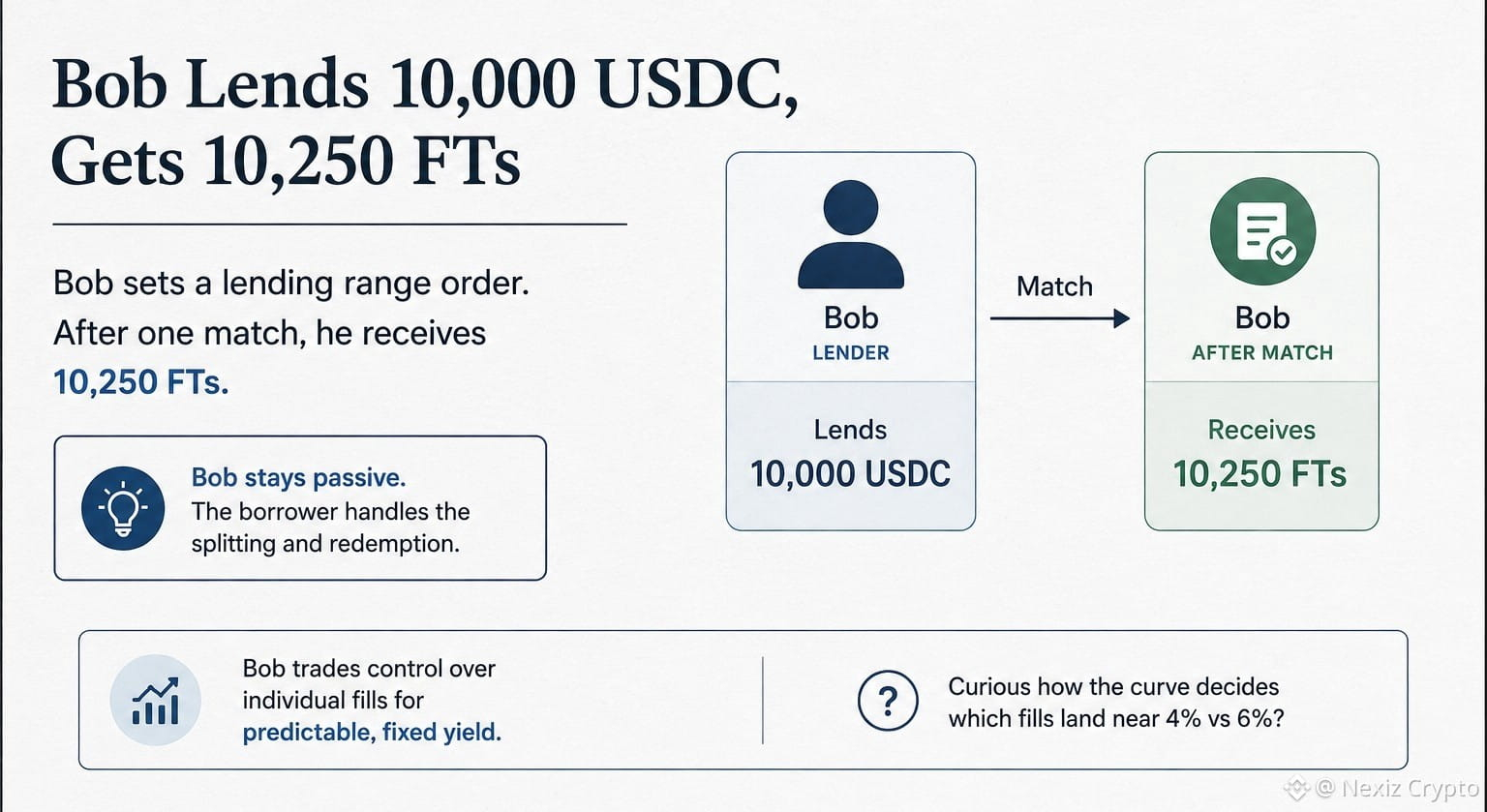
كنت أقرأ القسم الخاص بمعدّلات ترتيب نطاق الإقراض، ولفت انتباهي تفصيل في المثال: يقوم بوب بإقراض 10,000 USDC، وبعد تطابق واحد فقط، أصبح بالفعل يحمل 10,250 FTs. افتراضي الأول كان أن الـ 250 الإضافية تمثّل عائداً متوقعاً، وليس شيئاً حقيقياً بعد.
بعد إعادة التحقق من الآلية، اتضح أن الأمر ليس كذلك. عند الإيداع، يقوم النظام بإصدار FTs مبدئية بقيمة المبلغ الكامل لبوب، مقترنة بـ XTs، ومخصّصة ضمن الأمر. ما يتغير عند المطابقة هو جزء الفائدة فقط: يقوم المقترض بتقسيم الـ FTs التي أصدرها إلى أصل وفائدة، ثم يبيع FTs الفائدة إلى أمر بوب مقابل XTs، بعد ذلك يقوم بإعادة الاسترداد باستخدام تلك XTs إضافةً إلى FTs الأصل الخاصة به. لا يتعامل بوب إطلاقاً مع XT؛ بل يستلم فقط FTs الفائدة.
ما أثار دهشتي هو أن المقترض هو من يقوم بكل عمليات التقسيم والاسترداد، وليس المُقرض. يبقى بوب خالياً من التدخل بمجرد أن يحدّد منحنى التسعير الخاص به، ويتحوّل التحكم في تسعير كل عملية تعبئة (fill) إلى عائد ثابت وقابل للتنبؤ.
ومع ذلك، ما زلت أتساءل كيف يقرر المنحنى أي عمليات التعبئة تقع قرب 4% وأيها قرب 6%.
#termmax @TermMax
بعد إعادة التحقق من الآلية، اتضح أن الأمر ليس كذلك. عند الإيداع، يقوم النظام بإصدار FTs مبدئية بقيمة المبلغ الكامل لبوب، مقترنة بـ XTs، ومخصّصة ضمن الأمر. ما يتغير عند المطابقة هو جزء الفائدة فقط: يقوم المقترض بتقسيم الـ FTs التي أصدرها إلى أصل وفائدة، ثم يبيع FTs الفائدة إلى أمر بوب مقابل XTs، بعد ذلك يقوم بإعادة الاسترداد باستخدام تلك XTs إضافةً إلى FTs الأصل الخاصة به. لا يتعامل بوب إطلاقاً مع XT؛ بل يستلم فقط FTs الفائدة.
ما أثار دهشتي هو أن المقترض هو من يقوم بكل عمليات التقسيم والاسترداد، وليس المُقرض. يبقى بوب خالياً من التدخل بمجرد أن يحدّد منحنى التسعير الخاص به، ويتحوّل التحكم في تسعير كل عملية تعبئة (fill) إلى عائد ثابت وقابل للتنبؤ.
ومع ذلك، ما زلت أتساءل كيف يقرر المنحنى أي عمليات التعبئة تقع قرب 4% وأيها قرب 6%.
#termmax @TermMax