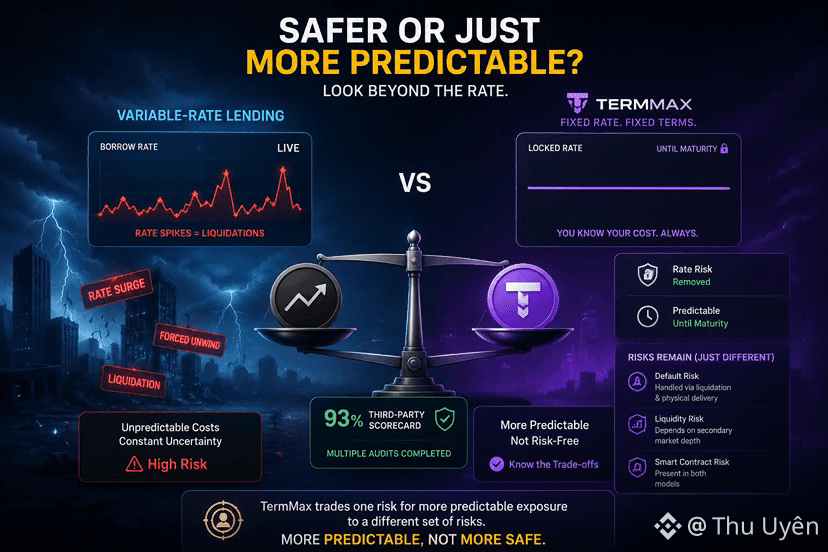
#termmax @TermMax يواصل الناس إخباري بأن TermMax هو الخيار الأكثر أمانًا مقارنة بالإقراض/الإقراض بسعر فائدة متغير، فحسب، دون أي مؤهلات. لا أعتقد أن هذا الادعاء يصمد أمام القراءة المتأنية، على الرغم من أنني أفهم لماذا يُكرر.
إليك الجزء الذي هو صحيح. في منصة بسعر فائدة متغير، يمكن أن يتحرك كلفة الاقتراض أو عائد الإقراض ضدك في أي لحظة، وقد أدى ارتفاع حاد في السعر إلى عمليات إغلاق قسري كثيرة عبر تاريخ التمويل اللامركزي (DeFi). يزيل TermMax هذا الخطر المحدد بالكامل. بمجرد أن تُصدر أو تشتري FT، يتم قفل السعر حتى تاريخ الاستحقاق، دون استثناءات، ودون تحديثات أوراكل تغيّر كلفتك خلال المدة. وعلى هذا المحور الواحد تحديدًا، يتفوق الثابت فعلًا على العائم.
إليك أين يصبح الادعاء أقل وضوحًا. إن مخاطر السعر ليست سوى واحدة من عدة مخاطر يحملها المُقرض أو المُقترض. لا تختفي مخاطر التعثر لأن السعر ثابت؛ بل تُعالَج بطريقة مختلفة، عبر نوافذ التصفية والتسليم الفعلي للضمانات عندما ينضب السيولة. ولا تختفي مخاطر السيولة أيضًا، لأن الخروج من FT قبل الاستحقاق يعتمد على عمق السوق الثانوية الذي يتفاوت بشكل كبير حسب الأصل ومدى طول المدة. مخاطر العقود الذكية موجودة في النموذجين على حد سواء، بغض النظر عن كيفية احتساب الفائدة.
فهل TermMax أكثر أمانًا؟ بالنسبة لشخص يقلقه تحديدًا أن تآكل التقلب في السعر قد يُضعف مركزًا، نعم، بشكل ذي معنى. أما بالنسبة لشخص يقارن ملف المخاطر الإجمالي بين الإقراض بسعر ثابت ومتغير، فالإجابة الصادقة هي أن TermMax يبدل مخاطرة واحدة بتعرض أكثر قابلية للتنبؤ لمجموعة مختلفة من المخاطر، لا بمجموعـة أصغر من المخاطر بشكل عام. يقول سجل الدرجات لدى طرف ثالث بنسبة 93% وجولات التدقيق المتعددة التي خضع لها TermMax شيئًا حقيقيًا عن جودة العقد، لكن سجل الدرجات لا يقيم مخاطر التعثر أو السيولة. سأصف TermMax بأنه أكثر قابلية للتنبؤ، وليس أكثر أمانًا، والفرق بين هاتين الكلمتين يهم أكثر مما يبدو أنه ينبغي.
$BTW
إليك الجزء الذي هو صحيح. في منصة بسعر فائدة متغير، يمكن أن يتحرك كلفة الاقتراض أو عائد الإقراض ضدك في أي لحظة، وقد أدى ارتفاع حاد في السعر إلى عمليات إغلاق قسري كثيرة عبر تاريخ التمويل اللامركزي (DeFi). يزيل TermMax هذا الخطر المحدد بالكامل. بمجرد أن تُصدر أو تشتري FT، يتم قفل السعر حتى تاريخ الاستحقاق، دون استثناءات، ودون تحديثات أوراكل تغيّر كلفتك خلال المدة. وعلى هذا المحور الواحد تحديدًا، يتفوق الثابت فعلًا على العائم.
إليك أين يصبح الادعاء أقل وضوحًا. إن مخاطر السعر ليست سوى واحدة من عدة مخاطر يحملها المُقرض أو المُقترض. لا تختفي مخاطر التعثر لأن السعر ثابت؛ بل تُعالَج بطريقة مختلفة، عبر نوافذ التصفية والتسليم الفعلي للضمانات عندما ينضب السيولة. ولا تختفي مخاطر السيولة أيضًا، لأن الخروج من FT قبل الاستحقاق يعتمد على عمق السوق الثانوية الذي يتفاوت بشكل كبير حسب الأصل ومدى طول المدة. مخاطر العقود الذكية موجودة في النموذجين على حد سواء، بغض النظر عن كيفية احتساب الفائدة.
فهل TermMax أكثر أمانًا؟ بالنسبة لشخص يقلقه تحديدًا أن تآكل التقلب في السعر قد يُضعف مركزًا، نعم، بشكل ذي معنى. أما بالنسبة لشخص يقارن ملف المخاطر الإجمالي بين الإقراض بسعر ثابت ومتغير، فالإجابة الصادقة هي أن TermMax يبدل مخاطرة واحدة بتعرض أكثر قابلية للتنبؤ لمجموعة مختلفة من المخاطر، لا بمجموعـة أصغر من المخاطر بشكل عام. يقول سجل الدرجات لدى طرف ثالث بنسبة 93% وجولات التدقيق المتعددة التي خضع لها TermMax شيئًا حقيقيًا عن جودة العقد، لكن سجل الدرجات لا يقيم مخاطر التعثر أو السيولة. سأصف TermMax بأنه أكثر قابلية للتنبؤ، وليس أكثر أمانًا، والفرق بين هاتين الكلمتين يهم أكثر مما يبدو أنه ينبغي.
$BTW