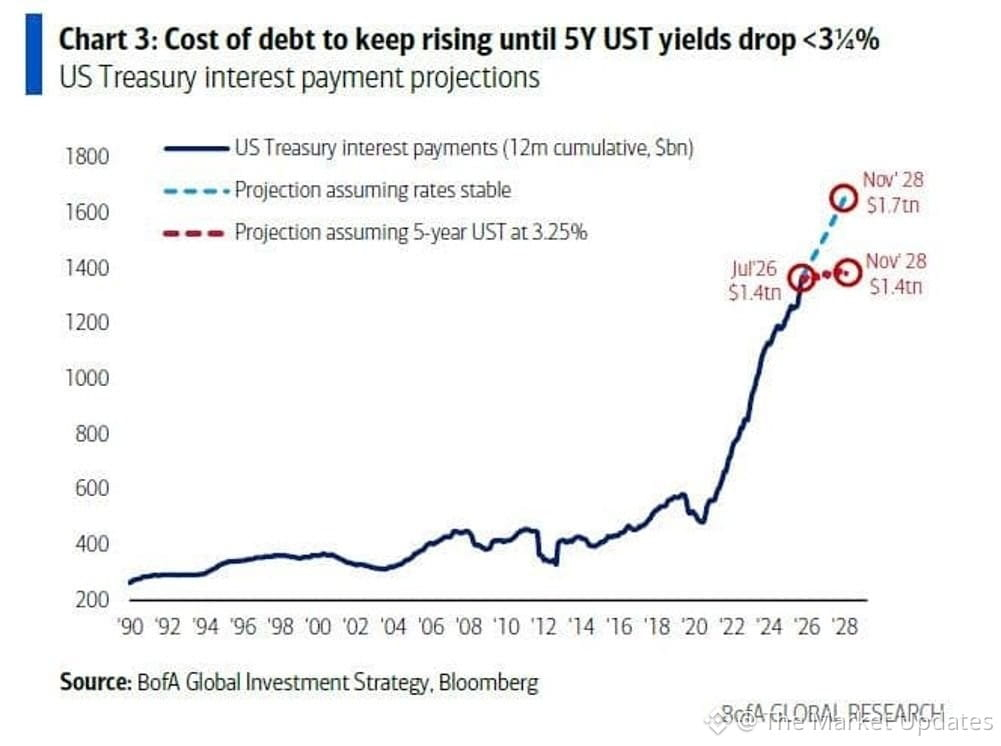
🇺🇸 $1.4 trillion: That’s what America paid in interest on the national debt over the last twelve months, nearly three times the 2020 level.
A growing share of every federal dollar is now going to service past borrowing instead of funding current programs. If rates stay where they are, the annual bill may climb to $1.7 trillion by November 2028 and becomes the government’s single largest expense, overtaking Social Security for the first time.
The real danger is the feedback loop: larger deficits add more debt, more debt generates higher interest costs, and those costs push deficits even wider.
Once the numbers get this big, the cycle starts feeding itself.
Interest and debt management aren’t abstract Wall Street worries anymore, they’re the quiet force deciding how much room Washington actually has left to spend on anything else.
A growing share of every federal dollar is now going to service past borrowing instead of funding current programs. If rates stay where they are, the annual bill may climb to $1.7 trillion by November 2028 and becomes the government’s single largest expense, overtaking Social Security for the first time.
The real danger is the feedback loop: larger deficits add more debt, more debt generates higher interest costs, and those costs push deficits even wider.
Once the numbers get this big, the cycle starts feeding itself.
Interest and debt management aren’t abstract Wall Street worries anymore, they’re the quiet force deciding how much room Washington actually has left to spend on anything else.