ليست NFTs معرّفة بواسطة الرمز وحده.
السؤال الحقيقي هو:
أين تعيش الأعمال الفنية فعليًا؟
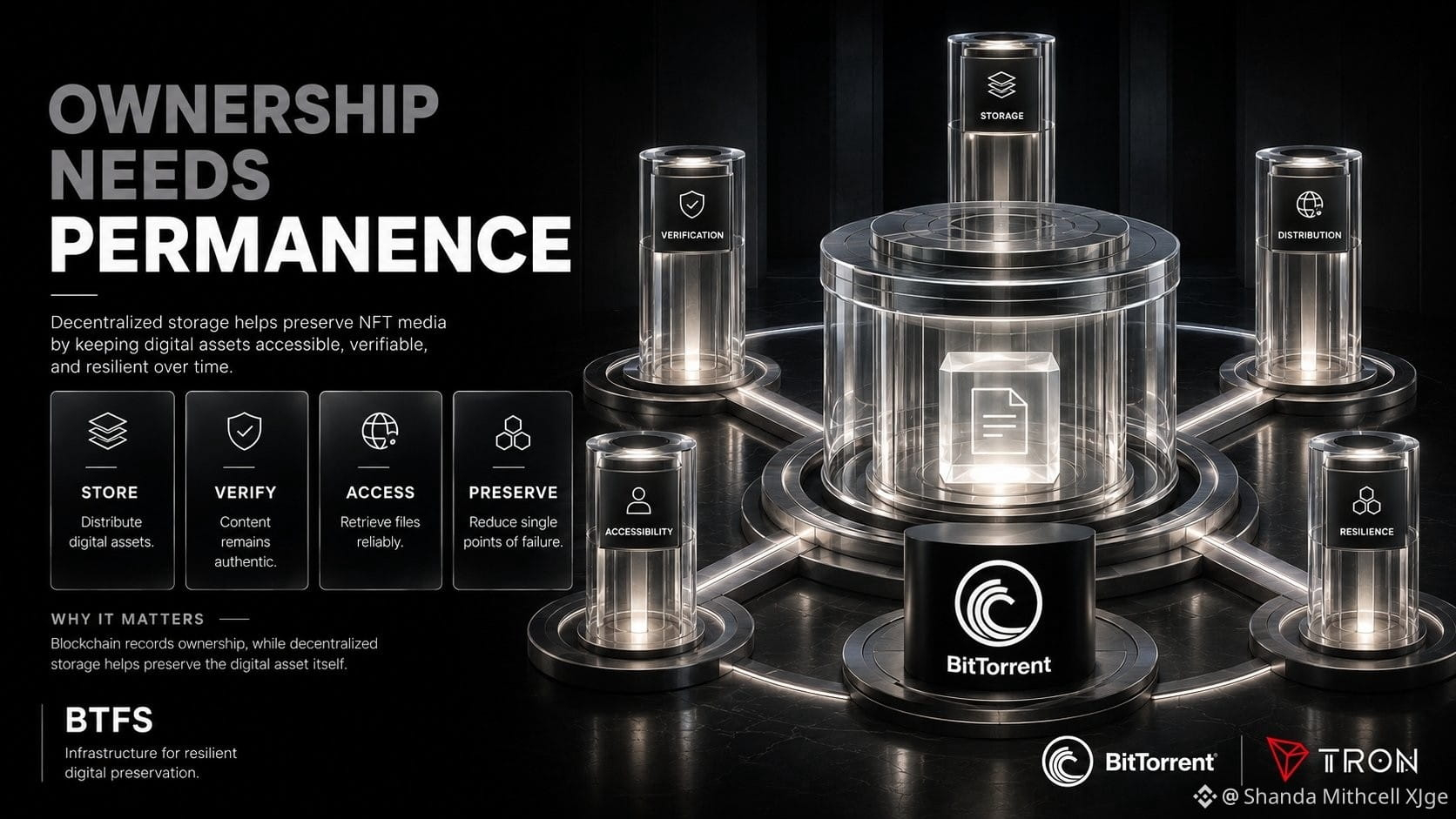
عندما تشتري NFT، غالبًا ما يسجل البلوكشين الملكية، وليس بالضرورة الصورة أو ملف الفيديو أو الموسيقى أو ملف 3D نفسه.
إذا كان هذا المحتوى مستضافًا على خادم مركزي، فإن ذلك يقدّم نقطة فشل واحدة. قد يؤدي تعطل الخادم أو تلف الروابط (link rot) أو إيقاف الخدمة إلى ترك الـ NFT يشير إلى محتوى لم يعد متاحًا.
ولهذا السبب تهمّ التخزينات اللامركزية.
يساعد BTFS (BitTorrent File System) على معالجة هذا التحدي عبر توزيع أصول الـ NFT عبر شبكة لامركزية بدلًا من الاعتماد على خادم واحد.
إليك كيف يعزّز هذا بنية تحتية للـ NFT:
تخزين NFT لامركزي • يخزّن الأعمال الفنية والفيديو والصوت والبيانات الوصفية (metadata) عبر شبكة موزعة. • يستخدم التجزئة المعتمدة على المحتوى (CIDs بأسلوب IPFS)، ما يمنح كل ملف بصمة فريدة يمكن التحقق منها. • يقلّل الاعتماد على الاستضافة المركزية، ويساعد في الحفاظ على الوصول طويل الأمد لمحتوى وسائط الـ NFT.
لماذا هذا مهم:
✅ مرونة أكبر في مواجهة نقاط الفشل الواحدة.
✅ يمكن لأي شخص التحقق من أن المحتوى المخزّن لم يتم العبث به.
✅ تخزين لامركزي فعّال من حيث التكلفة مدعوم بواسطة BTT.
✅ يتكامل مع منظومة TRON ويتوافق مع تطبيقات Web3.
وبينما تستمر NFTs في التوسع نحو الألعاب والموسيقى والهوية الرقمية والأصول في العالم الحقيقي ومجتمعات على السلسلة، تصبح متانة الوسائط الأساسية بنفس أهمية سجل الملكية نفسه.
يمكن لسلسلة البلوكشين أن تثبت من يمتلك أصلًا.
يساعد طبقة التخزين اللامركزية على الحفاظ على ما يمثله هذا الأصل فعليًا.
وهنا يلعب BTFS دورًا مهمًا في بناء بنية تحتية أكثر مرونة لـ Web3.
@BitTorrent_Official @Justin Sun孙宇晨 #TRON #TRONEcoStar
السؤال الحقيقي هو:
أين تعيش الأعمال الفنية فعليًا؟
عندما تشتري NFT، غالبًا ما يسجل البلوكشين الملكية، وليس بالضرورة الصورة أو ملف الفيديو أو الموسيقى أو ملف 3D نفسه.
إذا كان هذا المحتوى مستضافًا على خادم مركزي، فإن ذلك يقدّم نقطة فشل واحدة. قد يؤدي تعطل الخادم أو تلف الروابط (link rot) أو إيقاف الخدمة إلى ترك الـ NFT يشير إلى محتوى لم يعد متاحًا.
ولهذا السبب تهمّ التخزينات اللامركزية.
يساعد BTFS (BitTorrent File System) على معالجة هذا التحدي عبر توزيع أصول الـ NFT عبر شبكة لامركزية بدلًا من الاعتماد على خادم واحد.
إليك كيف يعزّز هذا بنية تحتية للـ NFT:
تخزين NFT لامركزي • يخزّن الأعمال الفنية والفيديو والصوت والبيانات الوصفية (metadata) عبر شبكة موزعة. • يستخدم التجزئة المعتمدة على المحتوى (CIDs بأسلوب IPFS)، ما يمنح كل ملف بصمة فريدة يمكن التحقق منها. • يقلّل الاعتماد على الاستضافة المركزية، ويساعد في الحفاظ على الوصول طويل الأمد لمحتوى وسائط الـ NFT.
لماذا هذا مهم:
✅ مرونة أكبر في مواجهة نقاط الفشل الواحدة.
✅ يمكن لأي شخص التحقق من أن المحتوى المخزّن لم يتم العبث به.
✅ تخزين لامركزي فعّال من حيث التكلفة مدعوم بواسطة BTT.
✅ يتكامل مع منظومة TRON ويتوافق مع تطبيقات Web3.
وبينما تستمر NFTs في التوسع نحو الألعاب والموسيقى والهوية الرقمية والأصول في العالم الحقيقي ومجتمعات على السلسلة، تصبح متانة الوسائط الأساسية بنفس أهمية سجل الملكية نفسه.
يمكن لسلسلة البلوكشين أن تثبت من يمتلك أصلًا.
يساعد طبقة التخزين اللامركزية على الحفاظ على ما يمثله هذا الأصل فعليًا.
وهنا يلعب BTFS دورًا مهمًا في بناء بنية تحتية أكثر مرونة لـ Web3.
@BitTorrent_Official @Justin Sun孙宇晨 #TRON #TRONEcoStar