كنت أتعمّق في إجماع <a>الإثبات الموجز</a> الخاص بـ Dusk، محاولًا فهم ما الذي يحدث فعليًا عندما تفشل لجنة في إنتاج كتلة في تكرار (iteration) معيّن. افتراضي من البداية: أن التكرار الفاشل يعني حدوث خطأ — خلل، أو slot تم تفويته، أو مشكلة يلزم الالتفاف حولها.
لكن الأمر ليس كذلك.
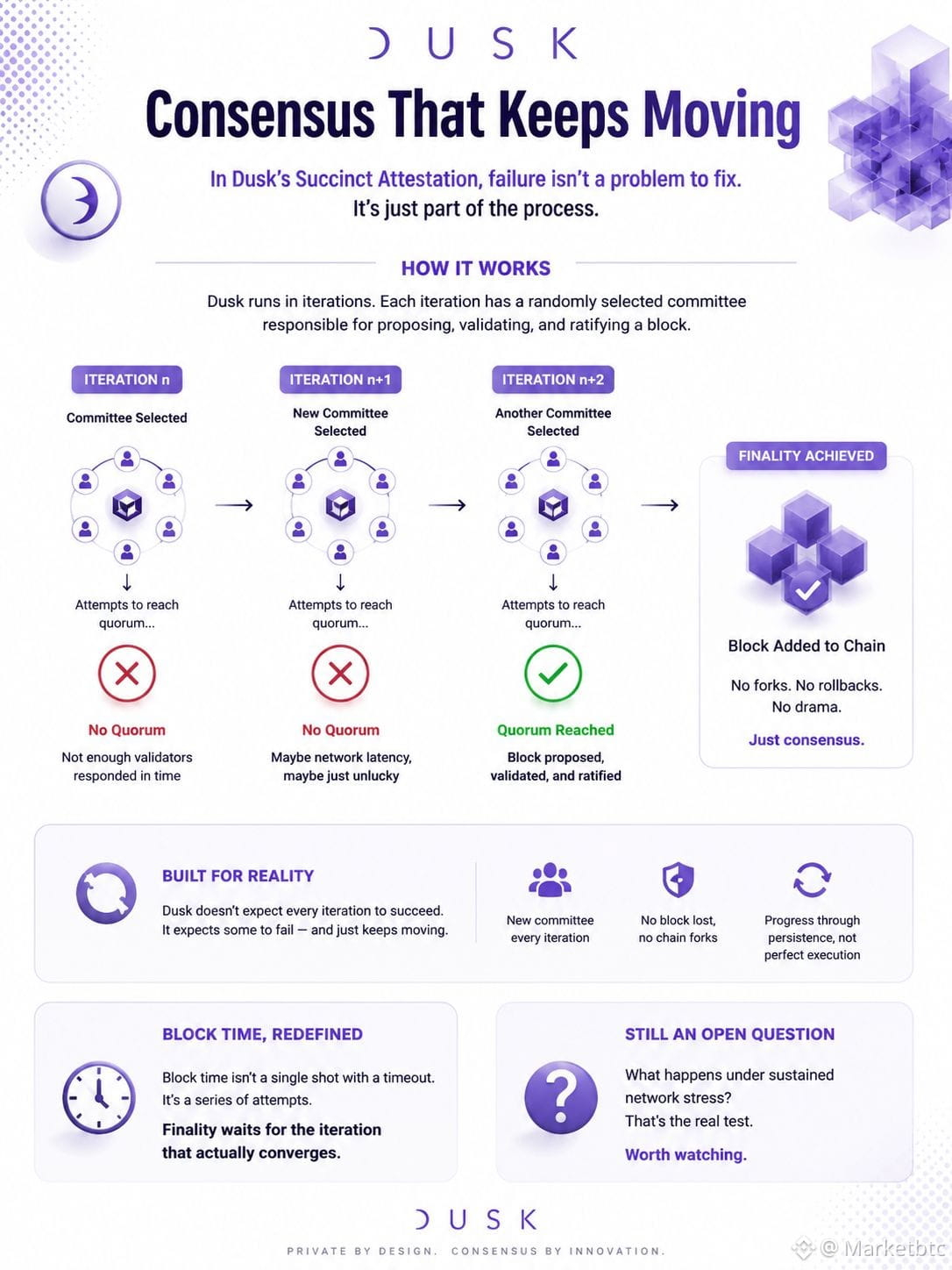
يعمل إجماع Dusk على تكرارات، يكون لكل منها لجنة يتم اختيارها عشوائيًا لتقديم المقترح والتحقق والمصادقة. إذا لم تصل اللجنة إلى نصاب الإقرار — فقد لا تكون هناك استجابات كافية من المدققين في الوقت، أو قد تكون هناك تأخيرات شبكية (latency)، ولا شيء دراميًا — لا يتعامل النظام مع ذلك باعتباره فشلًا يحتاج إلى إصلاح سريع (patch). بل ينتقل فقط إلى التكرار التالي مع لجنة جديدة يتم اختيارها فورًا. لا تُفقد أي كتلة، ولا تحدث تفرعات (forks) في السلسلة، ولا يوجد تراجع (rollback). تنتهي المحاولة ببساطة، ثم يحاول الإجماع مرة أخرى باستخدام مدققين مختلفين يتحملون المسؤولية.
الذي لفتني هو أن هذا ليس إجراءً احتياطيًا مضافًا فوق التصميم. بل هو التوقع الافتراضي. يفترض البروتوكول أن بعض التكرارات لن تُنجز (finalize)، ويبني تدوير اللجان حول هذه الفكرة بدلًا من الاعتماد على أمل أن ينجح كل تكرار.
وهذا يغيّر الطريقة التي أقرأ بها "زمن الكتلة" بالنسبة لـ Dusk. ليس الأمر محاولة واحدة مع مهلة (timeout) — بل سلسلة من المحاولات يكون فيها الفشل أمرًا روتينيًا لا استثنائيًا، وتستمر الحتمية (finality) في الانتظار حتى يتقارب (converges) التكرار الذي ينجح فعليًا.
ما زلت غير متأكد كيف يتصرف ذلك تحت ضغط شبكي مستمر وليس فقط حالات تفويت النصاب بشكل منفصل. @Dusk #dusk $DUSK
لكن الأمر ليس كذلك.
يعمل إجماع Dusk على تكرارات، يكون لكل منها لجنة يتم اختيارها عشوائيًا لتقديم المقترح والتحقق والمصادقة. إذا لم تصل اللجنة إلى نصاب الإقرار — فقد لا تكون هناك استجابات كافية من المدققين في الوقت، أو قد تكون هناك تأخيرات شبكية (latency)، ولا شيء دراميًا — لا يتعامل النظام مع ذلك باعتباره فشلًا يحتاج إلى إصلاح سريع (patch). بل ينتقل فقط إلى التكرار التالي مع لجنة جديدة يتم اختيارها فورًا. لا تُفقد أي كتلة، ولا تحدث تفرعات (forks) في السلسلة، ولا يوجد تراجع (rollback). تنتهي المحاولة ببساطة، ثم يحاول الإجماع مرة أخرى باستخدام مدققين مختلفين يتحملون المسؤولية.
الذي لفتني هو أن هذا ليس إجراءً احتياطيًا مضافًا فوق التصميم. بل هو التوقع الافتراضي. يفترض البروتوكول أن بعض التكرارات لن تُنجز (finalize)، ويبني تدوير اللجان حول هذه الفكرة بدلًا من الاعتماد على أمل أن ينجح كل تكرار.
وهذا يغيّر الطريقة التي أقرأ بها "زمن الكتلة" بالنسبة لـ Dusk. ليس الأمر محاولة واحدة مع مهلة (timeout) — بل سلسلة من المحاولات يكون فيها الفشل أمرًا روتينيًا لا استثنائيًا، وتستمر الحتمية (finality) في الانتظار حتى يتقارب (converges) التكرار الذي ينجح فعليًا.
ما زلت غير متأكد كيف يتصرف ذلك تحت ضغط شبكي مستمر وليس فقط حالات تفويت النصاب بشكل منفصل. @Dusk #dusk $DUSK