أعتقد أن الجزء الأكثر إثارة للاهتمام في رافعة @TermMax ليس في الواقع جزء “النقرة الواحدة”.
بل هو ما تستبدله تلك النقرة.
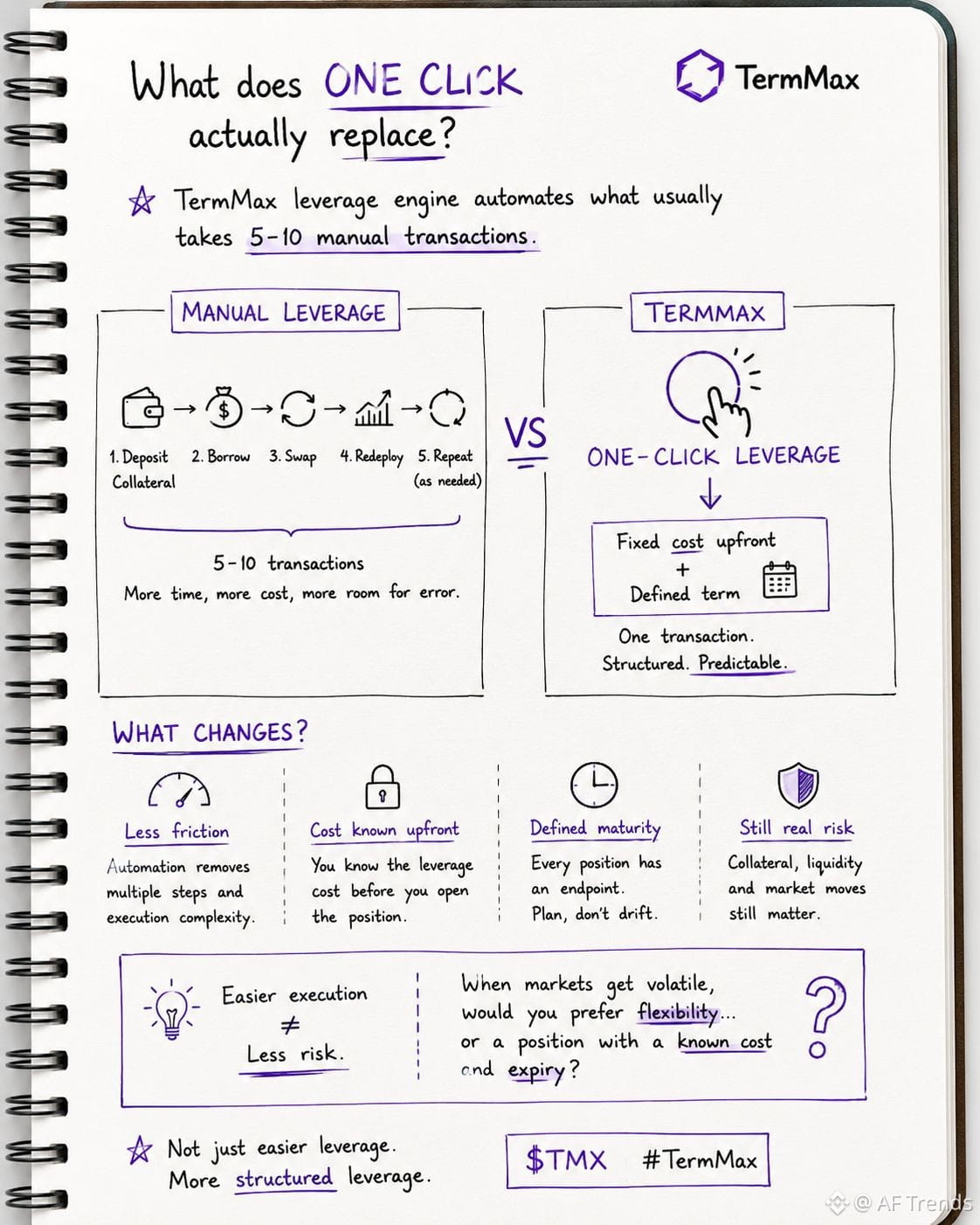
قد تتضمن استراتيجية DeFi بالرافعة إيداع ضمانات، ثم الاقتراض، ثم إجراء مبادلة، ثم إعادة الإيداع — ويدّعي TermMax أن محرك الرافعة لديه يمكنه أتمتة ما كان سيتطلب خلافًا ذلك نحو 5–10 معاملات يدوية.
لكن التفاصيل الأكبر سهلة الإغفال: تكلفة الرافعة ثابتة مسبقًا، ولدى المركز مدة محددة.
هذا يغيّر السؤال الذي أطرحه.
أنا أقل اهتمامًا بـ “كم مقدار الرافعة التي يمكنني الحصول عليها؟” وأكثر اهتمامًا بـ “مدى قابلية توقع الرافعة التي أتحملها؟”.
الأتمتة تزيل الاحتكاك. التكلفة الثابتة تزيل طبقة واحدة من عدم اليقين. والنضج المحدد يُلزم الاستراتيجية بأن يكون لها موعد نهاية.
وبالطبع، لا يجعل ذلك الرافعة خالية من المخاطر. الضمانات لا تزال مهمة، كما يجب إدارة النضج.
لكنني أعتقد أن هذا هو المكان الذي تصبح فيه @TermMax مثيرة للاهتمام: فهي لا تقتصر على جعل تنفيذ الرافعة أسهل — بل تحاول جعل المراكز الممولة بالرافعة أكثر تنظيمًا.
إذا كان بإمكان المستخدمين الاختيار بين رافعة مرنة دائمة التغيّر ومركز بتكلفة وانتهاء معروفين، فأي نموذج يفوز عندما تصبح الأسواق متقلبة؟
هذا هو الجزء من TermMax الذي أراقبه.
#TermMax #termmax
بل هو ما تستبدله تلك النقرة.
قد تتضمن استراتيجية DeFi بالرافعة إيداع ضمانات، ثم الاقتراض، ثم إجراء مبادلة، ثم إعادة الإيداع — ويدّعي TermMax أن محرك الرافعة لديه يمكنه أتمتة ما كان سيتطلب خلافًا ذلك نحو 5–10 معاملات يدوية.
لكن التفاصيل الأكبر سهلة الإغفال: تكلفة الرافعة ثابتة مسبقًا، ولدى المركز مدة محددة.
هذا يغيّر السؤال الذي أطرحه.
أنا أقل اهتمامًا بـ “كم مقدار الرافعة التي يمكنني الحصول عليها؟” وأكثر اهتمامًا بـ “مدى قابلية توقع الرافعة التي أتحملها؟”.
الأتمتة تزيل الاحتكاك. التكلفة الثابتة تزيل طبقة واحدة من عدم اليقين. والنضج المحدد يُلزم الاستراتيجية بأن يكون لها موعد نهاية.
وبالطبع، لا يجعل ذلك الرافعة خالية من المخاطر. الضمانات لا تزال مهمة، كما يجب إدارة النضج.
لكنني أعتقد أن هذا هو المكان الذي تصبح فيه @TermMax مثيرة للاهتمام: فهي لا تقتصر على جعل تنفيذ الرافعة أسهل — بل تحاول جعل المراكز الممولة بالرافعة أكثر تنظيمًا.
إذا كان بإمكان المستخدمين الاختيار بين رافعة مرنة دائمة التغيّر ومركز بتكلفة وانتهاء معروفين، فأي نموذج يفوز عندما تصبح الأسواق متقلبة؟
هذا هو الجزء من TermMax الذي أراقبه.
#TermMax #termmax