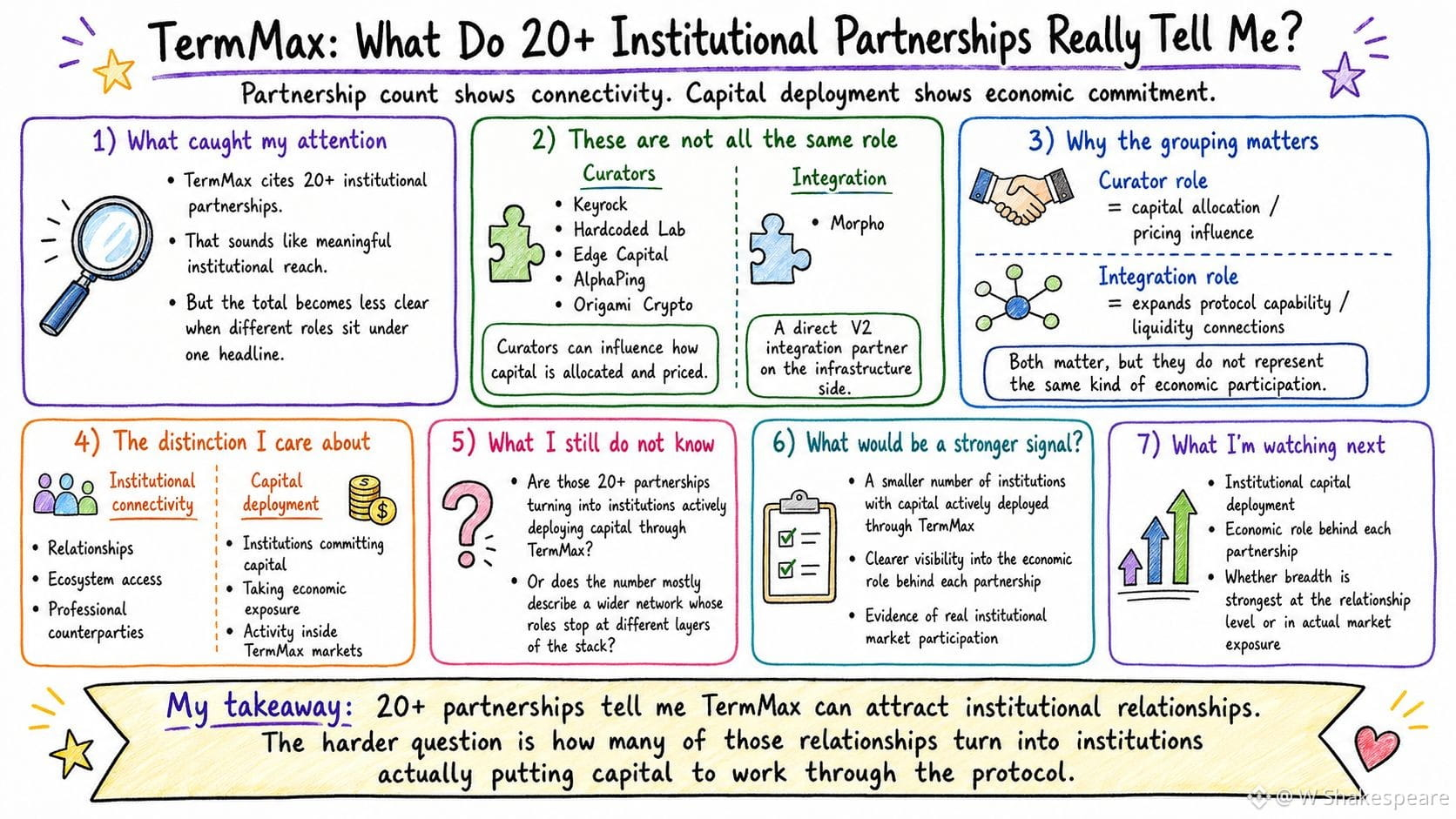
أعود باستمرار إلى TermMax، وهو بروتوكول لا مركزي للإقراض والاقتراض بمعدل ثابت، مستشهدًا بأكثر من 20 شراكة مؤسسية.
يبدو ذلك كزخم مؤسسي ذي معنى. لكن يصبح الرقم أقل وضوحًا عندما أسأل ما الذي تمثله كلمة "شراكة" فعليًا من الناحية الاقتصادية.
يمكن أن تجلس المؤسسات في أجزاء مختلفة جدًا من نظام TermMax البيئي. قد تعمل علاقة ما على توسيع البنية التحتية أو قنوات التوزيع. وقد تكون علاقة أخرى أقرب إلى التسعير أو توفير السيولة أو تخصيص رأس مال مباشر. جميعها قد تكون مهمة، لكن جمعها تحت عنوان واحد يجعل من الصعب معرفة مقدار هذا الوصول المؤسسي الذي تحوّل بالفعل إلى مشاركة رأسمالية.
ما لا أعرفه بعد هو ما إذا كانت تلك الشراكات الـ 20+ تتطور إلى قاعدة واسعة من المؤسسات ذات تعرض اقتصادي حقيقي عبر TermMax، أم أن جزءًا كبيرًا من هذا الحضور ما يزال موجودًا في طبقات أخرى من النظام البيئي. عندها يصبح رأس المال المُشغّل إشارة أقوى. فبمجرد أن تقوم مؤسسة بالفعل بتوظيف المال عبر TermMax، يجب أن تجتاز العلاقة اختبارًا اقتصاديًا لا يمكن للشراكة أو التكامل وحدهما اجتيازه. يجب على المؤسسة قبول المخاطر والعائد وظروف السوق المرتبطة بهذا التموضع، وليس مجرد كونها مرتبطة بالبروتوكول. لذا فإن اتساع نطاق العلاقة لا يعني بالضرورة اتساع نطاق رأس المال. يمكن لـ TermMax بناء شبكة مؤسسية واسعة، بينما لا يزال المال الذي يتحرك فعليًا عبر أسواقها يأتي من شريحة أصغر بكثير.
سأتعلم أكثر من مجموعة أصغر من المؤسسات التي تم توظيف رأس مالها بنشاط عبر TermMax، مقارنة بعدد شراكات أكبر بكثير حيث يظل الدور الاقتصادي وراء كل علاقة غير واضح.
السؤال هو ما إذا كانت TermMax تبني شبكة مؤسسية واسعة حول البروتوكول، أم أنها تحوّل هذا الاتساع إلى قاعدة متكافئة من مشاركة رأس مال مؤسسي. أتابع مقدار هذا الحضور المؤسسي الذي يظهر فعلًا كرأس مال مُوظَّف بعد ذلك.
#termmax @TermMax ✨$BTW
يبدو ذلك كزخم مؤسسي ذي معنى. لكن يصبح الرقم أقل وضوحًا عندما أسأل ما الذي تمثله كلمة "شراكة" فعليًا من الناحية الاقتصادية.
يمكن أن تجلس المؤسسات في أجزاء مختلفة جدًا من نظام TermMax البيئي. قد تعمل علاقة ما على توسيع البنية التحتية أو قنوات التوزيع. وقد تكون علاقة أخرى أقرب إلى التسعير أو توفير السيولة أو تخصيص رأس مال مباشر. جميعها قد تكون مهمة، لكن جمعها تحت عنوان واحد يجعل من الصعب معرفة مقدار هذا الوصول المؤسسي الذي تحوّل بالفعل إلى مشاركة رأسمالية.
ما لا أعرفه بعد هو ما إذا كانت تلك الشراكات الـ 20+ تتطور إلى قاعدة واسعة من المؤسسات ذات تعرض اقتصادي حقيقي عبر TermMax، أم أن جزءًا كبيرًا من هذا الحضور ما يزال موجودًا في طبقات أخرى من النظام البيئي. عندها يصبح رأس المال المُشغّل إشارة أقوى. فبمجرد أن تقوم مؤسسة بالفعل بتوظيف المال عبر TermMax، يجب أن تجتاز العلاقة اختبارًا اقتصاديًا لا يمكن للشراكة أو التكامل وحدهما اجتيازه. يجب على المؤسسة قبول المخاطر والعائد وظروف السوق المرتبطة بهذا التموضع، وليس مجرد كونها مرتبطة بالبروتوكول. لذا فإن اتساع نطاق العلاقة لا يعني بالضرورة اتساع نطاق رأس المال. يمكن لـ TermMax بناء شبكة مؤسسية واسعة، بينما لا يزال المال الذي يتحرك فعليًا عبر أسواقها يأتي من شريحة أصغر بكثير.
سأتعلم أكثر من مجموعة أصغر من المؤسسات التي تم توظيف رأس مالها بنشاط عبر TermMax، مقارنة بعدد شراكات أكبر بكثير حيث يظل الدور الاقتصادي وراء كل علاقة غير واضح.
السؤال هو ما إذا كانت TermMax تبني شبكة مؤسسية واسعة حول البروتوكول، أم أنها تحوّل هذا الاتساع إلى قاعدة متكافئة من مشاركة رأس مال مؤسسي. أتابع مقدار هذا الحضور المؤسسي الذي يظهر فعلًا كرأس مال مُوظَّف بعد ذلك.
#termmax @TermMax ✨$BTW