ذهبت للبحث في بنية سوق DUSK وانتهيت إلى أن أفكر بأقل في الرمز نفسه وأكثر في الأماكن/المنصات حوله.
عبارة "أماكن تنسّق النشاط في السوق الأولية أو الثانوية" تبدو عادية إلى حد ما في البداية. لكن عندما نظرت إليها من خلال عدسة السيولة وتوزيع الرمز، بدأت تبدو أكثر أهمية.
يمكن أن يمتلك الرمز سوقًا يعمل حتى لو لم تكن بنية السوق صحية.
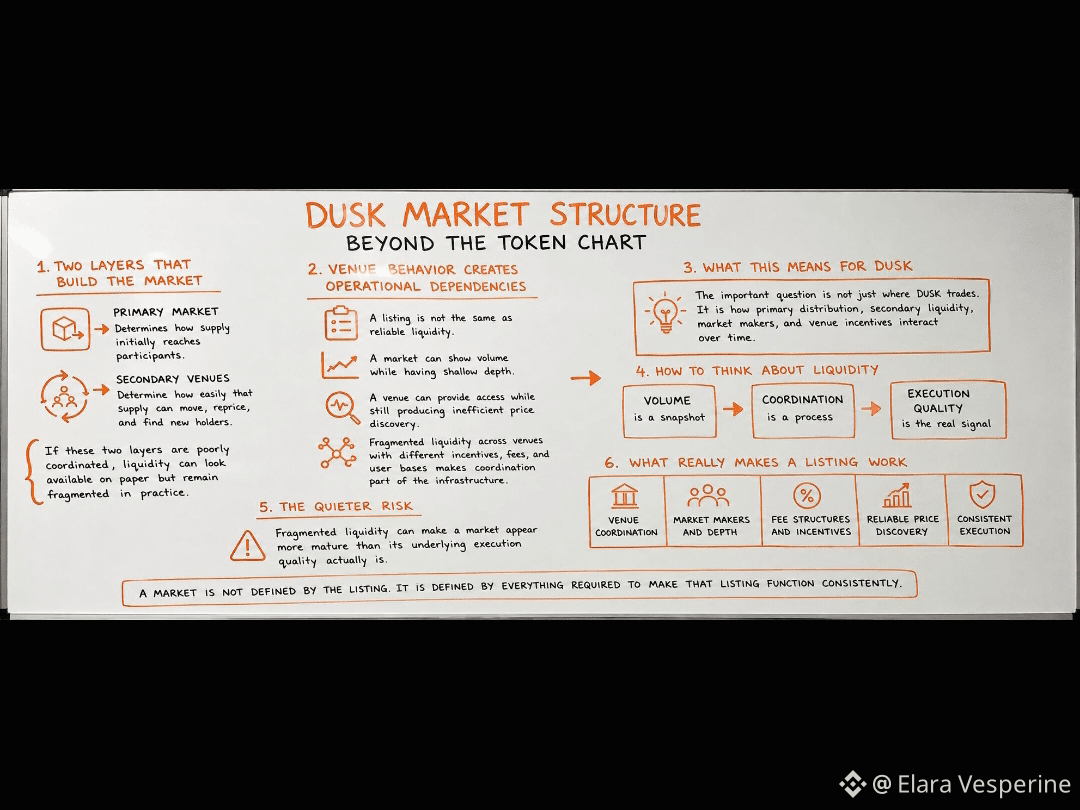
تحدد أنشطة السوق الأولية كيف يصل العرض مبدئيًا إلى المشاركين. ثم تحدد المنصات الثانوية مدى سهولة انتقال هذا العرض وإعادة تسعيره وإيجاد حامليَـن جدد. إذا كان هذان المستويان غير منسقين بشكل سيئ، قد تبدو السيولة متاحة على الورق بينما تظل مجزأة فعليًا.
وهذا مهم لأن سلوك المنصات يخلق تبعيات تشغيلية.
القَيد/الإدراج ليس هو نفسه سيولة موثوقة. يمكن للسوق أن يُظهر حجم تداول بينما تكون عمقه ضحلًا. قد توفر المنصة الثانوية وصولًا بينما تظل تنتج اكتشاف سعر غير كفء. وإذا كانت السيولة موزعة عبر منصات مختلفة لديها حوافز متنوعة، وهيئات لصناع السوق، وبُنى الرسوم وقواعد المستخدمين، تصبح عملية التنسيق بحد ذاتها جزءًا من البنية التحتية.
وهنا أعتقد أن DUSK أكثر إثارة للدراسة من مجرد مشاهدة مخطط الرمز.
السؤال المهم ليس فقط أين يتم تداول DUSK. بل كيف يتفاعل التوزيع الأولي، والسيولة الثانوية، وصناع السوق، وحوافز المنصات مع مرور الوقت.
كما أن هذا يغيّر طريقتي في التفكير ببيانات السيولة. الحجم هو لقطة. التنسيق هو عملية.
أما الخطر الأقل وضوحًا فهو أن السيولة المجزأة قد تجعل السوق يبدو أكثر نضجًا مما هي عليه فعليًا جودة التنفيذ الكامنة فيه.
أحيانًا لا تكون أهم جزء في سوق الرمز هو إدراج البورصة. بل كل ما يلزم لكي يعمل هذا الإدراج بشكل متسق.
#dusk $DUSK @Dusk
عبارة "أماكن تنسّق النشاط في السوق الأولية أو الثانوية" تبدو عادية إلى حد ما في البداية. لكن عندما نظرت إليها من خلال عدسة السيولة وتوزيع الرمز، بدأت تبدو أكثر أهمية.
يمكن أن يمتلك الرمز سوقًا يعمل حتى لو لم تكن بنية السوق صحية.
تحدد أنشطة السوق الأولية كيف يصل العرض مبدئيًا إلى المشاركين. ثم تحدد المنصات الثانوية مدى سهولة انتقال هذا العرض وإعادة تسعيره وإيجاد حامليَـن جدد. إذا كان هذان المستويان غير منسقين بشكل سيئ، قد تبدو السيولة متاحة على الورق بينما تظل مجزأة فعليًا.
وهذا مهم لأن سلوك المنصات يخلق تبعيات تشغيلية.
القَيد/الإدراج ليس هو نفسه سيولة موثوقة. يمكن للسوق أن يُظهر حجم تداول بينما تكون عمقه ضحلًا. قد توفر المنصة الثانوية وصولًا بينما تظل تنتج اكتشاف سعر غير كفء. وإذا كانت السيولة موزعة عبر منصات مختلفة لديها حوافز متنوعة، وهيئات لصناع السوق، وبُنى الرسوم وقواعد المستخدمين، تصبح عملية التنسيق بحد ذاتها جزءًا من البنية التحتية.
وهنا أعتقد أن DUSK أكثر إثارة للدراسة من مجرد مشاهدة مخطط الرمز.
السؤال المهم ليس فقط أين يتم تداول DUSK. بل كيف يتفاعل التوزيع الأولي، والسيولة الثانوية، وصناع السوق، وحوافز المنصات مع مرور الوقت.
كما أن هذا يغيّر طريقتي في التفكير ببيانات السيولة. الحجم هو لقطة. التنسيق هو عملية.
أما الخطر الأقل وضوحًا فهو أن السيولة المجزأة قد تجعل السوق يبدو أكثر نضجًا مما هي عليه فعليًا جودة التنفيذ الكامنة فيه.
أحيانًا لا تكون أهم جزء في سوق الرمز هو إدراج البورصة. بل كل ما يلزم لكي يعمل هذا الإدراج بشكل متسق.
#dusk $DUSK @Dusk