كلما فكّرت أكثر في «الأوراكلز» على Dusk، كلما وجدت نفسي أعود إلى شيء يبدو كأنه مجاملة، لكنه في الحقيقة سؤالٌ معقّد
مهمة الأوراكل هي التحقق: فهي تُغذي بيانات خارجية إلى سلسلة بحيث يمكن لعقد ما أن يثق بالسعر دون أن يثق بالطرف الذي يبلّغه. ولا يعمل ذلك إلا إذا تمكن أي شخص من مقارنة التغذية بالمشهد الحقيقي
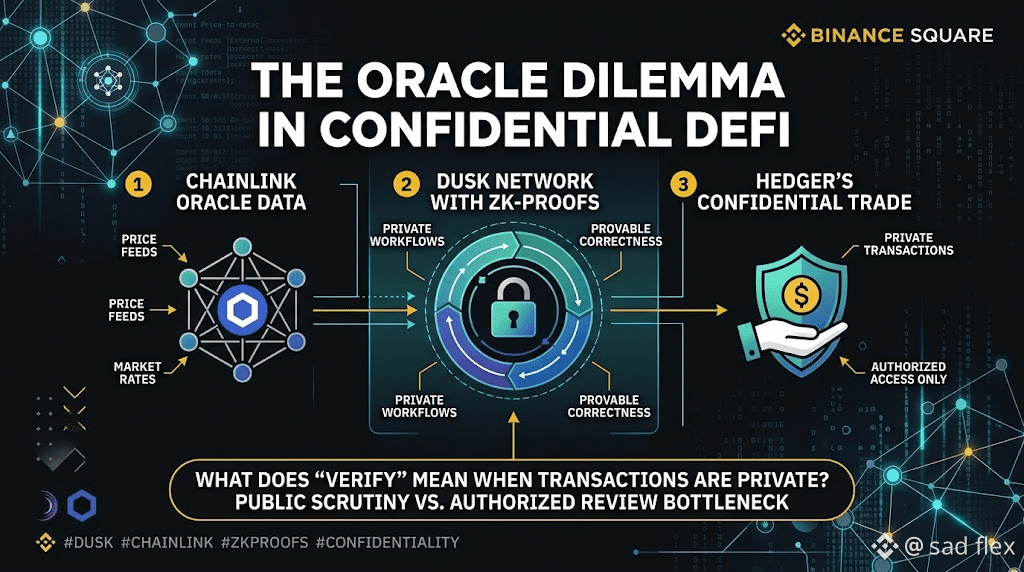
تجمع Dusk بين بيانات أوراكل Chainlink وبين سير العمل السري لدى Hedger: معاملات تظل خاصة، مع كونها صحيحة بشكلٍ قابل للإثبات لمن يملك صلاحية التحقق
لذا، فالسؤال ليس ما إذا كان الجمع بين الأوراكل والتنفيذ السري مفيدًا
إنه مفيدٌ بوضوح؛ فالأدوات الخاضعة للتنظيم تحتاج إلى بيانات أسعار حقيقية دون تعريض كل صفقة
السؤال إذن هو ماذا يعني حتى كلمة «التحقق» بمجرد أن تكون المعاملة المستهلكة لتلك البيانات خاصة
هذا الاقتران يحل مشكلة حقيقية. الصفقة السرية ما زالت تحتاج إلى تغذية سعرية صادقة؛ إخفاء المعاملة لا يعني أن المُدخلات يمكن أن تكون مزيفة. سمعة Chainlink في البيانات المقاومة للتلاعب تهم أيضًا داخل سير عمل خاص، بل قد تهم أكثر، لأن لا توجد «تاريخ صفقات» عام يمكن أن يساند النتائج للتحقق
هذه قوة حقيقية وليست تناقضًا
لكن السلاسل العامة تحصل على طبقة ثانية من التدقيق لا توفرها بيانات الأوراكل وحدها: يمكن لأي شخص مراقبة الصفقات وملاحظة ما إذا كانت النتائج تبدو خاطئة، حتى دون رؤية التغذية الخام. الصفقة السرية تُزيل تلك الطبقة. برهان المعرفة الصفرية يؤكد أن الحساب استخدم مدخلات الأوراكل بشكل صحيح، لكنه لا يسمح للمراقِب أن يتحقق منطقيًا مما إذا كانت تلك المدخلات ذات معنى، لأن الصفقة نفسها غير مرئية
تُملأ هذه الفجوة بواسطة من يملك صلاحية المراجعة، لا بواسطة الجمهور. تصبح دقة الأوراكل شيئًا يتم التحقق منه عبر المراجعين المحدودين أنفسهم الذين يتعاملون بالفعل مع الإفصاح، لا عبر التدقيق الأوسع الذي يلتقط التلاعب عادةً في وقت مبكر
ما لم أستقر عليه بعد هو ما إذا كان اقتران Chainlink مع Hedger يحافظ على مساءلة الأوراكل، أم ينقلها إلى نفس «عنق الزجاجة» الخاص بمراجعة مُصرّح بها الذي تعتمد عليه الخصوصية بالفعل
#dusk @Dusk $ACE $CYS $DUSK
مهمة الأوراكل هي التحقق: فهي تُغذي بيانات خارجية إلى سلسلة بحيث يمكن لعقد ما أن يثق بالسعر دون أن يثق بالطرف الذي يبلّغه. ولا يعمل ذلك إلا إذا تمكن أي شخص من مقارنة التغذية بالمشهد الحقيقي
تجمع Dusk بين بيانات أوراكل Chainlink وبين سير العمل السري لدى Hedger: معاملات تظل خاصة، مع كونها صحيحة بشكلٍ قابل للإثبات لمن يملك صلاحية التحقق
لذا، فالسؤال ليس ما إذا كان الجمع بين الأوراكل والتنفيذ السري مفيدًا
إنه مفيدٌ بوضوح؛ فالأدوات الخاضعة للتنظيم تحتاج إلى بيانات أسعار حقيقية دون تعريض كل صفقة
السؤال إذن هو ماذا يعني حتى كلمة «التحقق» بمجرد أن تكون المعاملة المستهلكة لتلك البيانات خاصة
هذا الاقتران يحل مشكلة حقيقية. الصفقة السرية ما زالت تحتاج إلى تغذية سعرية صادقة؛ إخفاء المعاملة لا يعني أن المُدخلات يمكن أن تكون مزيفة. سمعة Chainlink في البيانات المقاومة للتلاعب تهم أيضًا داخل سير عمل خاص، بل قد تهم أكثر، لأن لا توجد «تاريخ صفقات» عام يمكن أن يساند النتائج للتحقق
هذه قوة حقيقية وليست تناقضًا
لكن السلاسل العامة تحصل على طبقة ثانية من التدقيق لا توفرها بيانات الأوراكل وحدها: يمكن لأي شخص مراقبة الصفقات وملاحظة ما إذا كانت النتائج تبدو خاطئة، حتى دون رؤية التغذية الخام. الصفقة السرية تُزيل تلك الطبقة. برهان المعرفة الصفرية يؤكد أن الحساب استخدم مدخلات الأوراكل بشكل صحيح، لكنه لا يسمح للمراقِب أن يتحقق منطقيًا مما إذا كانت تلك المدخلات ذات معنى، لأن الصفقة نفسها غير مرئية
تُملأ هذه الفجوة بواسطة من يملك صلاحية المراجعة، لا بواسطة الجمهور. تصبح دقة الأوراكل شيئًا يتم التحقق منه عبر المراجعين المحدودين أنفسهم الذين يتعاملون بالفعل مع الإفصاح، لا عبر التدقيق الأوسع الذي يلتقط التلاعب عادةً في وقت مبكر
ما لم أستقر عليه بعد هو ما إذا كان اقتران Chainlink مع Hedger يحافظ على مساءلة الأوراكل، أم ينقلها إلى نفس «عنق الزجاجة» الخاص بمراجعة مُصرّح بها الذي تعتمد عليه الخصوصية بالفعل
#dusk @Dusk $ACE $CYS $DUSK