
لقد كنت في عالم العملات المشفرة لفترة كافية لأرى أن “الأسعار الثابتة” أصبحت عبارة يكررها الناس حتى تفقد معناها الحقيقي. لذا واصلت القراءة في @TermMax، بشكل أساسي لأنني أردت أن أفهم أين “الجزء الثابت” يسكن فعليًا.
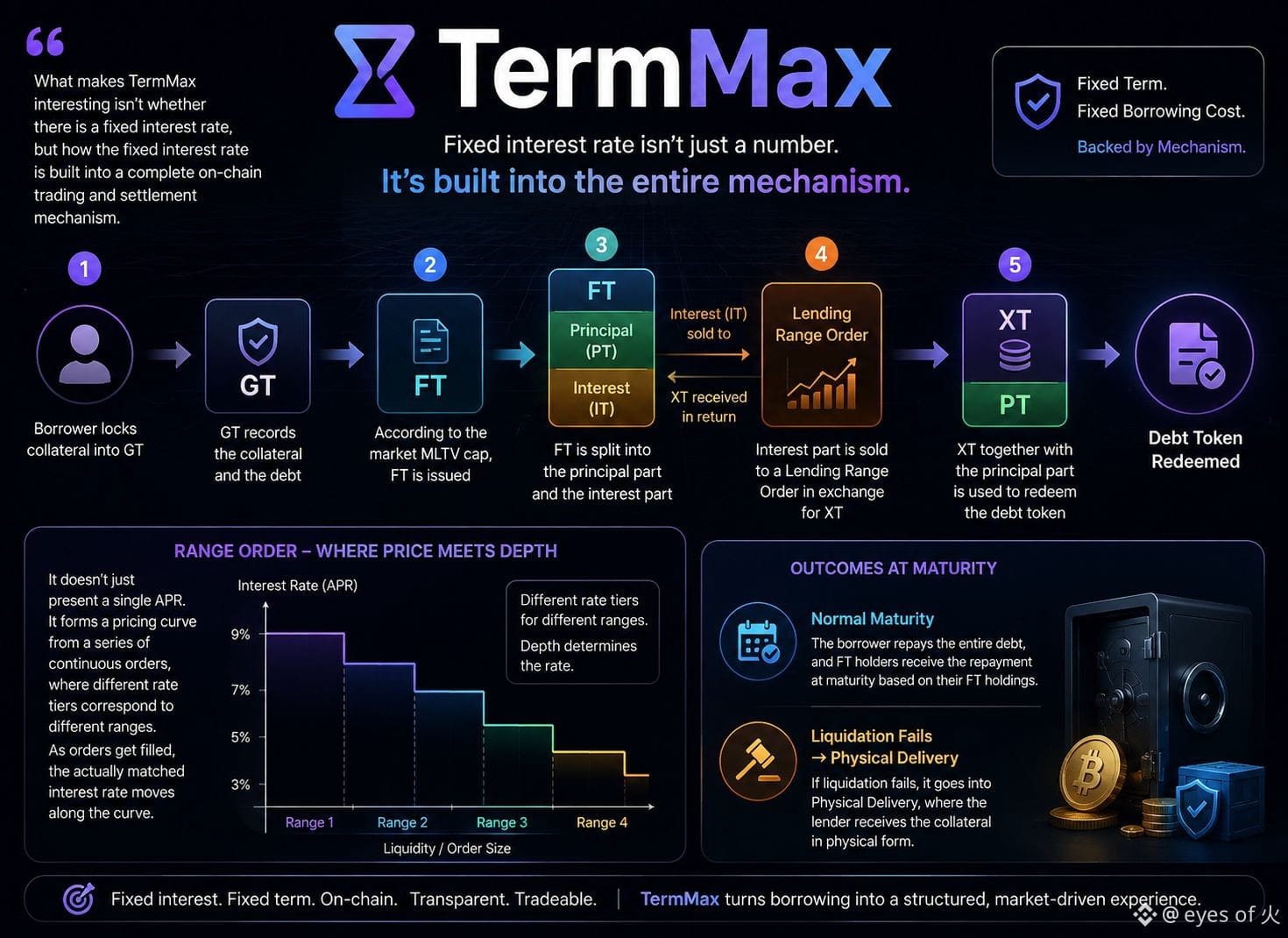
ما أدهشني أن الأمر ليس مجرد APR مكتوب على شاشة. الضمانات تُودَع في GT، ويتم تمثيل الدين عبر FT، ويتم فصل جزء الفائدة، وXT يصبح جزءًا من المسار المؤدي إلى رمز الدين. وهذا يجعل المعدل يبدو أقل كونه إعدادًا وأكثر كونه شيئًا متأصلًا داخل الأصول نفسها.
أمرٌ آخر بدأ يجذب انتباهي وهو أمر “Range Order”. لقد رأيت الكثير من أسواق DeFi تتظاهر بأن السيولة رقم واحد واضح بينما هي ليست كذلك فعليًا. هنا، يمكن لمنحنى التسعير أن يتحرك عبر نطاقات معدلات مختلفة مع تنفيذ الأوامر. استخدام سيولة أكبر لا يعني بالضرورة أن المعدل نفسه سيظل متاحًا. بل إن عمق السيولة بحد ذاته يصبح جزءًا من السعر.
يبدو هذا أكثر صدقًا بالنسبة لي، حتى لو كان أيضًا أكثر تعقيدًا.
لست متأكدًا بعد من مدى صمود ذلك أمام سيولة ضعيفة، أو أسواق مضغوطة، أو مستخدمين غير صبورين. لدى العملات المشفرة تاريخ طويل من آليات أنيقة تصطدم بالواقع الفوضوي. لكن هناك شيء ما في TermMax يبدو مختلفًا بما يكفي ليجعلني أستمر في المتابعة.
ربما كانت السؤال المثير للاهتمام ليس ما إذا كانت الفائدة الثابتة موجودة أصلًا.
بل ما إذا كان البروتوكول يمكنه فعلاً أن يجعل المعدل الثابت متماسكًا من لحظة التداول حتى الاستحقاق.
@TermMax #TermMax
ما أدهشني أن الأمر ليس مجرد APR مكتوب على شاشة. الضمانات تُودَع في GT، ويتم تمثيل الدين عبر FT، ويتم فصل جزء الفائدة، وXT يصبح جزءًا من المسار المؤدي إلى رمز الدين. وهذا يجعل المعدل يبدو أقل كونه إعدادًا وأكثر كونه شيئًا متأصلًا داخل الأصول نفسها.
أمرٌ آخر بدأ يجذب انتباهي وهو أمر “Range Order”. لقد رأيت الكثير من أسواق DeFi تتظاهر بأن السيولة رقم واحد واضح بينما هي ليست كذلك فعليًا. هنا، يمكن لمنحنى التسعير أن يتحرك عبر نطاقات معدلات مختلفة مع تنفيذ الأوامر. استخدام سيولة أكبر لا يعني بالضرورة أن المعدل نفسه سيظل متاحًا. بل إن عمق السيولة بحد ذاته يصبح جزءًا من السعر.
يبدو هذا أكثر صدقًا بالنسبة لي، حتى لو كان أيضًا أكثر تعقيدًا.
لست متأكدًا بعد من مدى صمود ذلك أمام سيولة ضعيفة، أو أسواق مضغوطة، أو مستخدمين غير صبورين. لدى العملات المشفرة تاريخ طويل من آليات أنيقة تصطدم بالواقع الفوضوي. لكن هناك شيء ما في TermMax يبدو مختلفًا بما يكفي ليجعلني أستمر في المتابعة.
ربما كانت السؤال المثير للاهتمام ليس ما إذا كانت الفائدة الثابتة موجودة أصلًا.
بل ما إذا كان البروتوكول يمكنه فعلاً أن يجعل المعدل الثابت متماسكًا من لحظة التداول حتى الاستحقاق.
@TermMax #TermMax