عند قراءة ورقة شبكة Dusk البيضاء، لفت انتباهي اختيار تصميمي صغير أكثر من أي تقنية خصوصية: كيف يقررون فعليًا من يحق له اقتراح الكتلة التالية.
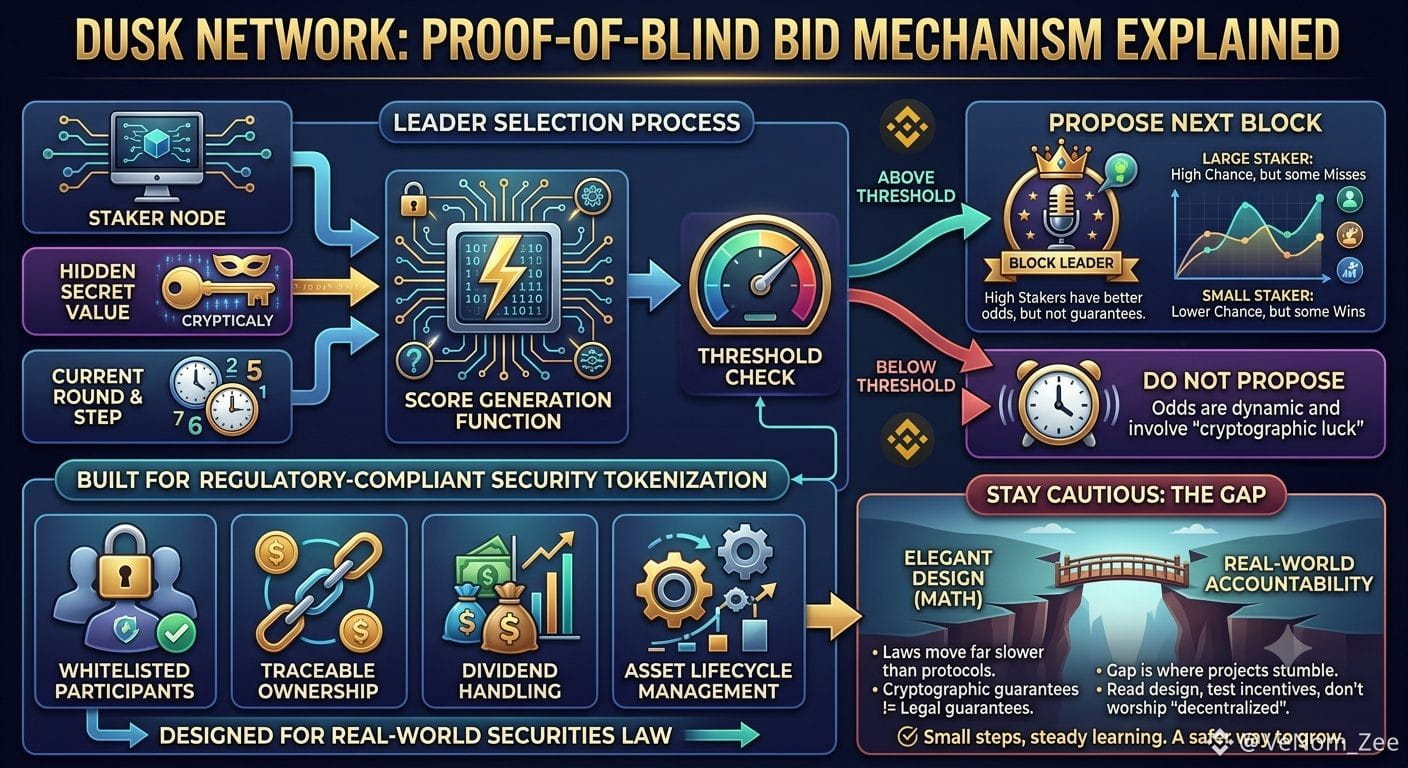
الأمر ليس ببساطة «من يملك أكبر حصة يفوز». آلية الإثبات بالعرض الأعمى (Proof-of-Blind Bid) لديهم تقوم بتشغيل قيمة سرية مخفية مع الجولة الحالية والمرحلة الحالية لتوليد درجة، ولا تمنحك الدرجة التي تتجاوز عتبة محددة سوى الحق في التوجيه/القيادة. لدى صاحب الحصة الكبيرة فرص أفضل، لكن الفرص ليست ضمانات—فقد يتم اختيار شخص أصغر، وقد يفوت شخص أكبر دوره. الحظ، حين يُلبس ثوبًا من التشفير، يقوم فعليًا بعمل هنا.
ما يجعل هذا يبدو أقل مثل «عرض ورقي» وأكثر مثل شيء يستند إلى واقع هو ما تقوله Dusk عن وجهته: ترميز الأصول كتوكينات أمنية متوافق مع اللوائح. إنهم يصممون صراحةً لإدارة دورة حياة الأصول من النوع الذي يهتم به قانون الأوراق المالية فعلًا—مشاركون مُدرجون (على القائمة البيضاء)، وملكية قابلة للتتبع، ومعالجة الأرباح/الـdividend. هذه طموحات مختلفة عن «مدفوعات أسرع» أو «خصوصية لمجرد الخصوصية».
ومع ذلك، أبقى متحفظًا قليلًا. كون الآلية عادلة بطريقة يمكن إثباتها على الورق لا يعني أن الجهة التنظيمية أو المحكمة أو السوق الفعلي سيتعاملون معها بوصفها عادلة في الممارسة. القوانين تتحرك أبطأ بكثير من البروتوكولات، وضمانات التشفير لا تتحول تلقائيًا إلى ضمانات قانونية. هذه الفجوة بين التصميم الأنيق والمساءلة الواقعية هي المكان الذي تتعثر فيه المشاريع عادةً، وليس في الرياضيات نفسها.
خلاصة تجربتي الشخصية: آليات مثل هذه تستحق الفهم، لا العبادة. اقرأ التصميم، واسأل ماذا يحدث عندما تُختبر مع حوافز حقيقية، ولا تفترض أن «المركزية» أو «الامتثال» تعني أن المشكلة تم حلها بالفعل.
خطوات صغيرة، وتعلّم ثابت—لا يزال ذلك هو أكثر الطرق أمانًا للنمو في هذا المجال.
@Dusk #dusk $DUSK
الأمر ليس ببساطة «من يملك أكبر حصة يفوز». آلية الإثبات بالعرض الأعمى (Proof-of-Blind Bid) لديهم تقوم بتشغيل قيمة سرية مخفية مع الجولة الحالية والمرحلة الحالية لتوليد درجة، ولا تمنحك الدرجة التي تتجاوز عتبة محددة سوى الحق في التوجيه/القيادة. لدى صاحب الحصة الكبيرة فرص أفضل، لكن الفرص ليست ضمانات—فقد يتم اختيار شخص أصغر، وقد يفوت شخص أكبر دوره. الحظ، حين يُلبس ثوبًا من التشفير، يقوم فعليًا بعمل هنا.
ما يجعل هذا يبدو أقل مثل «عرض ورقي» وأكثر مثل شيء يستند إلى واقع هو ما تقوله Dusk عن وجهته: ترميز الأصول كتوكينات أمنية متوافق مع اللوائح. إنهم يصممون صراحةً لإدارة دورة حياة الأصول من النوع الذي يهتم به قانون الأوراق المالية فعلًا—مشاركون مُدرجون (على القائمة البيضاء)، وملكية قابلة للتتبع، ومعالجة الأرباح/الـdividend. هذه طموحات مختلفة عن «مدفوعات أسرع» أو «خصوصية لمجرد الخصوصية».
ومع ذلك، أبقى متحفظًا قليلًا. كون الآلية عادلة بطريقة يمكن إثباتها على الورق لا يعني أن الجهة التنظيمية أو المحكمة أو السوق الفعلي سيتعاملون معها بوصفها عادلة في الممارسة. القوانين تتحرك أبطأ بكثير من البروتوكولات، وضمانات التشفير لا تتحول تلقائيًا إلى ضمانات قانونية. هذه الفجوة بين التصميم الأنيق والمساءلة الواقعية هي المكان الذي تتعثر فيه المشاريع عادةً، وليس في الرياضيات نفسها.
خلاصة تجربتي الشخصية: آليات مثل هذه تستحق الفهم، لا العبادة. اقرأ التصميم، واسأل ماذا يحدث عندما تُختبر مع حوافز حقيقية، ولا تفترض أن «المركزية» أو «الامتثال» تعني أن المشكلة تم حلها بالفعل.
خطوات صغيرة، وتعلّم ثابت—لا يزال ذلك هو أكثر الطرق أمانًا للنمو في هذا المجال.
@Dusk #dusk $DUSK