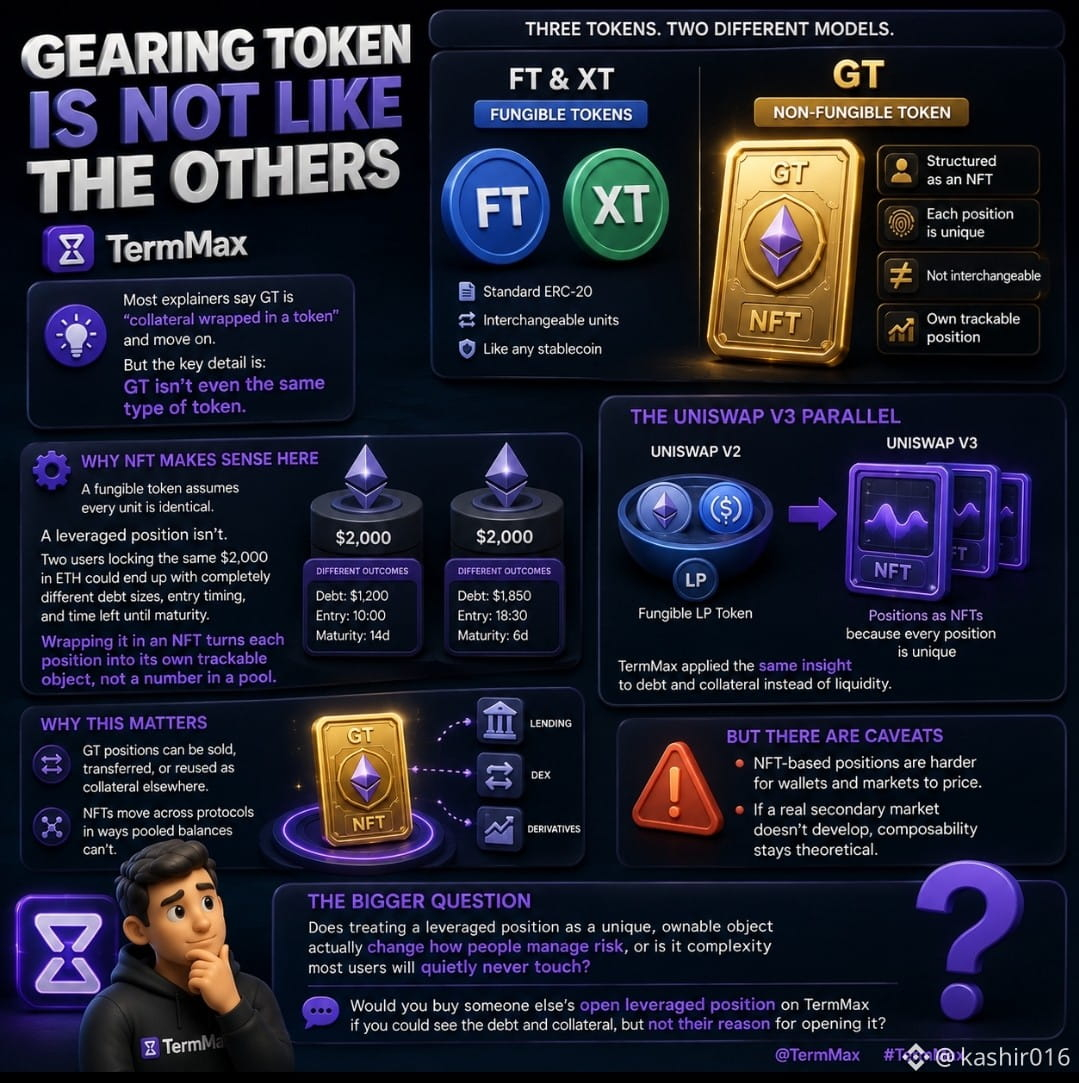
#termmax @TermMax يصف معظم الشّارحين رمز Gearing Token الخاص بـ TermMax بأنه "ضمان مُلتفّ داخل توكن" ثم يمضون قدماً. لكن ما يتخطّونه هو أن GT ليس حتى من نفس نوع التوكن الموجود في بقية النظام. FT وXT هما توكنان قياسيّان من نوع ERC-20، وحدات قابلة للتبديل مثل أي عملة مستقرة. أما GT فهو مُهيكل كـ NFT. هذه التفاصيل غيّرت طريقة قراءتي للمنتج بالكامل.
تتضح المنطقية بمجرد أن تجلس معه. التوكن القابل للاستبدال يفترض أن كل وحدة متطابقة. أما المركز المُرفوع بالرافعة المالية فليس كذلك. قد يقفل مستخدمان نفس مبلغ 2,000 دولار من ETH، لكن يمكن أن ينتهيا بحجوم ديون مختلفة تماماً، وتوقيت دخول مختلف، ومدة زمنية متبقية مختلفة حتى تاريخ الاستحقاق. إن لفّ ذلك داخل NFT يجعل كل مركز كائناً قابلاً للتتبّع بذاته بدل أن يكون رقماً داخل حوض مشترك.
ما شدّ انتباهي هو أن هذا هو المنطق نفسه الذي استخدمه Uniswap V3 عندما نقل مراكز السيولة من توكنات LP القابلة للاستبدال إلى NFTs، لأن السيولة المُركزة تعني أن مركزين لن يكونا متطابقين أيضاً. طبّق TermMax هذه الفكرة نفسها على الديون والضمان بدل السيولة. من الناحية النظرية، يعني ذلك أيضاً أن مركز GT يمكن بيعه أو تحويله أو إعادة استخدامه كضمان في مكان آخر، لأن NFTs تنتقل عبر البروتوكولات بطرق لا تستطيع الموازنات المجمّعة القيام بها.
لكنني لست مقتنعاً تماماً بعدُ بأنها ميزة عملية. فالمراكز المبنية على NFTs أصعب على المحافظ والأسواق الثانوية لتسعيرها بدقة مقارنةً برصيد بسيط من ERC-20. وإذا لم تتطور سوق ثانوية حقيقية لـ GTs، فستبقى هذه القابلية للتراكم/التوافق مجرد نظرية وليست شيئاً يستخدمه الناس فعلاً.
السؤال الأكبر هو ما إذا كان التعامل مع مركز مُرفوع بالرافعة ككائن فريد وقابل للامتلاك فعلاً يغيّر طريقة إدارة الناس للمخاطر، أم أن الأمر مجرد تعقيد سيتجنبه معظم المستخدمين دون أن يلمسوه.
هل ستشتري مركزاً مُرفوعاً بالرافعة مفتوحاً لشخص آخر على TermMax إذا كان بإمكانك رؤية مبلغ الدين والضمان، لكن ليس سبب فتحه؟
@TermMax #TermMax #termax
تتضح المنطقية بمجرد أن تجلس معه. التوكن القابل للاستبدال يفترض أن كل وحدة متطابقة. أما المركز المُرفوع بالرافعة المالية فليس كذلك. قد يقفل مستخدمان نفس مبلغ 2,000 دولار من ETH، لكن يمكن أن ينتهيا بحجوم ديون مختلفة تماماً، وتوقيت دخول مختلف، ومدة زمنية متبقية مختلفة حتى تاريخ الاستحقاق. إن لفّ ذلك داخل NFT يجعل كل مركز كائناً قابلاً للتتبّع بذاته بدل أن يكون رقماً داخل حوض مشترك.
ما شدّ انتباهي هو أن هذا هو المنطق نفسه الذي استخدمه Uniswap V3 عندما نقل مراكز السيولة من توكنات LP القابلة للاستبدال إلى NFTs، لأن السيولة المُركزة تعني أن مركزين لن يكونا متطابقين أيضاً. طبّق TermMax هذه الفكرة نفسها على الديون والضمان بدل السيولة. من الناحية النظرية، يعني ذلك أيضاً أن مركز GT يمكن بيعه أو تحويله أو إعادة استخدامه كضمان في مكان آخر، لأن NFTs تنتقل عبر البروتوكولات بطرق لا تستطيع الموازنات المجمّعة القيام بها.
لكنني لست مقتنعاً تماماً بعدُ بأنها ميزة عملية. فالمراكز المبنية على NFTs أصعب على المحافظ والأسواق الثانوية لتسعيرها بدقة مقارنةً برصيد بسيط من ERC-20. وإذا لم تتطور سوق ثانوية حقيقية لـ GTs، فستبقى هذه القابلية للتراكم/التوافق مجرد نظرية وليست شيئاً يستخدمه الناس فعلاً.
السؤال الأكبر هو ما إذا كان التعامل مع مركز مُرفوع بالرافعة ككائن فريد وقابل للامتلاك فعلاً يغيّر طريقة إدارة الناس للمخاطر، أم أن الأمر مجرد تعقيد سيتجنبه معظم المستخدمين دون أن يلمسوه.
هل ستشتري مركزاً مُرفوعاً بالرافعة مفتوحاً لشخص آخر على TermMax إذا كان بإمكانك رؤية مبلغ الدين والضمان، لكن ليس سبب فتحه؟
@TermMax #TermMax #termax