#termmax @TermMax كلما نظرت أكثر إلى TermMax، كلما بدا لي أن السؤال المثير للاهتمام ليس مقدار السيولة المتاحة داخل البروتوكول.
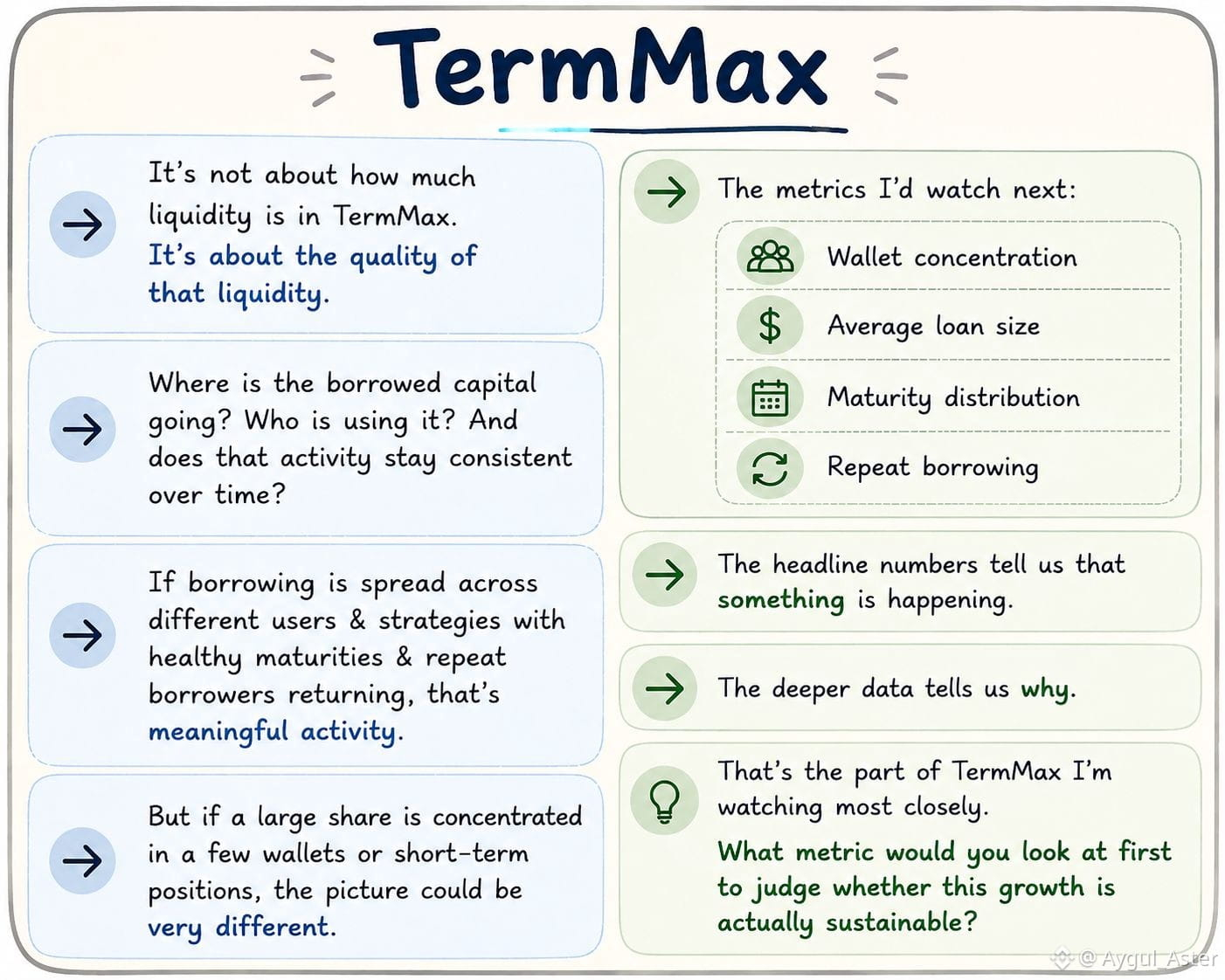
بل جودة تلك السيولة.
إلى أين يذهب رأس المال المقترض فعليًا؟ من يستخدمه؟ وهل تبقى هذه الأنشطة ثابتة مع مرور الوقت؟
إذا كان الاقتراض موزعًا عبر مستخدمين واستراتيجيات مختلفة، مع آجال استحقاق صحية ومقترضين متكررين يعودون مرة أخرى، تصبح هذه النشاطات أكثر معنى بكثير.
لكن إذا كانت حصة كبيرة مُركّزة في عدد قليل من المحافظ أو في مراكز قصيرة الأجل، فقد تكون الصورة مختلفة جدًا.
لذلك لست جاهزًا للقول إن النشاط الأخير دليل واضح على ملاءمة المنتج للسوق.
المؤشرات التي سأراقبها بعد ذلك:
• تركّز المحافظ
• متوسط حجم القرض
• توزيع آجال الاستحقاق
• الاقتراض المتكرر
الأرقام الرئيسية تخبرنا أن شيئًا ما يحدث.
والبيانات الأعمق تخبرنا لماذا.
وهذا هو الجزء من TermMax الذي أراقبه عن كثب أكثر من غيره.
أي مؤشر ستنظر إليه أولًا لتقييم ما إذا كان هذا النمو مستدامًا فعليًا؟
بل جودة تلك السيولة.
إلى أين يذهب رأس المال المقترض فعليًا؟ من يستخدمه؟ وهل تبقى هذه الأنشطة ثابتة مع مرور الوقت؟
إذا كان الاقتراض موزعًا عبر مستخدمين واستراتيجيات مختلفة، مع آجال استحقاق صحية ومقترضين متكررين يعودون مرة أخرى، تصبح هذه النشاطات أكثر معنى بكثير.
لكن إذا كانت حصة كبيرة مُركّزة في عدد قليل من المحافظ أو في مراكز قصيرة الأجل، فقد تكون الصورة مختلفة جدًا.
لذلك لست جاهزًا للقول إن النشاط الأخير دليل واضح على ملاءمة المنتج للسوق.
المؤشرات التي سأراقبها بعد ذلك:
• تركّز المحافظ
• متوسط حجم القرض
• توزيع آجال الاستحقاق
• الاقتراض المتكرر
الأرقام الرئيسية تخبرنا أن شيئًا ما يحدث.
والبيانات الأعمق تخبرنا لماذا.
وهذا هو الجزء من TermMax الذي أراقبه عن كثب أكثر من غيره.
أي مؤشر ستنظر إليه أولًا لتقييم ما إذا كان هذا النمو مستدامًا فعليًا؟