
#chinatodropolderwindowsfromstateagencies
تم إرسال طلب إلغاء برمجيات واحد فقط، ومع ذلك ارتفعت بعض الأسهم التقنية الصينية في السوق لتصل إلى الحد الأقصى اليومي—وهو رد فعل عادةً ما يُحجز لأخبار أكبر بكثير.
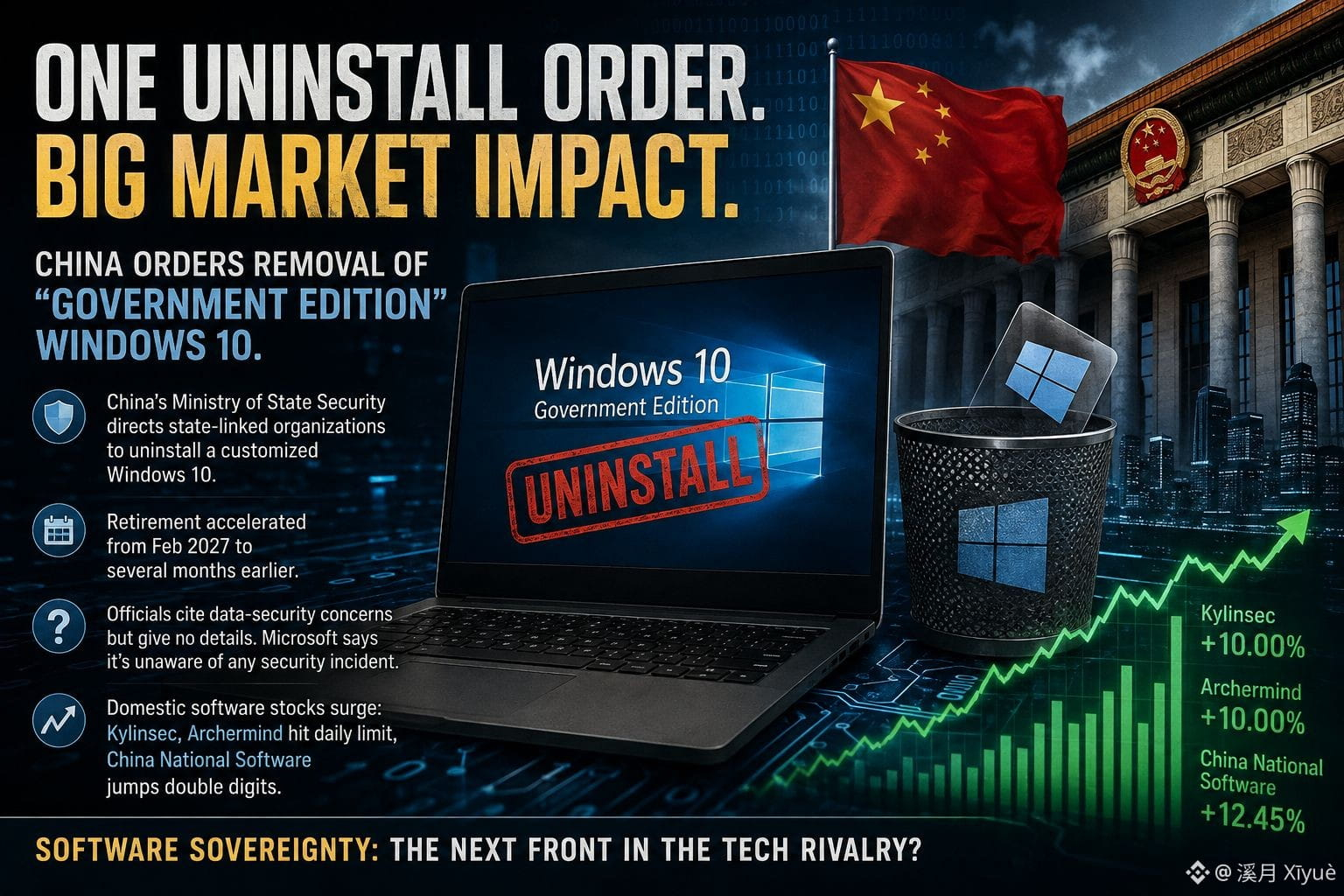
ووفقاً لوكالة بلومبرغ، قالت وزارة أمن الدولة الصينية مؤخراً لبعض المؤسسات المرتبطة بالدولة إن عليها إلغاء تثبيت نسخة مخصصة من "إصدار الحكومة" لوندوز 10—وهي نسخة تم بناؤها عبر مشروع مشترك بين مايكروسوفت ومجموعة الصين للإلكترونيات للتكنولوجيا المملوكة للدولة، ومصممة أصلاً لتلبية متطلبات بكين الأمنية. تُسرّع هذه التعليمات عملية إحلال كانت مخططة بالفعل لشهر فبراير 2027، ما يدفع الجدول الزمني إلى الأمام لعدة أشهر. ذكر المسؤولون مخاوف تتعلق بأمن البيانات، لكنهم لم يحددوا الثغرات التي دفعت إلى هذا التحرك، وتقول مايكروسوفت إنها لا تعرف بوجود أي حادث أمني يؤثر على المنتج. ويُلاحظ أن الطلب جاء قبل أسابيع فقط من اجتماع مخطط بين الرئيسين ترامب وشي.
كما سارعت شركات البرمجيات الصينية المحلية إلى الرد—فقُفزت أسهم شركات مثل Kylinsec وArchermind بالحد الأقصى للتداول اليومي، في حين ارتفعت شركة الصين الوطنية للبرمجيات بنسبة رقمين، إذ سعّر المستثمرون تحولات حكومية مُسرّعة في المشتريات.
ويأتي ذلك ضمن نمط أوسع: فقد كانت بكين توجّه بالفعل الأنظمة الحكومية نحو رقائق وبرمجيات محلية الصنع في ظل استمرار التوترات التقنية مع الولايات المتحدة. وما إذا كان هذا التحرك تحديداً يعكس قلقاً حقيقياً بشأن الأمن أم أنه أقرب إلى قضية توقيت وإرسال إشارات قبل دبلوماسية على مستوى رفيع، لم يتضح بعد.
هل تصبح سيادة البرمجيات هي الجبهة التالية في منافسة التكنولوجيا، إلى جانب الرقائق—أم أنها كانت تعمل بهدوء جنباً إلى جنب طوال الوقت؟
$BTW $VELVET $HEMI
تم إرسال طلب إلغاء برمجيات واحد فقط، ومع ذلك ارتفعت بعض الأسهم التقنية الصينية في السوق لتصل إلى الحد الأقصى اليومي—وهو رد فعل عادةً ما يُحجز لأخبار أكبر بكثير.
ووفقاً لوكالة بلومبرغ، قالت وزارة أمن الدولة الصينية مؤخراً لبعض المؤسسات المرتبطة بالدولة إن عليها إلغاء تثبيت نسخة مخصصة من "إصدار الحكومة" لوندوز 10—وهي نسخة تم بناؤها عبر مشروع مشترك بين مايكروسوفت ومجموعة الصين للإلكترونيات للتكنولوجيا المملوكة للدولة، ومصممة أصلاً لتلبية متطلبات بكين الأمنية. تُسرّع هذه التعليمات عملية إحلال كانت مخططة بالفعل لشهر فبراير 2027، ما يدفع الجدول الزمني إلى الأمام لعدة أشهر. ذكر المسؤولون مخاوف تتعلق بأمن البيانات، لكنهم لم يحددوا الثغرات التي دفعت إلى هذا التحرك، وتقول مايكروسوفت إنها لا تعرف بوجود أي حادث أمني يؤثر على المنتج. ويُلاحظ أن الطلب جاء قبل أسابيع فقط من اجتماع مخطط بين الرئيسين ترامب وشي.
كما سارعت شركات البرمجيات الصينية المحلية إلى الرد—فقُفزت أسهم شركات مثل Kylinsec وArchermind بالحد الأقصى للتداول اليومي، في حين ارتفعت شركة الصين الوطنية للبرمجيات بنسبة رقمين، إذ سعّر المستثمرون تحولات حكومية مُسرّعة في المشتريات.
ويأتي ذلك ضمن نمط أوسع: فقد كانت بكين توجّه بالفعل الأنظمة الحكومية نحو رقائق وبرمجيات محلية الصنع في ظل استمرار التوترات التقنية مع الولايات المتحدة. وما إذا كان هذا التحرك تحديداً يعكس قلقاً حقيقياً بشأن الأمن أم أنه أقرب إلى قضية توقيت وإرسال إشارات قبل دبلوماسية على مستوى رفيع، لم يتضح بعد.
هل تصبح سيادة البرمجيات هي الجبهة التالية في منافسة التكنولوجيا، إلى جانب الرقائق—أم أنها كانت تعمل بهدوء جنباً إلى جنب طوال الوقت؟
$BTW $VELVET $HEMI