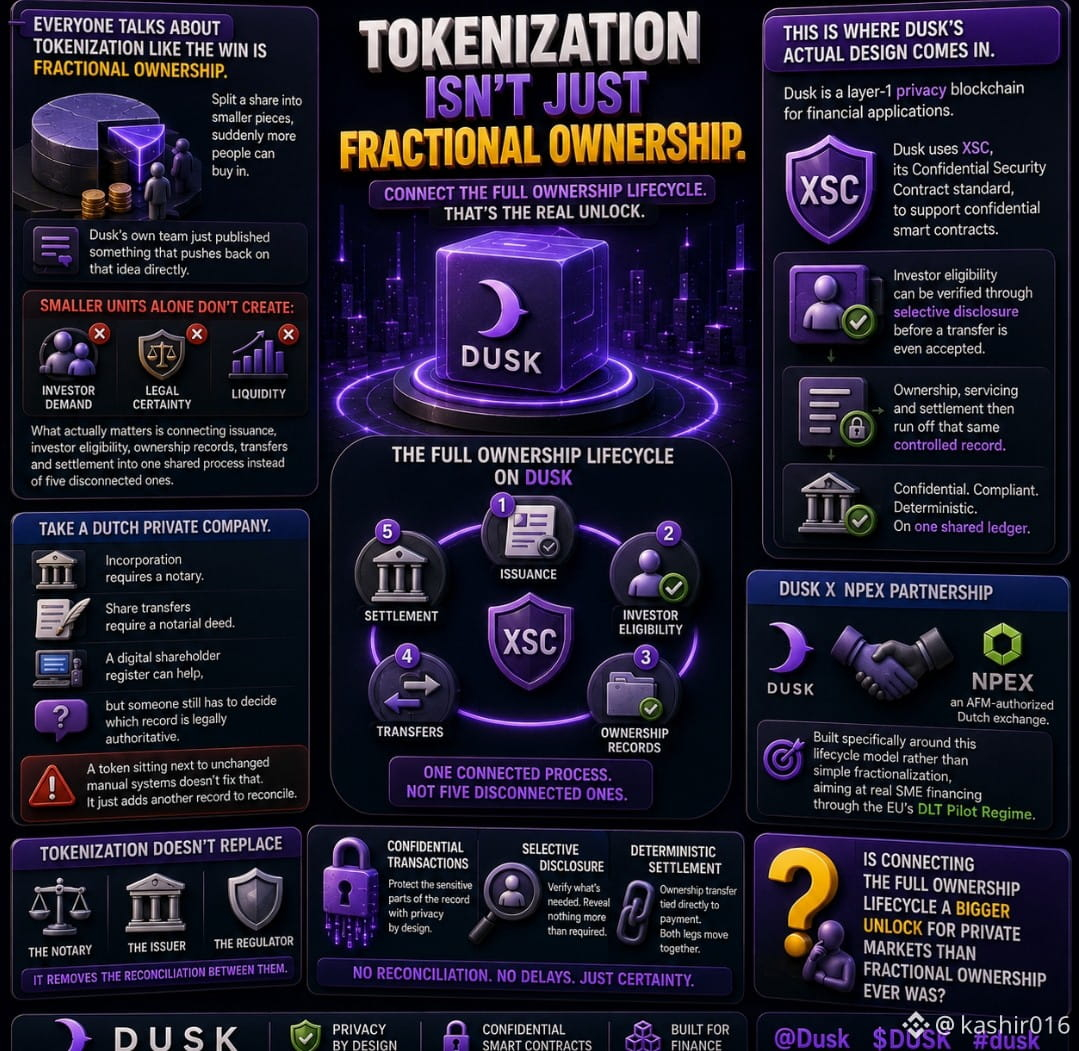
#dusk $DUSK @Dusk الجميع يتحدثون عن “الترميز” وكأن الفوز هو ملكية مجزأة إلى أجزاء. تقسيم السهم إلى وحدات أصغر يجعل عددًا أكبر من الناس قادرين على الشراء. لكن فريق Dusk الخاص نشر شيئًا يدفع عكس هذه الفكرة مباشرةً.
لا تُنشئ الوحدات الأصغر وحدها طلبًا من المستثمرين، ولا توفر اليقين القانوني أو السيولة. ما يهم فعلًا هو ربط الإصدار، وأهلية المستثمر، وسجلات الملكية، والتحويلات، والتسوية ضمن عملية مشتركة واحدة بدلًا من خمس عمليات منفصلة.
خذ شركة خاصة هولندية. يتطلب تأسيسها وجود كاتب عدل. تتطلب عمليات نقل الأسهم صكًا رسميًا أمام كاتب عدل. يمكن أن يساعد سجل المساهمين الرقمي، لكن يجب أن يظل هناك من يقرر أي سجل هو المرجع القانوني الموثوق. فوجود “توكن” بجانب أنظمة يدوية دون تغيير لا يصلح ذلك. بل يضيف مجرد سجلًا آخر يحتاج إلى مواءمة.
هنا يأتي تصميم Dusk الفعلي. كبلوكشين خصوصية من الطبقة الأولى للتطبيقات المالية، تستخدم Dusk معيار XSC الخاص بها، وهو “معيار عقد الأمان السري”، لدعم العقود الذكية السرية حيث يمكن التحقق من أهلية المستثمر عبر الإفصاح الانتقائي قبل قبول أي تحويل. بعدها تعمل الملكية والخدمات والتسوية انطلاقًا من السجل نفسه المُدار.
يُبنى شراكة Dusk مع NPEX، وهي بورصة هولندية مُصرّح بها من AFM، خصيصًا حول نموذج دورة الحياة هذا بدل الاكتفاء بالتجزئة البسيطة، بهدف تمويل حقيقي للشركات الصغيرة والمتوسطة عبر نظام تجريبي DLT التابع للاتحاد الأوروبي.
الترميز لا يستبدل كاتب العدل، ولا المُصدر، ولا الجهة التنظيمية. بل يزيل عملية مواءمة البيانات بين هذه الأطراف. تحمي المعاملات السرية والإفصاحات الانتقائية الأجزاء الحساسة من هذا السجل، بينما تربط التسوية الحتمية نقل الملكية مباشرةً بالدفع، بحيث تتحرك الركنان معًا بدل أن تتم مواءمتهما منفصلتين لاحقًا.
هل ربط دورة حياة الملكية الكاملة هو “فتح” أكبر للأسواق الخاصة من أي ما كان عليه الترميز الجزئي للملكية؟
@Dusk $DUSK #dusk
$TRIA
لا تُنشئ الوحدات الأصغر وحدها طلبًا من المستثمرين، ولا توفر اليقين القانوني أو السيولة. ما يهم فعلًا هو ربط الإصدار، وأهلية المستثمر، وسجلات الملكية، والتحويلات، والتسوية ضمن عملية مشتركة واحدة بدلًا من خمس عمليات منفصلة.
خذ شركة خاصة هولندية. يتطلب تأسيسها وجود كاتب عدل. تتطلب عمليات نقل الأسهم صكًا رسميًا أمام كاتب عدل. يمكن أن يساعد سجل المساهمين الرقمي، لكن يجب أن يظل هناك من يقرر أي سجل هو المرجع القانوني الموثوق. فوجود “توكن” بجانب أنظمة يدوية دون تغيير لا يصلح ذلك. بل يضيف مجرد سجلًا آخر يحتاج إلى مواءمة.
هنا يأتي تصميم Dusk الفعلي. كبلوكشين خصوصية من الطبقة الأولى للتطبيقات المالية، تستخدم Dusk معيار XSC الخاص بها، وهو “معيار عقد الأمان السري”، لدعم العقود الذكية السرية حيث يمكن التحقق من أهلية المستثمر عبر الإفصاح الانتقائي قبل قبول أي تحويل. بعدها تعمل الملكية والخدمات والتسوية انطلاقًا من السجل نفسه المُدار.
يُبنى شراكة Dusk مع NPEX، وهي بورصة هولندية مُصرّح بها من AFM، خصيصًا حول نموذج دورة الحياة هذا بدل الاكتفاء بالتجزئة البسيطة، بهدف تمويل حقيقي للشركات الصغيرة والمتوسطة عبر نظام تجريبي DLT التابع للاتحاد الأوروبي.
الترميز لا يستبدل كاتب العدل، ولا المُصدر، ولا الجهة التنظيمية. بل يزيل عملية مواءمة البيانات بين هذه الأطراف. تحمي المعاملات السرية والإفصاحات الانتقائية الأجزاء الحساسة من هذا السجل، بينما تربط التسوية الحتمية نقل الملكية مباشرةً بالدفع، بحيث تتحرك الركنان معًا بدل أن تتم مواءمتهما منفصلتين لاحقًا.
هل ربط دورة حياة الملكية الكاملة هو “فتح” أكبر للأسواق الخاصة من أي ما كان عليه الترميز الجزئي للملكية؟
@Dusk $DUSK #dusk
$TRIA