
Another day, another retreat. Wall Street fell for a third straight session on Tuesday, dragged down by a punishing sell-off in chipmakers and a bond market that simply would not settle. Futures had already turned lower overnight, weighed by a global bond rout and rising yields that hit shares of Meta, Tesla, Nvidia and Home Depot before the opening bell even rang.
Tech led the declines from the open, and it never really let go. Thirty-year Treasury yields touched their highest level since 2007 during the session, while ten-year yields climbed to levels last seen in January 2025.
Only the Dow Jones Industrial Average made a serious run at positive territory, and even that attempt faded by the close. Part of the pressure traces back to supply: a busy stretch of corporate bond issuance and a fresh wave of long-dated government debt hitting the market have both leaned on prices, pushing yields higher just as investors were already nervous about inflation staying sticky.
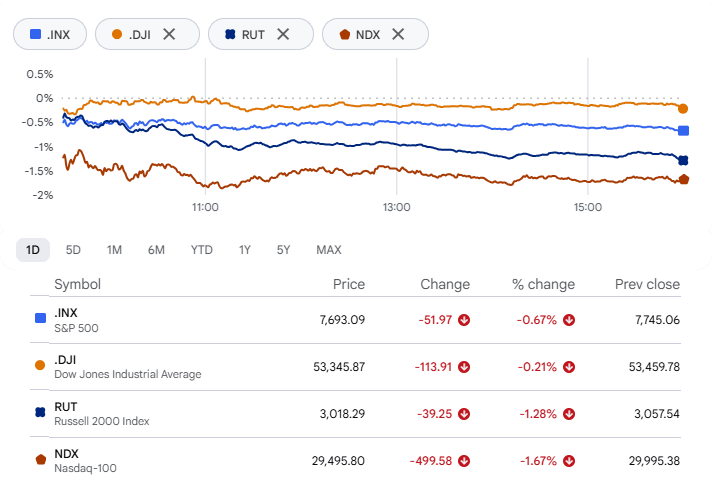
By the close, the broad S&P 500 index had fallen 0.7% — its third consecutive losing session — while the tech-heavy Nasdaq Composite dropped 1.3% to end at 26,289.71. The small-cap Russell 2000 slid a matching 1.3%. The 30-stock Dow, less exposed to tech, held up better with a 0.2% decline.
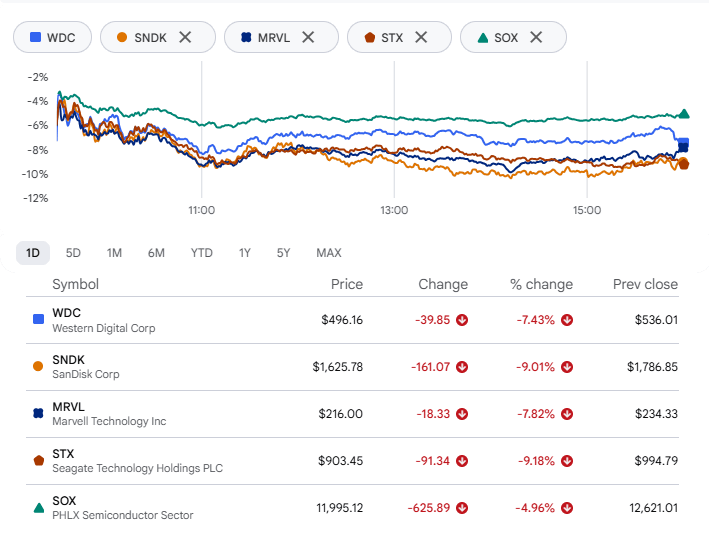
Western Digital fell 7% and weighed heavily on the Nasdaq. Sandisk dropped 9%. Marvell Technology and Seagate Technology were down nearly 8% and more than 9% respectively, a rough session across the whole storage and memory complex. Semiconductors bore the brunt of it. The PHLX Semiconductor Index tumbled 5.0%, with memory-chip names and optical and electronic manufacturers leading the way down. Oil added fuel to the fire too: hopes for a near-term thaw between Washington and Tehran kept fading, and WTI crude rose another 0.5% to roughly $85 a barrel.
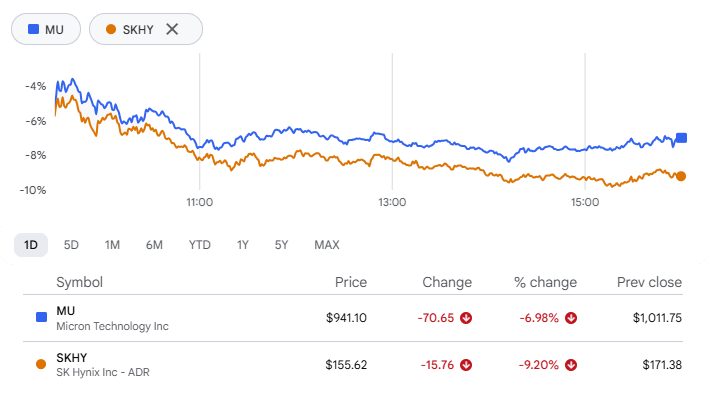
The pressure on memory names was visible well before the opening bell. Micron Technology fell 7% and SK Hynix dropped 9% by the close.
Concentration risk isn't just an equity-market problem any more, JPMorgan Asset Management's Gabriela Santos warned Tuesday. It has bled into fixed income too. "That AI tentacle is everywhere now," she said. Ten-year yields hovered near their highest levels since early 2025, and oil found support after President Trump said no talks with Iran were happening or even scheduled. Futures in Australia pointed to a weaker open as the mood carried through into Asian trading hours.
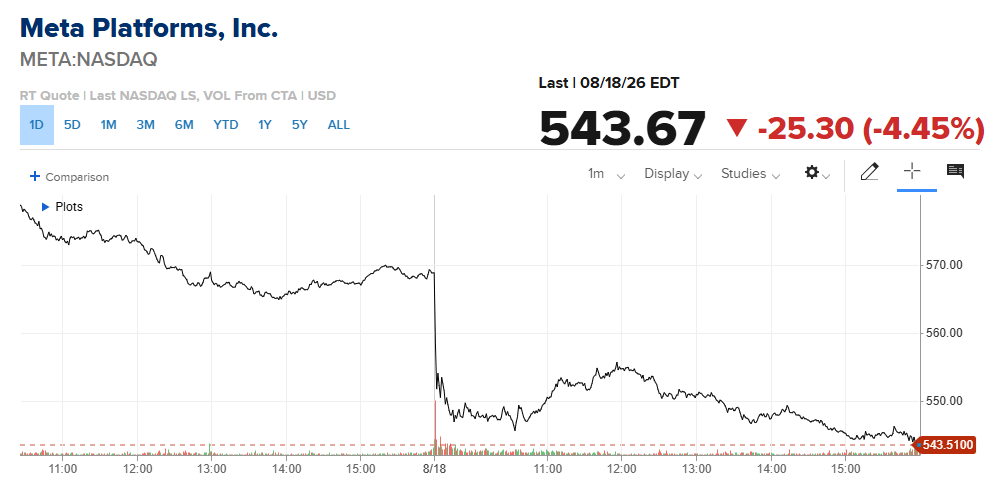
Meta Platforms found itself in a courtroom, not just a trading pit. A federal trial opened in Oakland, with four lead states — California, Colorado, Kentucky and New Jersey — heading a wider coalition of 29 states that allege the company deliberately engineered Facebook and Instagram to hook children and misrepresented how much harmful content teenagers were actually seeing on the platforms. Meta has denied the claims. Shares slid more than 4% as the trial got underway.
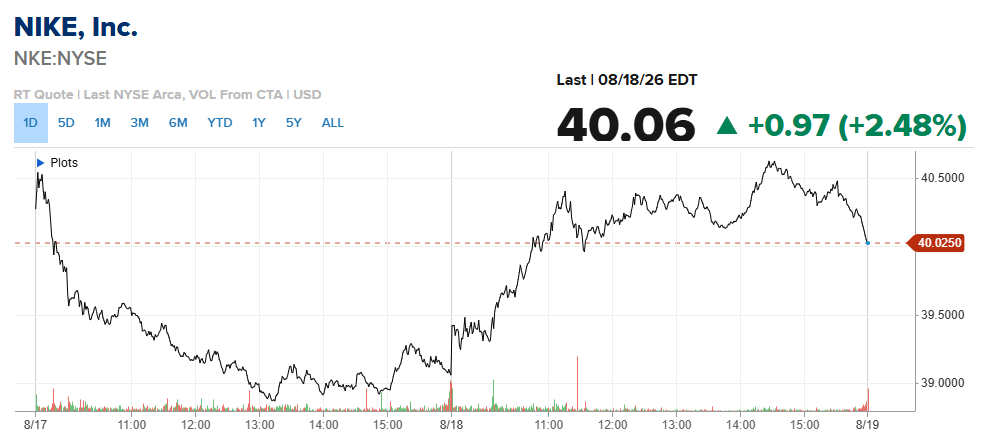
Nike shares fell 3% to a fresh 12-year low after JPMorgan downgraded the stock, pointing to persistent weakness in China and broader pressure across the sector, even as the company's wholesale business showed signs of a rebound. The bank's $40 price target now sits almost exactly where the stock trades, and the Street remains split on whether that makes Nike cheap or simply a value trap.
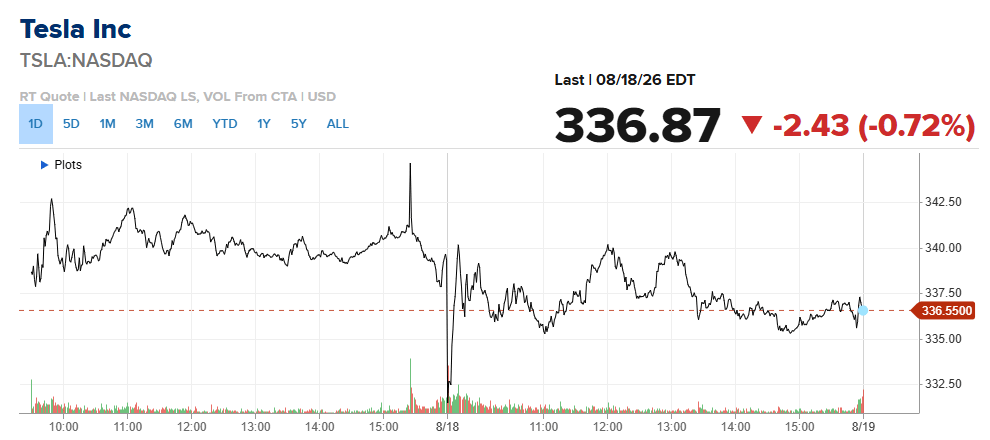
Tesla dipped a more modest 0.7%. The Information reported the company is gearing up for an August launch of its Cybercab, the steering-wheel-free robotaxi that has been years in the making.
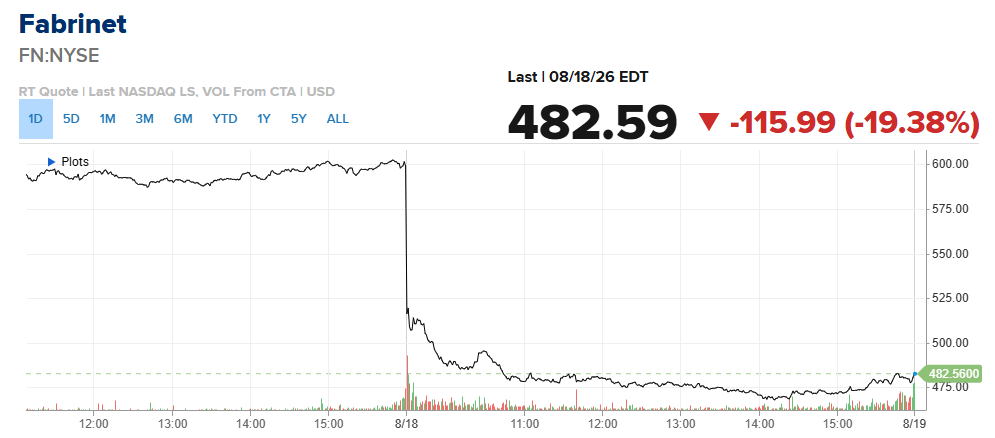
Fabrinet had the worst day of the lot. The optical products manufacturer dropped more than 19% even though fourth-quarter earnings and revenue both beat expectations — non-GAAP profit topped forecasts comfortably and sales rose sharply from a year earlier — and guidance came in rosy. The catch was seasonality: the company flagged that its usual first-quarter expense pattern would create a temporary margin headwind heading into fiscal 2027, and investors punished the stock anyway. The reaction rippled through the wider optical and connectivity trade, dragging several of its peers lower in sympathy.
Not everything was red.
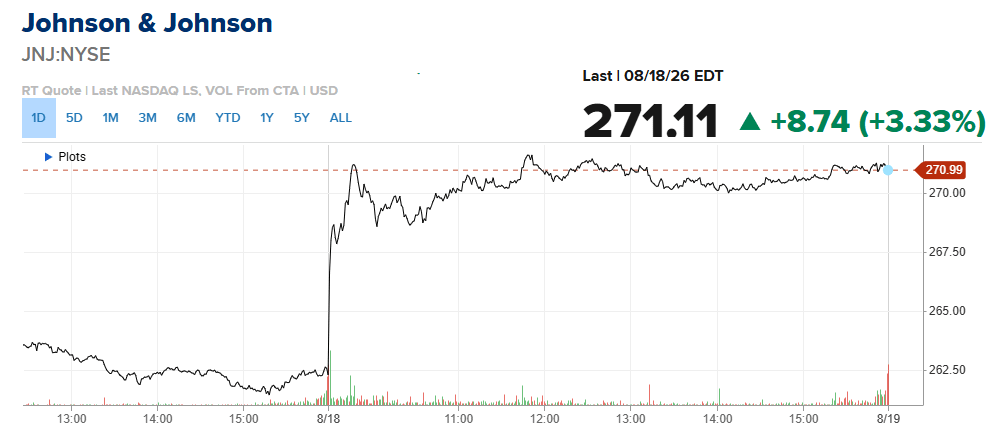
Johnson & Johnson rose more than 3% in afternoon trading, putting it on track for a fresh closing record — its first since 7 July, when the stock gained 3.1% to $267.24. J&J has now gained roughly 31% year to date, more than double the S&P 500's advance over the same stretch.
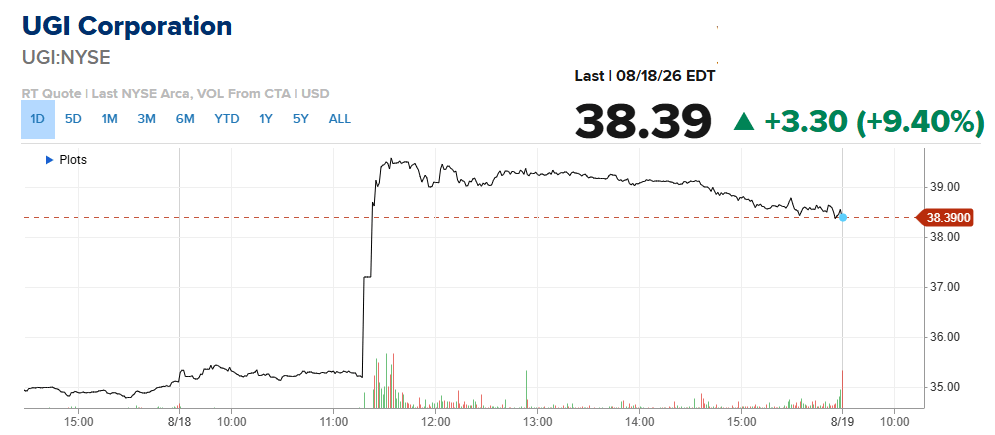
UGI shares jumped in midday trading after the Wall Street Journal reported that KKR had made a $9 billion bid to take over the Pennsylvania-based utility, citing people familiar with the matter. Trading was briefly halted for volatility at one point. By the close, UGI was up 9% on the day and 5% for 2026. The company serves roughly 700,000 customers; KKR declined to comment on the report.
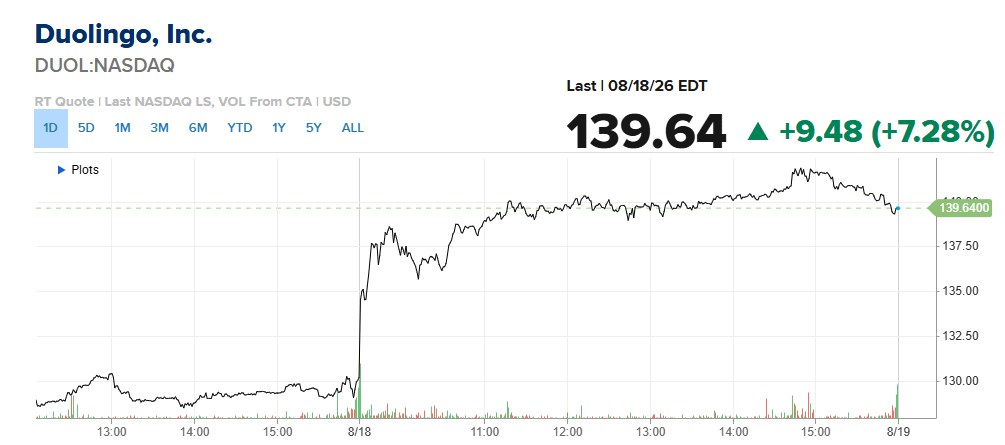
Duolingo also had a strong session. The language-learning app has had a wild couple of years, up more than 350% across 2023 and 2024, only to give back 60% of that gain over 2025 and 2026. D.A. Davidson upgraded the stock to buy from neutral on Tuesday, lifting its 12-month price target to $160 from $130, which implies 23% upside from Monday's close. Analyst Wyatt Swanson argued the market has been underpricing the company's product and marketing improvements, and that Duolingo still has a long runway ahead as daily active user growth converts into bookings. It is a contrarian call — the bulk of the Street still rates the shares no better than a hold — but shares closed up more than 7% regardless.
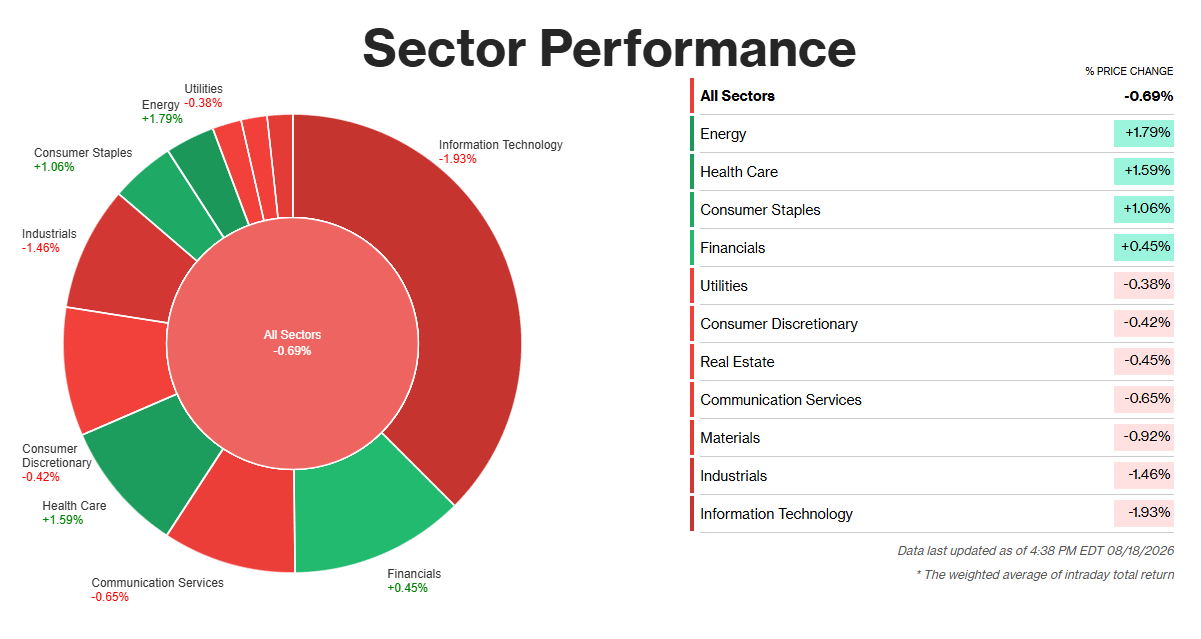
Sector Analysis:
So where did the money actually want to be on Tuesday? Energy, for one, led every other sector by a wide margin, up 1.79%, as the clock ran out on the U.S.-Iran ceasefire. The 60-day truce lapsed without a resolution, and bond yields and oil climbed together as the agreement collapsed. Brent crude pushed back above $90 a barrel, WTI traded near $85, and reports that Iran had seized a UAE-owned tanker in the strait sent shipping through the waterway sharply lower. President Trump added to the tension, ruling out talks with Iran and confirming the naval blockade would remain in force. With crude climbing and no diplomatic off-ramp anywhere in sight, energy was the easy trade of the day.
Health care added 1.59% and consumer staples rose 1.06%, the flip side of the same trade. Defensive sectors — staples, health care, REITs — rallied in a fresh round of rotation even as energy outperformed on higher oil prices. With yields spiking and growth names under pressure, capital moved towards steadier earners less exposed to financing costs. Call it a flight to safety rather than a sector-specific story.
Health care and biotechnology stocks climbed to all-time highs Tuesday as investors hunted for pockets of strength beyond tech. The $44 billion State Street Health Care Select Sector SPDR ETF, holding 62 stocks, touched a record; its three-month total return, including reinvested dividends, sits at 15.6% against 4.8% for the S&P 500. Eli Lilly and Johnson & Johnson make up 26% of that fund. The $19 billion Vanguard Health Care Index Fund also hit a record, with a three-month total return of 16.6% across its 415 holdings — Lilly and J&J account for 22.2% there. The iShares Biotechnology ETF, the Nasdaq Biotechnology Index and the S&P 500 Health Care Index all touched new highs too, up 21.1%, 18.5% and 15.7% respectively over three months.
Information technology bore the brunt of the selloff, down 1.93%. Chips felt it earliest and hardest — Western Digital, Sandisk, Marvell and Seagate all posted the declines detailed above — while Nvidia, Meta, Tesla and Oracle each dropped as much as 3%. Credit-sensitive banks including Goldman Sachs and JPMorgan traded lower too. The thread tying it together was duration risk. Thirty-year yields, back at levels not seen since 2007, mean higher discount rates — and those fall hardest on long-duration growth names.
Industrials fell 1.46%, with Caterpillar among the Dow's biggest drags, down 2.86%. Materials slipped 0.92% in sympathy. Both sectors run capital-intensive and rate-sensitive, and a much weaker-than-expected July housing starts report — down 12.4% against a far milder forecast decline — added to worries about the construction pipeline. Neither move looked company-specific. It read as broad-based caution about the cost of borrowing.
Wolfspeed reports Wednesday, and its results will be the next test of whether chip sentiment can find a floor. The bond market, for now, remains the story the rest of the tape can't ignore.